Prefer Jewish News on Google
Gaza school founder backed by Israeli donors says children are taught ‘we are better together’
Palestinian-American surgeon behind Gaza’s Academies of Hope tells Jewish News why Jewish support shaped his vision
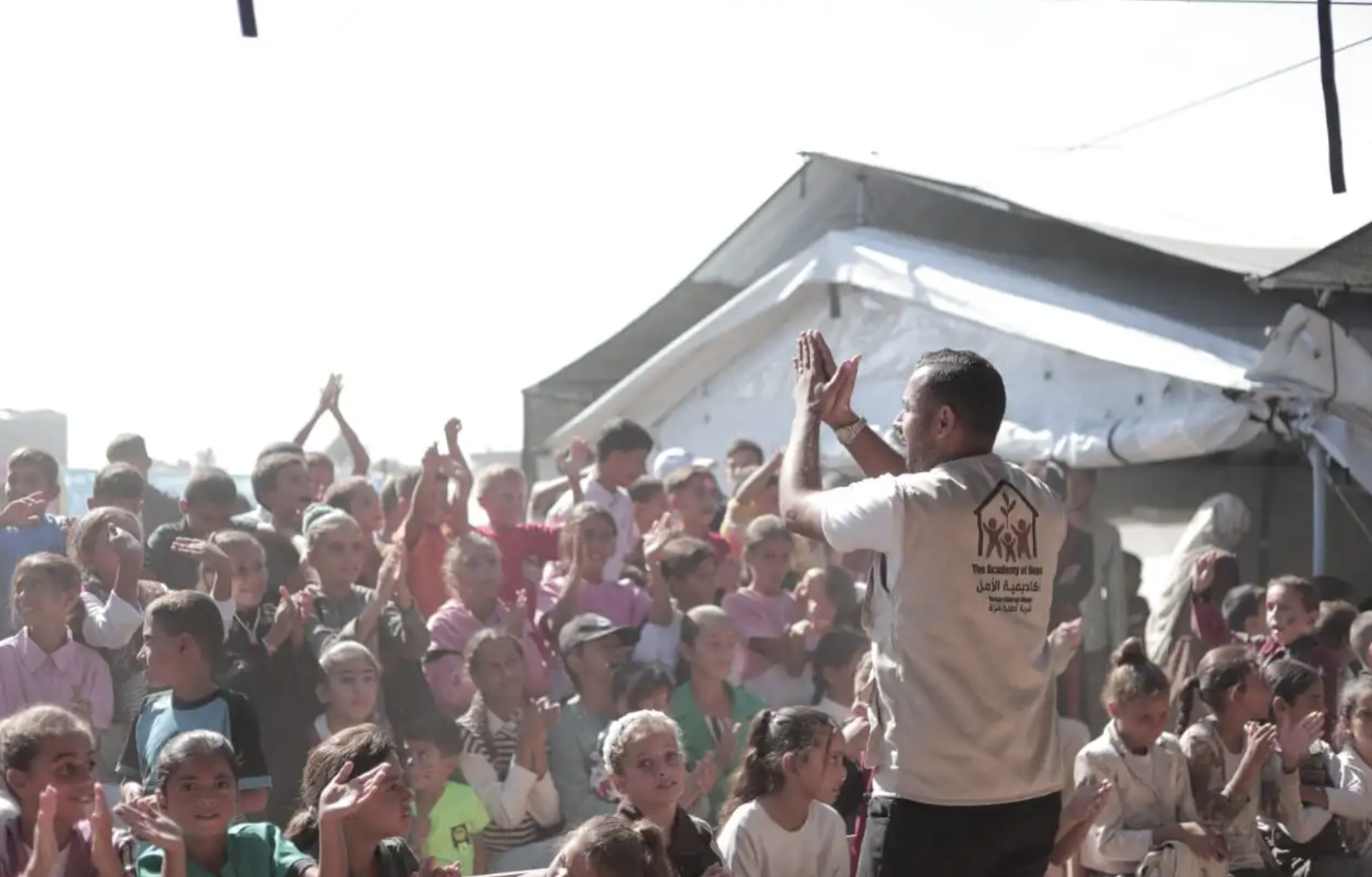
A Palestinian-American neurosurgeon who has built a fast-growing network of schools for Gaza’s orphaned and displaced children says Israeli and Jewish donors are helping drive an education project centred on trust, trauma recovery and what he calls a philosophy of being “better together”.
Dr David Hasan, founder of the Academies of Hope network in Gaza, told Jewish News that his work emerged from a deeply personal shift following the 7 October attacks and his own experience travelling between Gaza and Israel during the war.
Hasan, a professor and neurosurgeon based in North Carolina, said he entered Gaza in December 2023 as part of a World Health Organisation medical mission, operating in hospitals under what he described as “horrible conditions.”
Born in Kuwait to Palestinian parents from the West Bank, Hasan said he grew up with a single narrative about Jews before moving to the United States, where exposure to Jewish culture, Christianity and religious studies reshaped his worldview.
“My parents are from the West Bank, born and raised there,” he said. “That was the narrative that we grew up with.”

After studying religion during university alongside his medical training, Hasan said he began to see conflict through multiple perspectives rather than a single identity.
“I came to appreciate all the different religions and world views, which kind of helped shape the way I am,” he said.
Hasan said the aftermath of 7 October marked a turning point. While he tried reaching out to Israeli and Jewish friends to express sympathy following the Hamas attacks, he said many relationships fractured almost overnight.
“I knew at that time that this conflict was much bigger than what was there in the region,” he said.
He entered Gaza with a small group of international doctors in late 2023 after a global appeal for volunteers.
“Only 18 people responded to that call,” Hasan said.
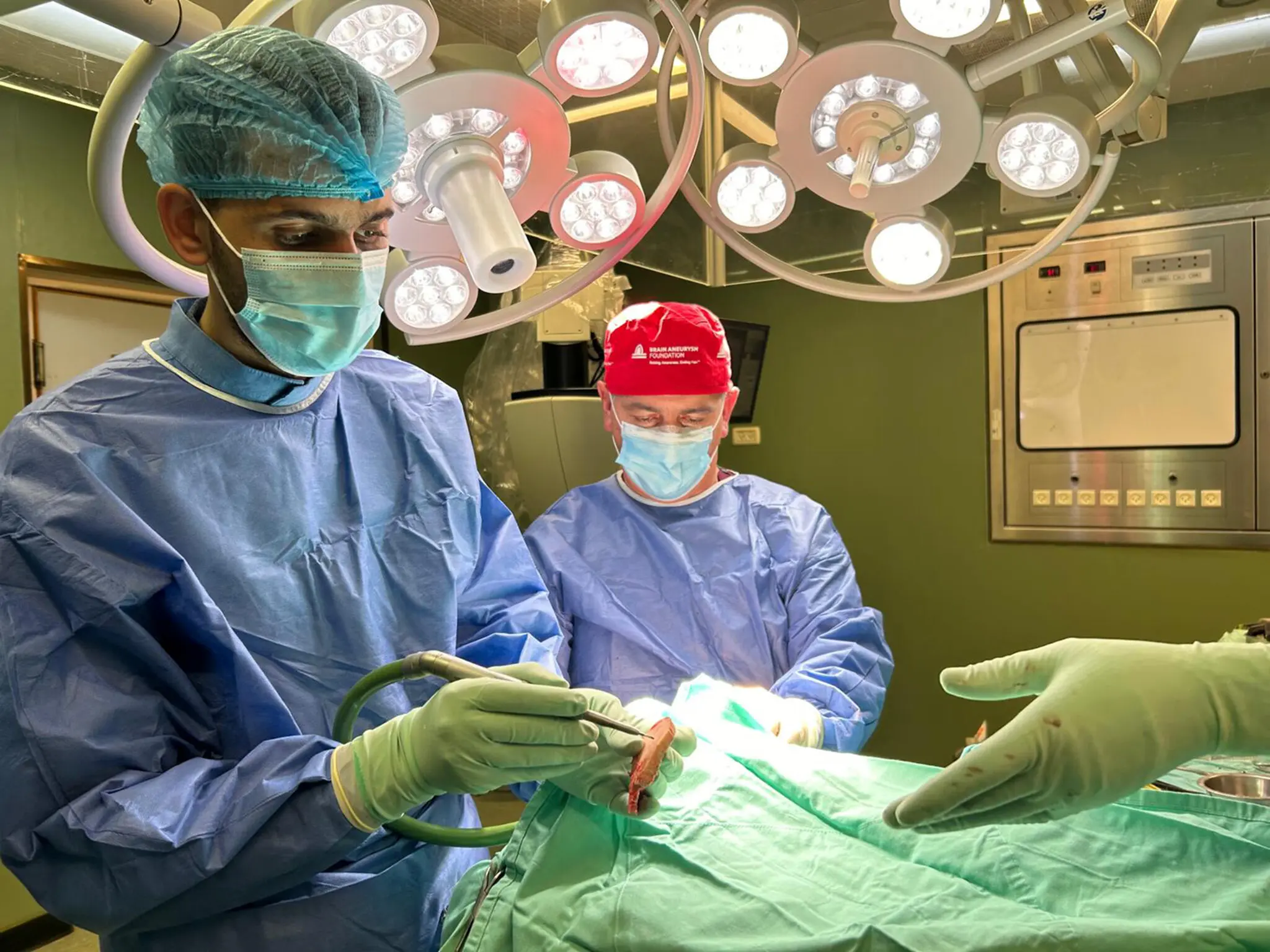
Working inside hospitals, he documented conditions on the ground through written updates to his wife, who later shared them publicly after his return.
The visibility brought invitations to speak internationally, including at universities and policy institutions, but Hasan said he deliberately avoided taking overt political positions.
“I refused,” he said. “I stayed in the middle. I never used the words ‘genocide’ or ‘war crimes’. I just described facts.”
The idea for the schools came later, after Hasan said he witnessed the scale of trauma affecting children.
He described trying unsuccessfully to establish orphanages before turning instead toward education.
The first school opened in July 2025 in southern Gaza, initially designed for around 200 children.
“We thought it would be 200, but about 500 came,” he said.
Many children arrived hungry, he added, prompting him to contact chef José Andrés and the charity World Central Kitchen for support.
“Some of the kids hadn’t had food, hadn’t had sleep for four or five days,” Hasan said.
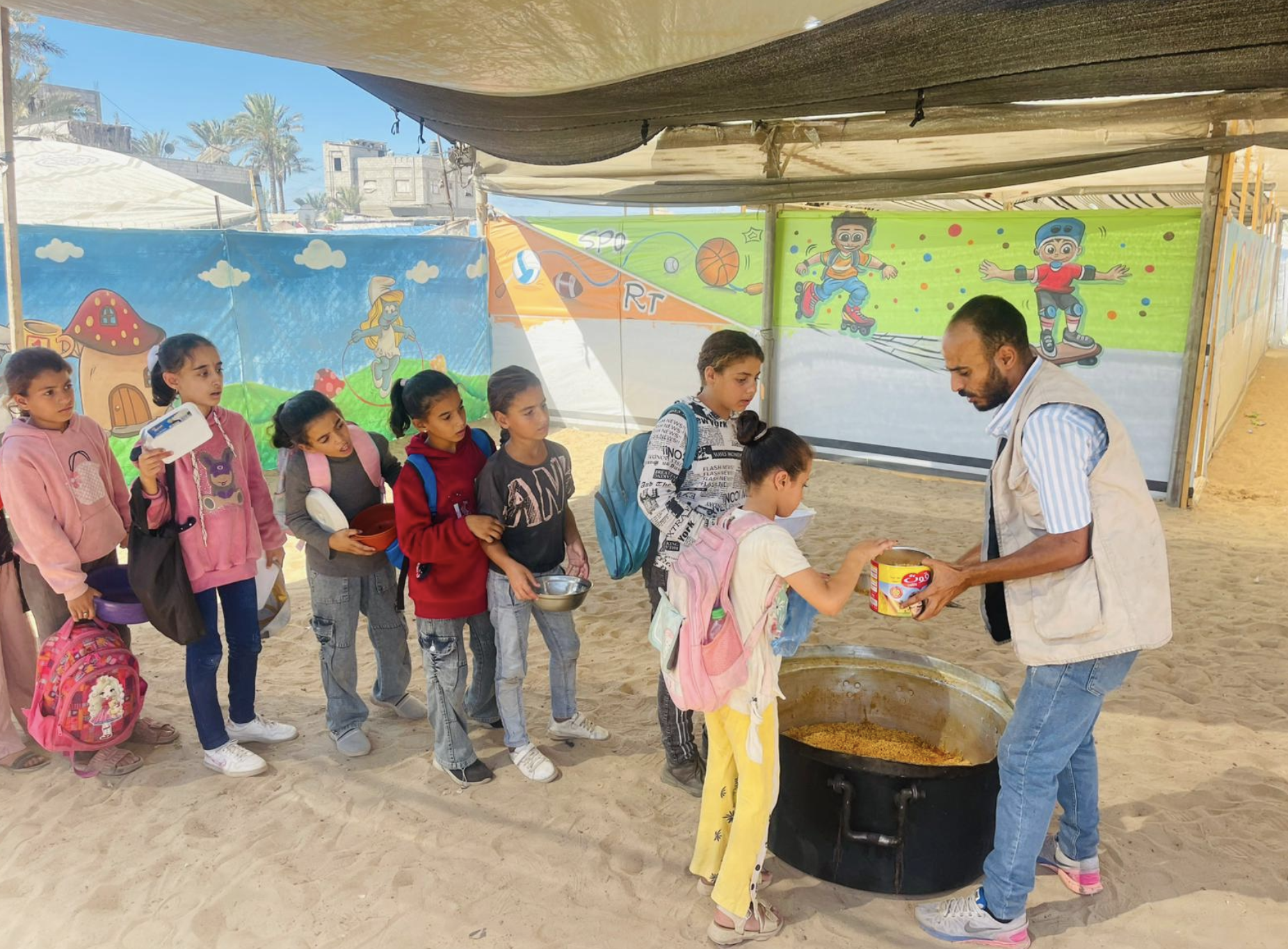
Photo Credit: Gaza Children Village website
The schools now offer daily meals, healthcare, psychological support and structured education, with pupils taught in tented campuses built from pipes, tarpaulin and improvised classrooms.
Hasan said the initiative has since expanded to nearly 19,000 children across multiple sites.
At the centre of the project is a curriculum, he says, that removes material promoting violence while preserving Palestinian identity.
Hasan rejected the language of “coexistence,” saying he believes it implies tolerance without genuine connection.
“Coexistence is a bad term,” he said. “Normalisation is even worse.”
Instead, he said students are taught a different principle.
“We are better together,” he said. “Because if you’re better together, you care about the other person.”
Hasan said the curriculum combines standard Palestinian Authority material with lessons on empathy, religion, critical thinking and conflict resolution.
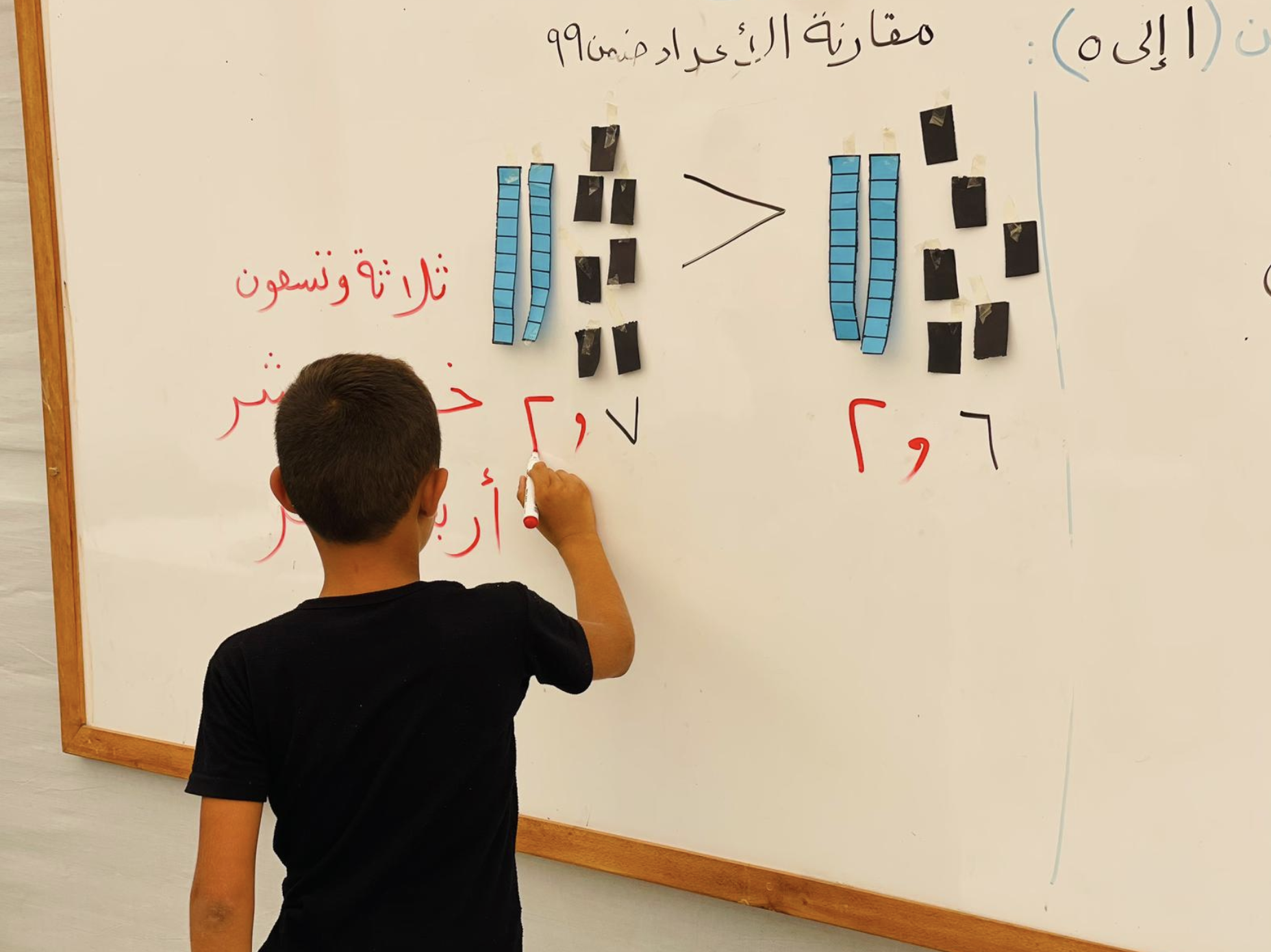
He described what he calls a “passive curriculum” – a revised version of existing educational material – alongside an “active curriculum” focused on values.
“The active curriculum: We created a course where we actually teach the kids about love, peace, tolerance, critical thinking,” he said.
Students also learn about major world religions, including Judaism.
“We teach the kids about neighbours, the major religions – Islam, Christianity, Buddhism, Hinduism, Judaism – and understand the differences and similarities,” Hasan said.
He said artwork created by students often reflects hopes for peace.
“For the first time, you walk in, and you see kids have drawn Palestinian and Israeli flags together,” he said.
Hasan acknowledged that the curriculum has attracted hostility from both Hamas and Palestinian Authority-linked officials.
“There was a lot of posturing, intimidation, smearing campaigns against us,” he said.
Teachers have also faced fear and pressure, he added, prompting the organisation to vet staff carefully.
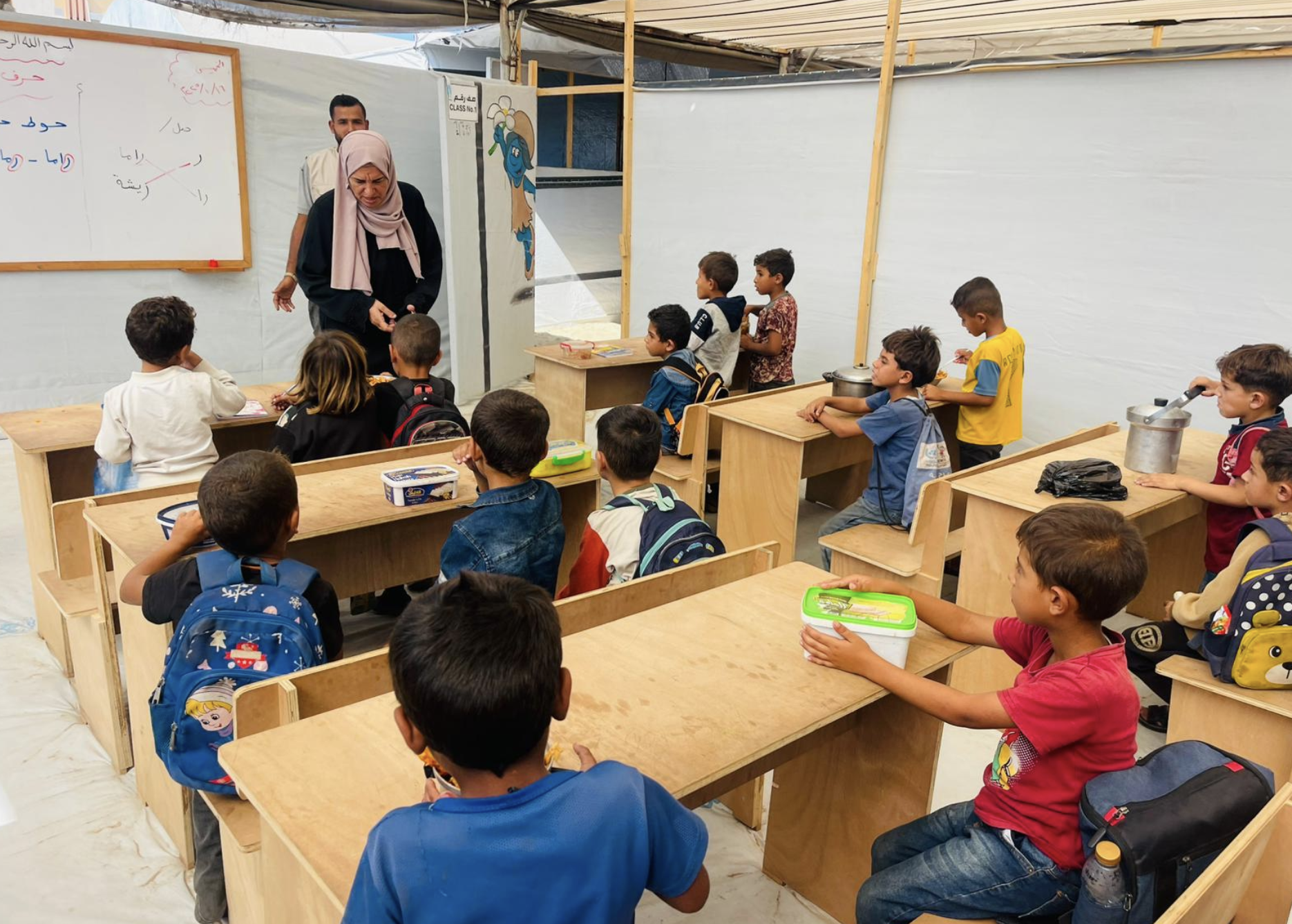
“We were very selective,” Hasan said. “We didn’t work with already existing NGOs. We picked them one by one.”
Hasan said transparency around Jewish and Israeli donor support was essential to building trust.
“You have to be honest with everybody,” he said. “If the people in Gaza found out later, they would say, ‘You’re up to no good.’”
He said local community leaders accepted outside funding so long as the schools did not seek to erase Palestinian identity.
“They said, ‘As long as you don’t brainwash our kids,’” Hasan recalled.
The initiative has since developed relationships with Israeli supporters, some of whom became involved after Hasan gave a talk at the Peres Centre for Peace and Innovation in 2024.
He described visiting communities devastated by 7 October after travelling through southern Israel.
“Having one foot in Gaza, one foot in the kibbutzim in the south, I knew it was my mission,” Hasan said.
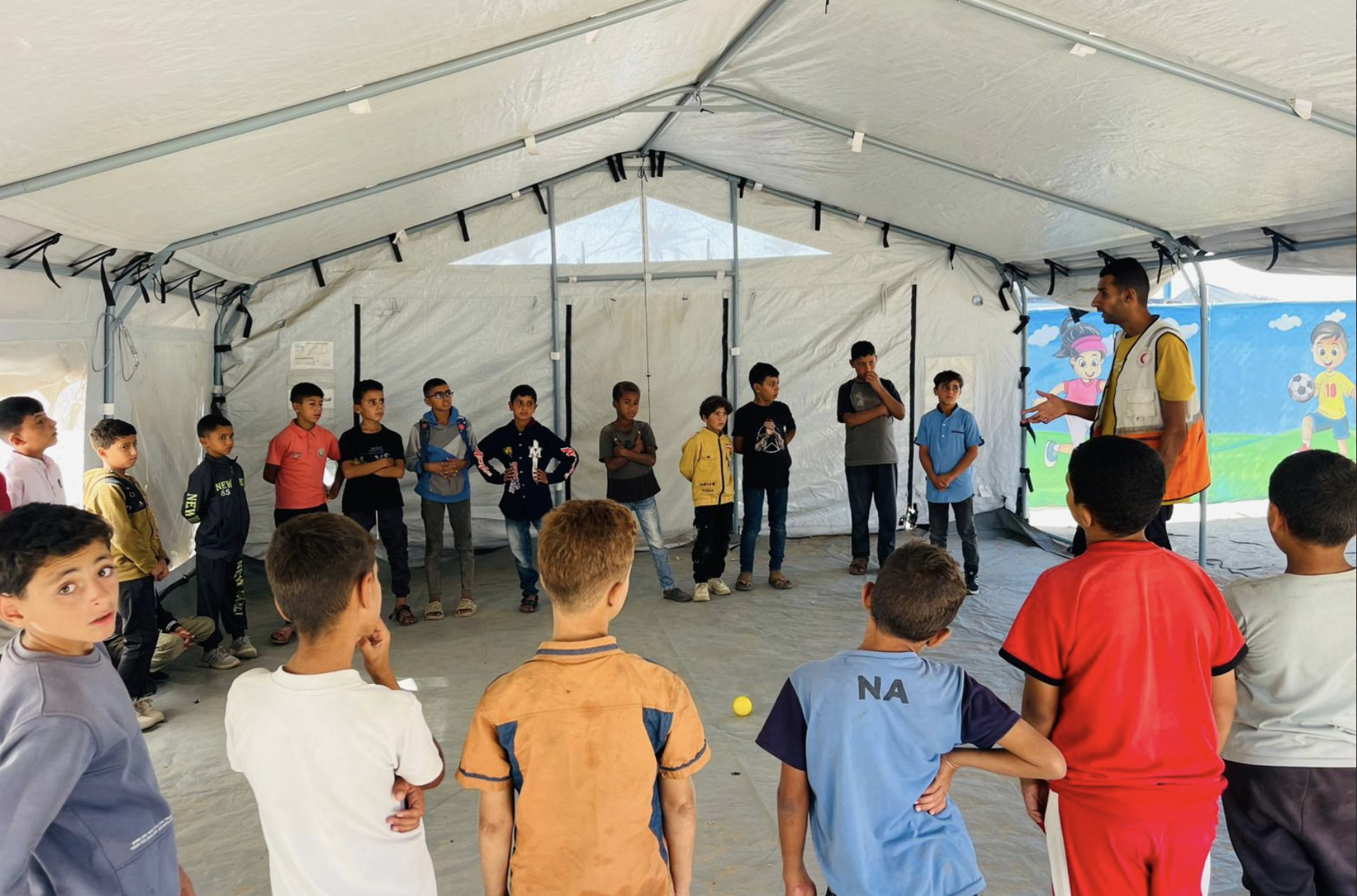
Hasan said his long-term ambition is to reach as many as 250,000 children.
“We are outrageously ambitious,” he said.
He believes the model could eventually extend beyond Gaza.
“If change is possible in Gaza – one of the most difficult places in the region – imagine what impact that could have elsewhere,” he said.
Hasan also revealed plans for a private initiative later this year, bringing together orphans from Gaza and children orphaned in the 7 October attacks.
The gathering, expected to take place in September, would involve psychologists from both communities and no media presence.
“These kids are the most affected of the whole war,” Hasan said. “We failed them before, and now we’re trying to make it better.”

Keep community journalism free.
Jewish News is free for everyone. No paywall. No barriers. Just trusted journalism for anyone who wants to stay connected to Jewish life in Britain.
If you value that, please support us.
From as little as £5 a month, you can help keep our journalism free and accessible to all.
Every day, we report on the issues that matter to our community. We celebrate achievements, support charities, challenge antisemitism and ensure Jewish voices are heard more widely.
From as little as £5 a month, you can help us continue to:
- Report on the stories shaping Jewish life in the UK and beyond
- Bring our community together through shared stories, events and campaigns
- Celebrate the people, culture and moments that define our community
- Support organisations doing vital work across Jewish Britain
You can make a one-off donation or become a regular supporter. Every contribution helps keep our journalism free, independent and accessible to all.
If everyone who values Jewish News gave a small amount, it would make a real difference to our future.