Prefer Jewish News on Google

How much more evidence is required for the BBC to engage in genuine change?
When it comes to antisemitism, anti-Zionism and Israel, the BBC does not have a perception problem, it has a reality problem
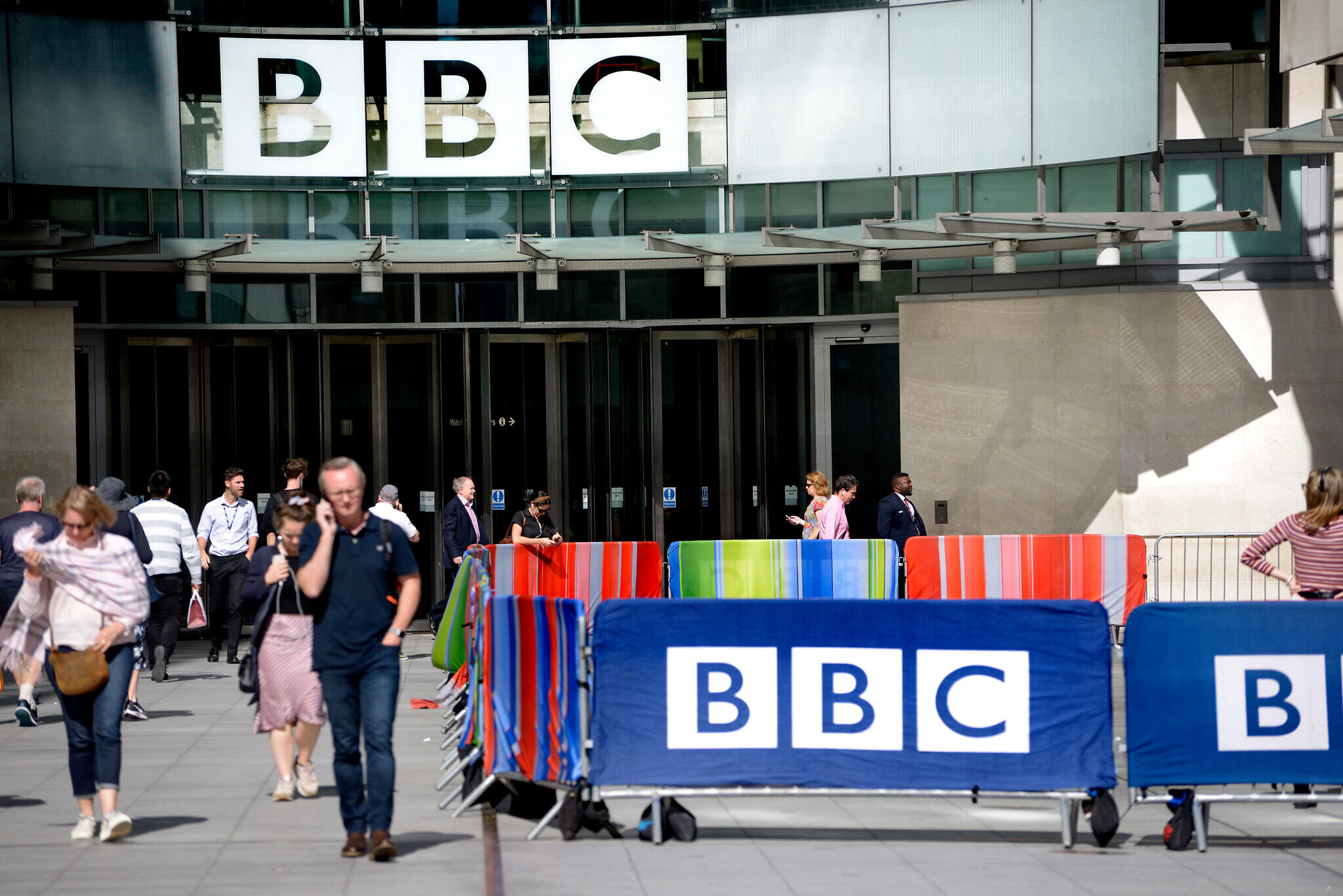
For months, critics of the BBC have been told to wait. Wait for internal reviews, for leadership changes, for the organisation to “listen and learn”.
When the Director-General and the Head of News were finally forced out, some were encouraged, it turns out naively, to believe this marked a reckoning, that accountability at the top would correct what had gone wrong beneath it. That a change of faces would mean a change of culture. It hasn’t.
Because the problem was never about individuals. It is endemic, systemic, institutional and crucially, it is not confined to one corner of the BBC. It spans news, factual programming and entertainment alike. That breadth matters, it tells us this is not a rogue editor, a compromised bureau or a single newsroom gone astray. It is a worldview that runs through the organisation’s bloodstream.
If there were ever any doubt that removing senior figures would neutralise the BBC’s editorial pathology, the corporation itself has erased it, not over years, the time it normally takes for them to mark their own homework, but in just the last few weeks.
A leaked internal memo recently instructed BBC staff that “the argument over how much aid has crossed into Gaza is irrelevant”, and that Israel should be blamed regardless. That sentence alone should chill anyone who still believes the BBC’s problems are exaggerated. Once an organisation decides facts are irrelevant, journalism is no longer the objective, the outcome is. When a publicly funded broadcaster resolves the conclusion first and treats evidence as an inconvenience, fitted up to deliver the “right” answer”, it stops informing the public and starts shaping it. Call it what you like, but it no longer resembles reporting and hasn’t for sometime.

Another leak revealed something more serious still. Internal BBC communications confirmed what critics have warned for months, the corporation had evidence contradicting its own viral “mass graves” narrative, evidence showing the graves were dug by Palestinians before Israeli entry and the story was broadcast regardless. This was not a failure to verify, it was a decision to proceed despite verification. That is how propaganda functions, not through ignorance, but through editorial selection.
Then there was the reporting on West Midlands Police and the banning of Jewish fans from attending the Aston Villa–Maccabi Tel Aviv match. The framing was familiar, the insinuation predictable, but buried deep in the article, almost as an afterthought, was the actual story. Jewish fans were banned not because they posed a threat, but because Muslim “local vigilante groups” threatened violence. A British police force restricted Jewish attendance because it could not guarantee safety from radical intimidation and the BBC buried that fact so thoroughly it was almost ornamental. That is not omission, it is clear and undeniable intent to mislead the public that they have been commissioned to serve.
Last week, the Jewish News broke the story on how the BBC reached a settlement with an Israeli family whose home it filmed following the 7 October attacks, without consent. The act itself was grotesque, the name attached to this infringement of civil and human rights was not surprising. It was Jeremy Bowen, the same senior journalist who falsely amplified claims that Israel bombed a Gaza hospital, a supposed massacre that never occurred. He never corrected the record with the urgency that untruth demanded, nor found the decency to apologise when asked to do so on the record. Errors reveal competence, or in this case lack of, while responses reveal instinct.
Even in entertainment programming, the pattern holds. In a BBC One Christmas special this year, The Repair Shop, a significant portion of the programme was devoted to a child refugee fleeing the Nazis on the Kindertransport, a story inseparable from Jewish history. And yet the programme made no mention of Jews at all. Only after backlash did the BBC quietly amend the iPlayer description to acknowledge that the Kindertransport rescued Jewish children from Nazi territory. British Jews noticed immediately because they have learned to read between the lines.
In December, the BBC rolled out mandatory antisemitism training for staff for the first time, an online course required across the organisation. It took twenty-six months from the 7 October massacre, for the BBC to find the time to implement something that Jews in our industry have been politely asking for years. The course takes twenty minutes to complete and avoids the single greatest challenge the BBC faces; the fact that antisemitism within its ranks has been systematically laundered through antizionism for years. If this is the scale of response deemed sufficient for a crisis this deep, then God help us. This is not education, it is box-ticking theatre.
At this point, the BBC’s response to criticism has become as predictable as the behaviour being criticised. We will be told these are isolated incidents, that context matters, that mistakes were made, that lessons have been learned. That the corporation “takes antisemitism extremely seriously”.
We have heard all of this before.
What we have not seen is accountability proportionate to the scale of the failure. We have not seen senior editorial judgment meaningfully challenged. We have not seen a serious reckoning with the way antizionism has been used, repeatedly, as respectable cover for antisemitism within the organisation.
Instead, we see the same patterns reassert themselves, across news, factual output and entertainment, even after leadership collapse and public disgrace. That is not reform, it is the true hallmark of Auntie, institutional self-protection. The BBC does not have a perception problem, it has a reality problem. No amount of carefully worded statements or internal process reviews will change that.
Trust is not restored by insisting it still exists. It is restored by action, visible, uncomfortable, structural action and by a willingness to confront the culture that produced this crisis in the first place. Until that happens, every denial will sound hollow, every clarification defensive and every appeal to impartiality will ring false.
A new Director-General and a new Head of News will need to be appointed. Surely no one seriously believes Jonathan Munro is fit for the job, the same interim head of news who, seemingly without irony, thought he was paying BBC Arabic a compliment when he described its journalism as “almost as trusted as Al Jazeera.” The fact that such a comparison could be offered as praise tells you everything about how far the rot has spread.
Another review, another apology, another training module designed to tick a box and change nothing, these are meaningless. The small matter of the upcoming charter review, perhaps the only process the BBC’s chair and board genuinely understand to be existential, that is the moment, the moment of truth.
Because what is at stake here is not whether the BBC has offended a community, it plainly has, but whether Britain’s most powerful cultural institution still understands its responsibility to the country it serves.
A publicly funded broadcaster that treats facts as optional, buries national scandals, erases Jews from their own history and confuses activism for journalism is not neutral, it is not impartial and it is not entitled to the trust it continues to demand.
The question now is simple, how much more evidence is required?
If this does not prompt change, then the conclusion is unavoidable, the BBC does not believe it has a problem serious enough to warrant one. If that is the case, then the British public must decide whether an institution so captured by its own worldview still deserves its privileged place in national life.
Silence is no longer neutrality, delay is no longer caution and pretending this will resolve itself is no longer credible.
Change will come, either because the BBC chooses it, or because the country insists on it. The first question is how much damage will be done before that happens. When it does, no one will be able to claim ignorance, only a choice between speaking when it mattered or staying silent when it was easier.

Keep community journalism free.
Jewish News is free for everyone. No paywall. No barriers. Just trusted journalism for anyone who wants to stay connected to Jewish life in Britain.
If you value that, please support us.
From as little as £5 a month, you can help keep our journalism free and accessible to all.
Every day, we report on the issues that matter to our community. We celebrate achievements, support charities, challenge antisemitism and ensure Jewish voices are heard more widely.
From as little as £5 a month, you can help us continue to:
- Report on the stories shaping Jewish life in the UK and beyond
- Bring our community together through shared stories, events and campaigns
- Celebrate the people, culture and moments that define our community
- Support organisations doing vital work across Jewish Britain
You can make a one-off donation or become a regular supporter. Every contribution helps keep our journalism free, independent and accessible to all.
If everyone who values Jewish News gave a small amount, it would make a real difference to our future.