
 Prefer Jewish News on Google
How one man put the Holocaust back on Europe’s streets
On Yom HaShoah, a documentary returns memory to the streets where lives were erased
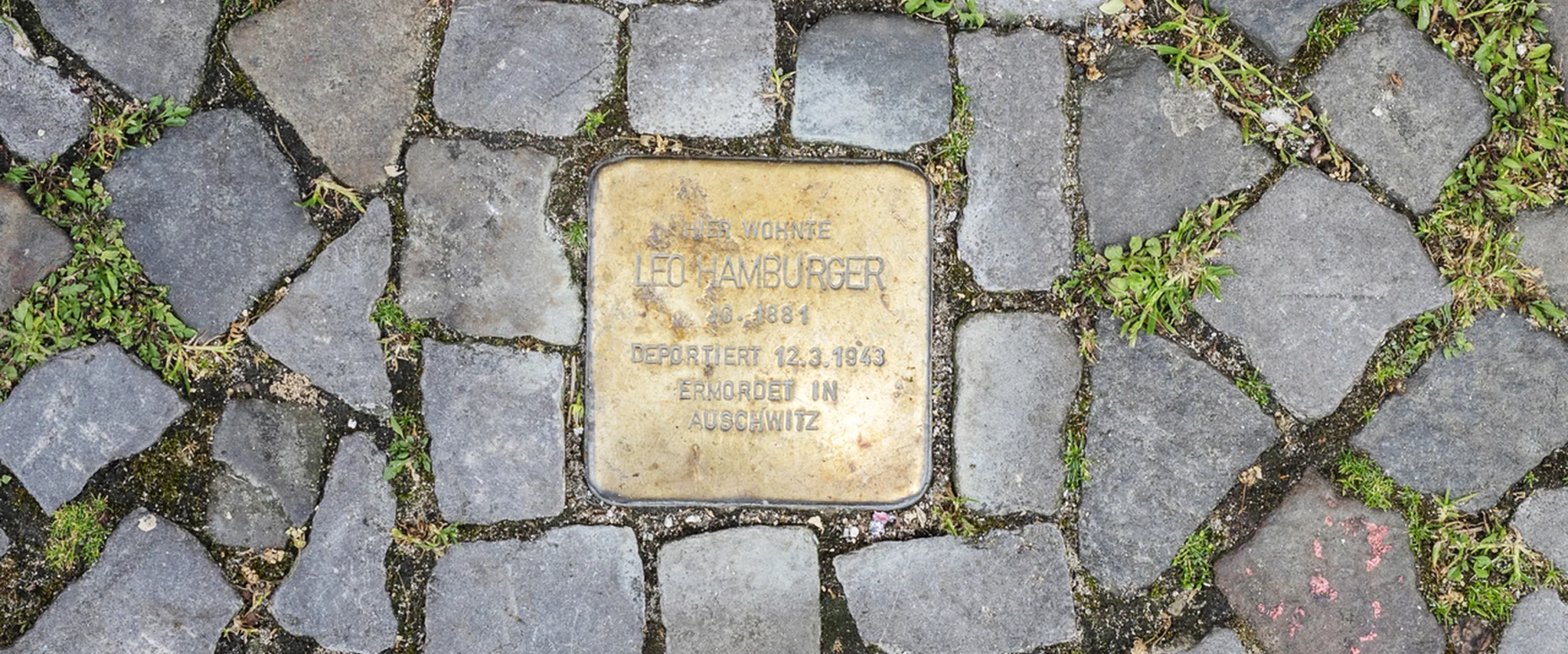
The documentary Here Lived: The Stolpersteine Story does not begin with grand ideas about memory. It begins with a gap in a street — in many streets.
The gap is not architectural. The buildings are still there, rebuilt or renovated, but what is missing are the people who once lived there — and any visible trace that they were ever part of the place at all.
In the early 1990s, German artist Gunter Demnig was researching the deportation of Roma and Sinti families from Cologne. He found addresses, transport lists, dates. What he did not find was anything at street level to mark what had happened. Entire families had been removed from specific homes, yet the locations themselves carried no acknowledgement. Absence had become normal.
Demnig’s first response was practical rather than symbolic. In 1992, marking fifty years since the Nazi decree ordering the deportation of Roma and Sinti to Auschwitz, he installed a brass plaque in Cologne reproducing the opening lines of that order.
From that moment came the idea that would define the rest of his working life. Instead of building monuments that people visit intentionally, Demnig would return names to the exact places they had been erased from. They would live in those places by name.



The result was the Stolpersteine — small brass stones embedded in pavements outside or near the homes or community buildings of Holocaust victims. Each stone records one person: name, year of birth, date of deportation, and fate where known. Every inscription begins with the same words: Hier wohnte… — Here lived.
The documentary makes clear that this wording matters. These stones do not mark where someone died, but where they belonged.
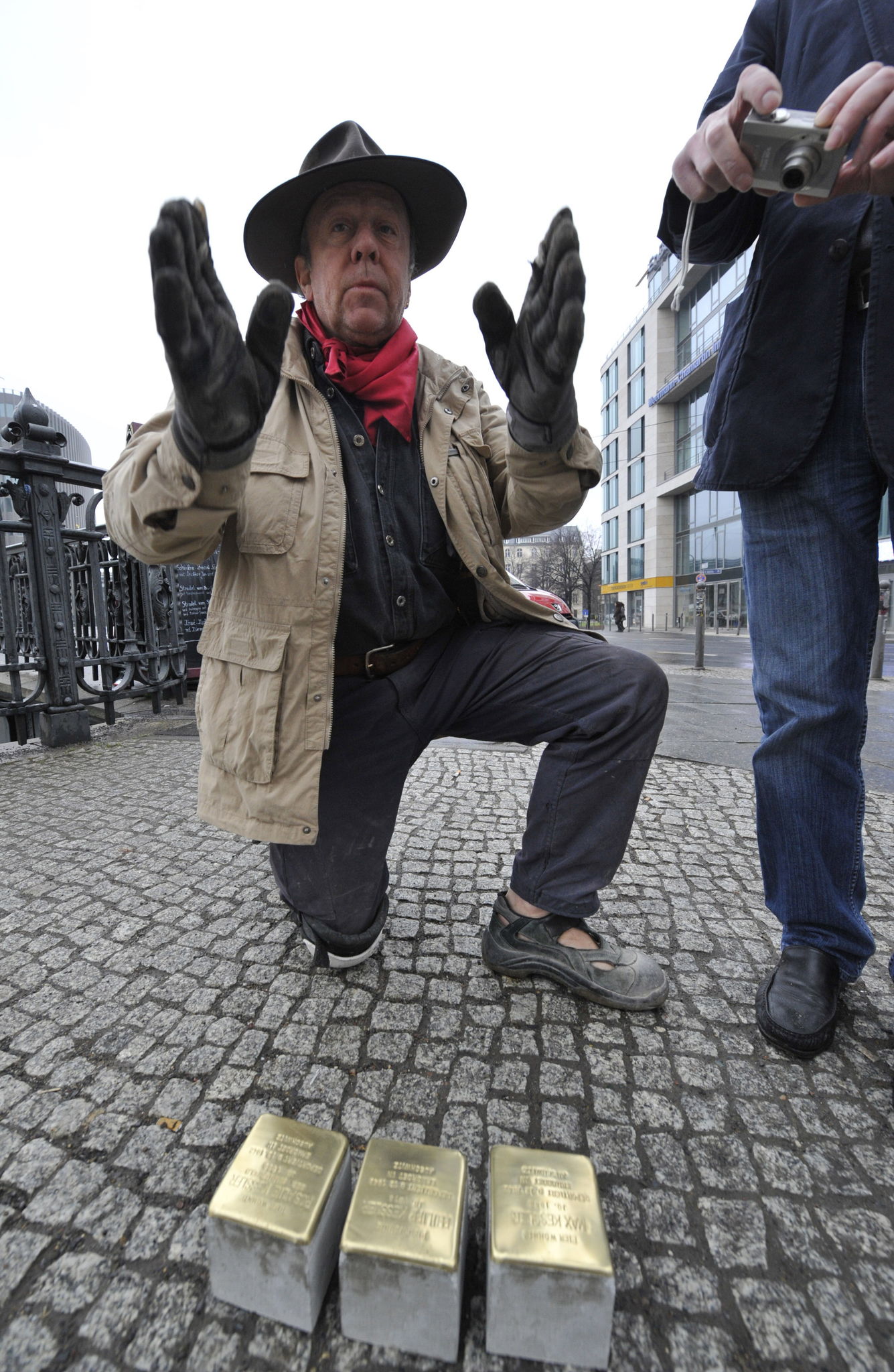
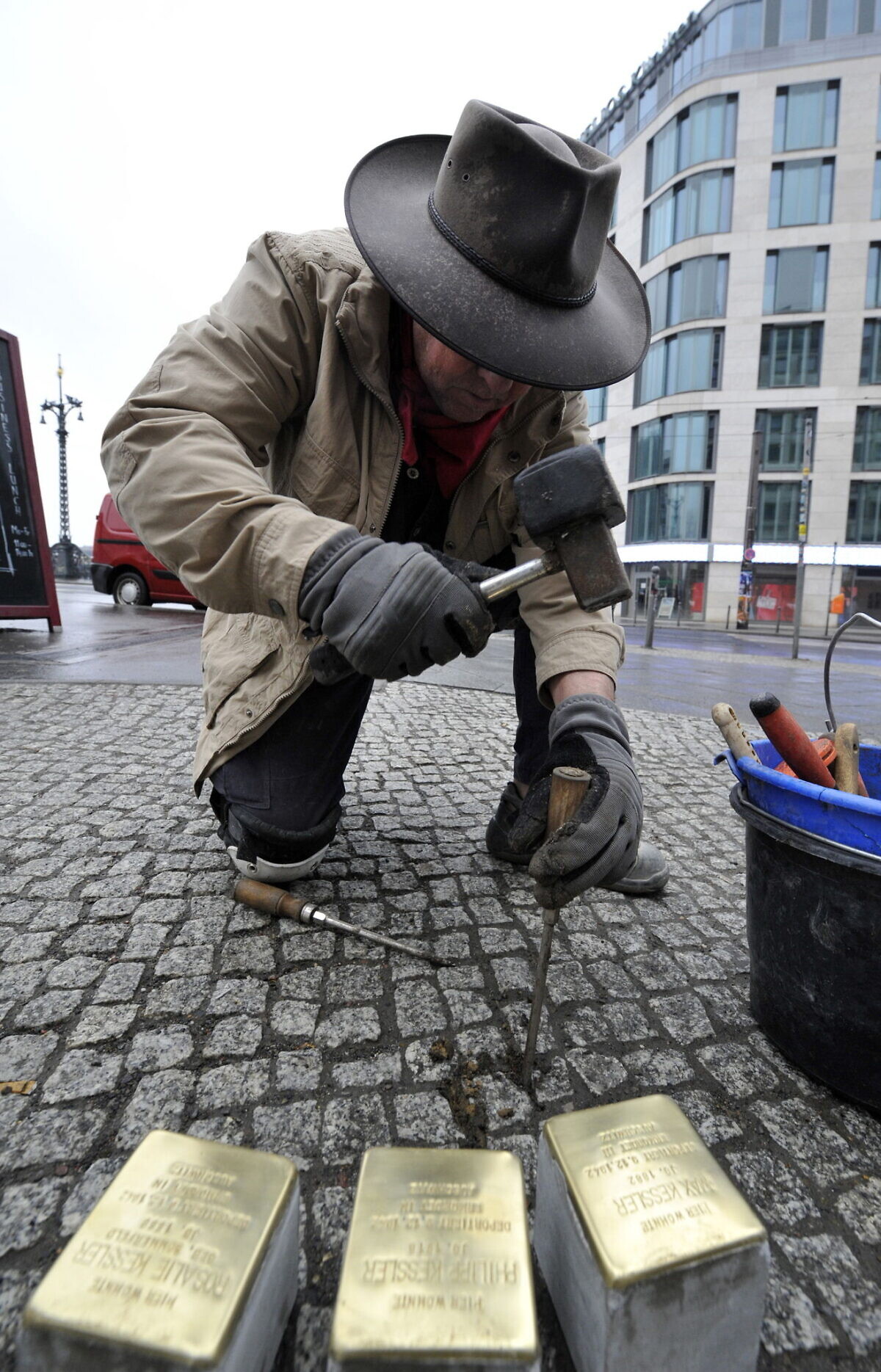
Here Lived follows Demnig as he installs the stones himself — measuring, kneeling, setting each one by hand. He insists on individual research for every name and, wherever possible, carries out the installation personally. Now 78 years old, Demnig was born in Berlin in 1947 and lives and works in Hesse in Germany, though the film shows that he is always moving because since laying the first stone, he continues to travel across Europe, installing Stolpersteine with the same methodical care.
What began in Cologne has grown into the largest memorial project in the world. Stolpersteine can now be found across Germany, Austria, the Netherlands, Belgium, France, Italy, the Czech Republic, Poland, Hungary, Norway and Denmark, among other countries. Cities including Berlin, Vienna, Prague, Amsterdam, Paris, Rome and Budapest carry them in their pavements. Despite the scale of the project, each stone remains resolutely individual, tied to one person and one address.
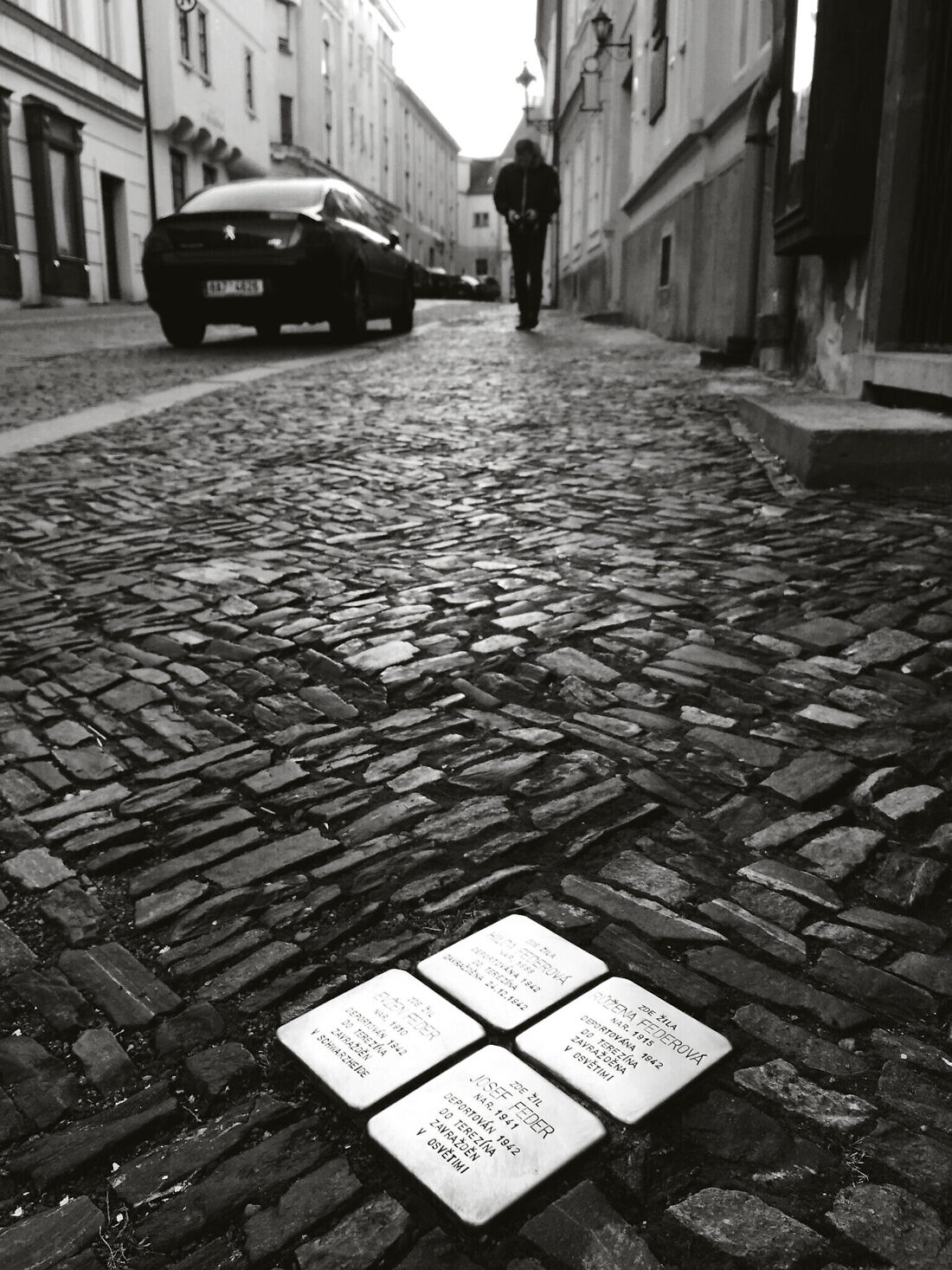 The documentary does not ignore controversy. Some municipalities objected to the idea of people walking over victims’ names. Demnig’s response is consistent: a name is not trampled when someone stops to read it. The act of noticing is the memorial. “A child asks a question that did not exist before the stone was placed,” says the artist. “I did not set out to build a continent-wide project. I began because something was missing — and because leaving that absence unmarked felt wrong.”
Here Lived: The Stolpersteine Story premiered in 2024 and has since screened through film festivals, museums, universities and Holocaust memorial institutions in Europe and the United States. It is available to stream on ChaiFlicks.com

Keep community journalism free.
Jewish News is free for everyone. No paywall. No barriers. Just trusted journalism for anyone who wants to stay connected to Jewish life in Britain.
If you value that, please support us.
From as little as £5 a month, you can help keep our journalism free and accessible to all.
Every day, we report on the issues that matter to our community. We celebrate achievements, support charities, challenge antisemitism and ensure Jewish voices are heard more widely.
From as little as £5 a month, you can help us continue to:
- Report on the stories shaping Jewish life in the UK and beyond
- Bring our community together through shared stories, events and campaigns
- Celebrate the people, culture and moments that define our community
- Support organisations doing vital work across Jewish Britain
You can make a one-off donation or become a regular supporter. Every contribution helps keep our journalism free, independent and accessible to all.
If everyone who values Jewish News gave a small amount, it would make a real difference to our future.





















