Prefer Jewish News on Google

Key stakeholders come together for landmark Lancaster House Conference on antisemitism
Jewish and non-Jewish representatives from multiple walks of life came together to discuss challenges, successes and next steps
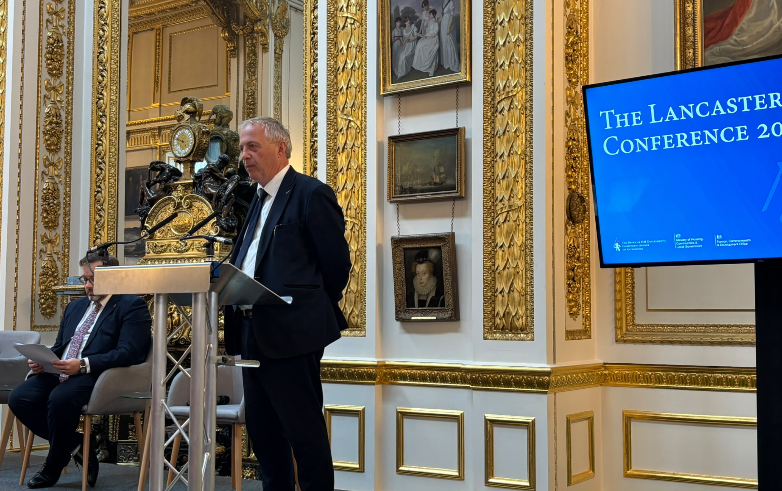
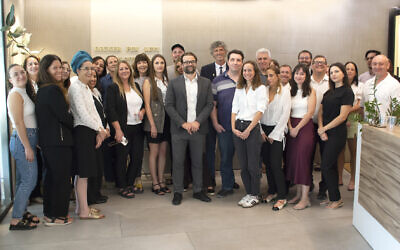
Hundreds of representatives from different societal sectors, including politics, healthcare, education, the arts and sport, came together for the 2026 Lancaster House Conference, to discuss the hurdles which antisemitism has placed in the path of British Jews, as well as ways to overcome such challenges.
Opening the conference, Lord Mann, its convenor, described how a significant number of government ministers had actively asked to attend the event, rather than him needing to request their presence.
“The Jewish community in Britain is feeling more isolated, ostracised and insecure than before”, the government’s independent advisor on antisemitism told those present, going on to say that “it’s not my prerogative to care how you’re Jewish. I don’t care what kind of Synagogues you go to, whether you eat kosher, I don’t care what your views are on the Middle East. What I care about is that you individually, or your family as a group, can be yourselves, with no negatives.”
Lord Mann went on to describe how “a 16 year old Jewish boy or girl in this country has to be able to be themselves…can they play or watch sport, go to a festival, concert or play with no hassle…when they enter the workforce, can they expect their employer to create an environment where they feel welcome.”
Antisemitism, Lord Mann said, “is anti-Jewish racism…the vast majority of people in this country don’t like antisemitism, but they don’t always understand what it is.”


Following on from the Peer, Chris Elmore MP, Under-Secretary of State in the Foreign Office, thanked both Lord Mann and the Antisemitism Policy Trust for helping to organise the event. He described how “when Jewish people fear that they have to hide who they are, that should concern all of us…the responsibility to confront antisemitism belongs to all of us.”
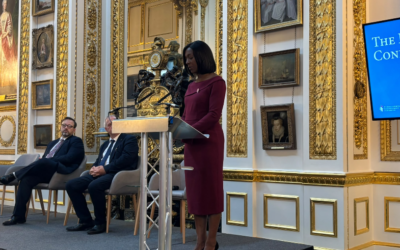
Florence Eshalomi MP, Minister of State in the Ministry of Housing, Communities and Local Government, echoed that sentiment, saying that “the oldest hatred wears different faces at many different times – what doesn’t change is our collective responsibility to confront it.
“Perpetrators of antisemitism will have nowhere to hide – we will back our wonderful Jewish community.”
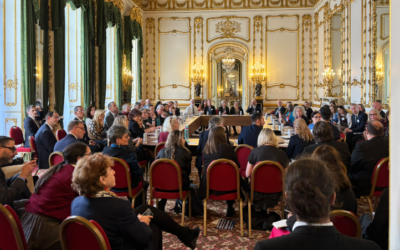
Multiple sessions took place throughout the day, with Jewish stakeholders describing their personal experiences, while senior representatives from the sectors key organisations listening and responding to what they heard.
In a session on combating antisemitism in the health sector, Health Minister Karin Smyth confirmed that “94 [NHS] trusts have so far agreed to adopt the IHRA [International Holocaust Remembrance Alliance] definition of antisemitism”, and that the government would continue to press the others to do so. With 207 NHS trusts in the UK, this means that 45% have so far adopted the definition. The Minister also confirmed that “we have today published in Parliament an update on the progress we are making” on the implementation of Lord Mann’s report on antisemitism in the NHS, which was published in June this year.
Dr Fiona Sim, chair of the Jewish Medical Association, described how since 7 October 2023, her organisations has needed to make “hundreds of complaints” regarding antisemitism in healthcare.
“I have submitted numerous complaints with an incredibly heavy heart because they are serious enough to merit action, but they are not handled in any way other than going to a regulator.”
Other participants described antisemitism experience in both hospital and GP settings. In the examples given by a Jewish NHS staffer with more than 30 years experience, the NHS trust in question consistently refused to properly escalate when she made complaints about experiences of unquestionable antisemitism, leading to mediation processes which went nowhere. Examples given within General Practice included a Jewish medical professional being told that she shouldn’t put a picture of family members wearing Jewish garb on her desk at work because “you’ll alienate our local community”, and a receptionist wearing a Star of David necklace receiving antisemitic abuse.
Phil Rosenberg, President of the Board of Deputies, summed up the general mood, saying that while he was proud of the Jewish healthcare professionals, he was “incredibly angry” at what they were experiencing – and how they were not being taken seriously.
“Institutions will have bad apples, and large institutions like the NHS and the healthcare sector and the social care sector will have lots of bad apples”, he said.
“But what we hear about the institutional response is institutions that are rotten to the core, and that makes me incredibly, incredibly angry.”
While he appreciated the government’s response, and individual engagement by certain trusts, others were sorely lacking.
“We can’t keep asking nicely”, he said.
“There comes a certain point at which there have to be consequences for a failure to deliver on these recommendations that the government has adopted…they need to know that just simply sort of passing on or only adopting or not implementing that’s not going to be accepted, and there will be consequences for it.”
Addressing all attendees in relation to the Culture sector, Lisa Nandy MP, Secretary of State for Culture, Media and Sport, described how “a football ground, a theatre, a concert hall, a gallery, a cricket club, a music festival – these are places where people who might otherwise never meet find themselves standing shoulder to shoulder, sharing experience, discovering a common language, and sometimes discovering that they have more in common than they ever imagined.
“At their best, these places do something extraordinary. They make belonging tangible, but belonging can be withdrawn. It can be denied, and when antisemitism is allowed to take hold, it tells Jewish people that the spaces that they have helped to build, to enrich, and to sustain are not really theirs, and that’s why I’m here today, and that’s why the responsibility resting on me and every single person in government and in this room matters so much.”
The Secretary of State went on to talk directly about how “recently we’ve had this what’s been called a controversy around Ed Sheeran and his decision to continue his tour, despite the decision of his promoters to remove a supporting act from that tour because of his expressions around Palestine and around Jews.
“Now, I want to be really clear: that wasn’t just an expression of support for Palestine. There were serious concerns about previous incidents of antisemitism that had occurred because of that artist, but I want to be clear with you as well that the reason that I got involved, that I stepped up and spoke out about that, is because these places and spaces matter.”
She cited a promise she made to Luciana Berger back during the years when Jeremy Corbyn was in charge of the party and Labour was grappling with a major antisemitism problem.
I said to her, ‘What can I do?’ And she said, ‘This cannot be our fight alone.’, the Secretary of State recounted.
“And I made her a promise that day that it wouldn’t be, and I want to make that promise and that commitment to you again today. That however difficult, however controversial, however much opposition there is, it doesn’t matter how hard. This is not your fight alone, because it matters to all of us.”
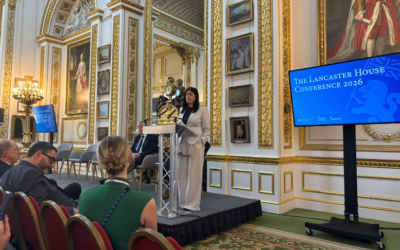
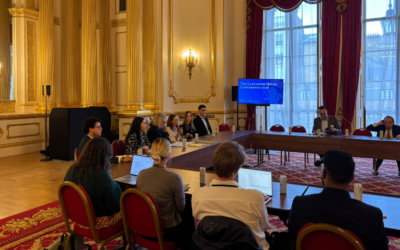
In an afternoon session led by the Union of Jewish Students and Baroness (Jacqui) Smith, Minister of State for Skills, Raphi Leon, President of UJS, praised what he described as “record levels of engagement within our program at UJS and the Jewish life on campuses over the last couple of years”. However, he also cited UJS’s recent “Time for Change” report, and the three key findings – that antisemitism has become normalised on campuses, that glorification of terrorism is prevalent and unpunished, and that protests disrupt all students, with universities having a clear mandate from students to take firmer action.
While the different students on the panel all described vibrant JSocs – from major centres of Jewish student life like Leeds to smaller hubs like Warwick – many of their experiences sounded similar.
In particular, there was a sense that Jewish students were being rejected from wider student life.
“There is so much potential from the Jewish community, there is so much that you can see from kind of young leaders, and so much that we can contribute to wider British life”, said Edgar, a former JSoc chair at Bristol.
“But where is that future if there is no kind of scope for inclusion?”
Another student described going “for a student society job interview, and someone from JSoc said to me before, ‘Don’t say you’re part of JSoc; you won’t get the job.’ And it’s because they know the person who’s running it has prejudice against people from JSoc.”
Emma Levy, a final year student at the University of Leeds, was catapulted into the centre of an antisemitism storm in her first year, when she led the campus JSoc. Weeks after 7 October, antisemitic graffiti was daubed on the Hillel house, which “really sent shockwaves, not just throughout the Leeds community, but honestly the British Jewish community.”
She described how “a professor leaked the address of our Jewish Society House through Palestinian group chat, encouraging students to protest outside”. When she called that out, she said, the professor in question “launched an investigation against me after this, and he also started a petition against me, saying Emma Levy, on behalf of Leeds JSoc, is forcing the university to fire him just because he’s pro-Palestinian, and kind of framing.
“At the time I was I was 19”, she said.
“I was a teenager, a first year uni student and he framed me as having this all powerful Zionist control over the university. There was a long and difficult investigation – I didn’t know if I was going to be expelled, it was really scary and it’s really challenging but eventually the university did do the right thing, and he effectively was fired.”
She urged university administrators present to do more to protect Jewish students.
“My message is quite simple”, she said. I would really just urge everyone in higher education to have the courage to stick your head above the parapet, because that’s what we’ve all been forced to do. Age 18, 19, 20, just by virtue of being Jewish on campus.
“You know, it’s not our job as students. We go to university to get an education, have a good time, and then we have this antisemitism thing as well. This isn’t just about the Jews, you know. I think antisemitism is an attack on democracy, on tolerance, and other values that we all hold dear. So please, just be brave.”

Keep community journalism free.
Jewish News is free for everyone. No paywall. No barriers. Just trusted journalism for anyone who wants to stay connected to Jewish life in Britain.
If you value that, please support us.
From as little as £5 a month, you can help keep our journalism free and accessible to all.
Every day, we report on the issues that matter to our community. We celebrate achievements, support charities, challenge antisemitism and ensure Jewish voices are heard more widely.
From as little as £5 a month, you can help us continue to:
- Report on the stories shaping Jewish life in the UK and beyond
- Bring our community together through shared stories, events and campaigns
- Celebrate the people, culture and moments that define our community
- Support organisations doing vital work across Jewish Britain
You can make a one-off donation or become a regular supporter. Every contribution helps keep our journalism free, independent and accessible to all.
If everyone who values Jewish News gave a small amount, it would make a real difference to our future.