Prefer Jewish News on Google
Lapid blasts Netanyahu over ceasefire: ‘There’s never been such a diplomatic disaster’
Israeli PM insists truce does not prevent fighting against Hezbollah forces in Lebanon
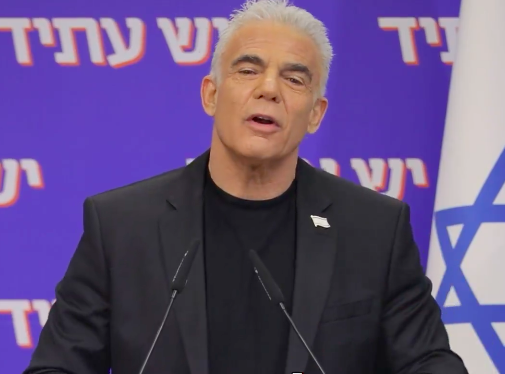
Israeli opposition leader Yair Lapid has sharply criticised Prime Minister Benjamin Netanyahu over the Iran ceasefire, insisting: “There has never been such a diplomatic disaster in all our history.”
After confirmation that the United States and Tehran had agreed to a two-week truce on Tuesday, Lapid said: “Israel wasn’t even at the table when decisions were made concerning the core of our national security.”
Defending the role played by Israel’s military in the war that began in February — which had “carried out everything it was asked to do” — Lapid said that while citizens in the Jewish state had “shown remarkable resilience”, Netanyahu had “failed diplomatically, failed strategically and did not meet any of the goals he himself set.”
Before the decision to halt the war, Donald Trump had warned on his Truth Social platform that “a whole civilisation will die” if safe passage through the region’s waterways was not restored, threatening to ramp up his offensive.
However, Trump and Iran’s Supreme National Security Council confirmed a two-week truce less than two hours before the US’s deadline, with shipping allowed through the Strait of Hormuz.


Israel’s position on the fragile ceasefire was initially unclear, with some officials immediately raising concerns about the deal.
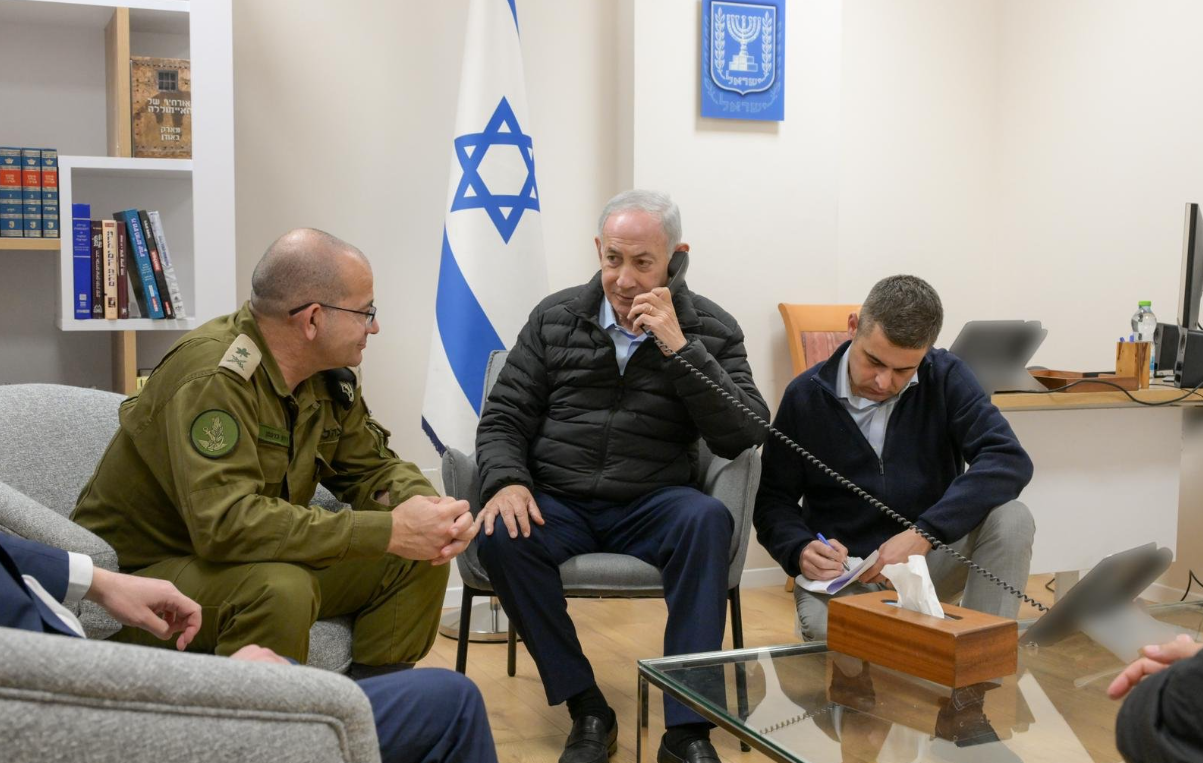
Netanyahu later issued a statement saying he supported the US decision to suspend attacks against Iran for two weeks, but insisted the ceasefire did not include fighting against Hezbollah forces in Lebanon.
Netanyahu’s confirmation that he had agreed to the ceasefire immediately sparked criticism at home.
Many pointed to the fact that Iran’s uranium stockpile had not been diminished and that the prospect of the regime producing nuclear weapons remained unaddressed. Iran was also permitted to expand its control of the Strait as part of the ceasefire agreement.
But supporters of the Israeli PM pointed to clear wins for Netanyahu.
Iran’s military industrial complex is seriously degraded, its regional influence diminished, and an ayatollah and other senior leaders have been killed.
Israel also renewed an evacuation order for an area more than 40 km inside Lebanon, saying “the battle in Lebanon is ongoing”.
Minutes after Trump announced the suspension of attacks and declared readiness for a ceasefire, Israel’s military warned that Iran had fired missiles toward it, with some breaching air defences over Tel Aviv.
Pakistan’s Prime Minister Shehbaz Sharif said the ceasefire extended to Lebanon, after his country played a leading role in brokering negotiations between Washington and Tehran.
Iran’s Supreme National Security Council confirmed it had agreed to a two-week truce, with further negotiations scheduled to take place in Islamabad on Friday.
Iran released two different versions of the 10-point plan intended to be the basis for negotiations, and which Trump said was a “workable basis on which to negotiate”.
A version released in Farsi, included the phrase “acceptance of enrichment” for Tehran’s nuclear program.
That phrase was missing in English versions shared by Iranian diplomats to journalists.
Iran’s opening position for negotiations — which Trump had previously called “workable” — included retaining control of the Strait of Hormuz and the complete withdrawal of all US military forces from the region.
Trump — who faced mounting criticism at home, including from key supporters, over the decision to enter the war — claimed the provisional ceasefire with Iran was a “total and complete victory” and said the issue of uranium would be “perfectly taken care of.”
Earlier reports suggested China had encouraged Tehran to agree to a ceasefire.
The announcement came soon after Russia and China vetoed a UN Security Council resolution aimed at reopening the Strait of Hormuz — blocking the body from authorising the use of force to reopen the crucial waterway through which one-fifth of the world’s oil passes.
The markets reacted positively to the announcement of the ceasefire.
In the UK on Wednesday the FTSE 100 rose sharply, with airline, housing and mining shares gaining while energy shares fell.
Downing Street confirmed that Keir Starmer was visiting the region to hold talks on “practical efforts” to restore freedom of navigation in the Strait of Hormuz.
The Prime Minister welcomed the ceasefire agreed between the US and Iran, saying it would “bring a moment of relief to the region and the world”.
He added: “Together with our partners we must do all we can to support and sustain this ceasefire, turn it into a lasting agreement and re-open the Strait of Hormuz.”
France’s President Macron welcomed the ceasefire calling the agreement a “very good thing”, but said the halt in hostilities should include the war in Lebanon as well.

Keep community journalism free.
Jewish News is free for everyone. No paywall. No barriers. Just trusted journalism for anyone who wants to stay connected to Jewish life in Britain.
If you value that, please support us.
From as little as £5 a month, you can help keep our journalism free and accessible to all.
Every day, we report on the issues that matter to our community. We celebrate achievements, support charities, challenge antisemitism and ensure Jewish voices are heard more widely.
From as little as £5 a month, you can help us continue to:
- Report on the stories shaping Jewish life in the UK and beyond
- Bring our community together through shared stories, events and campaigns
- Celebrate the people, culture and moments that define our community
- Support organisations doing vital work across Jewish Britain
You can make a one-off donation or become a regular supporter. Every contribution helps keep our journalism free, independent and accessible to all.
If everyone who values Jewish News gave a small amount, it would make a real difference to our future.