LIVE UPDATES: 80th anniversary of the liberation of Auschwitz

We are live all day as the King travels to Poland to mark the 80th anniversary of liberation

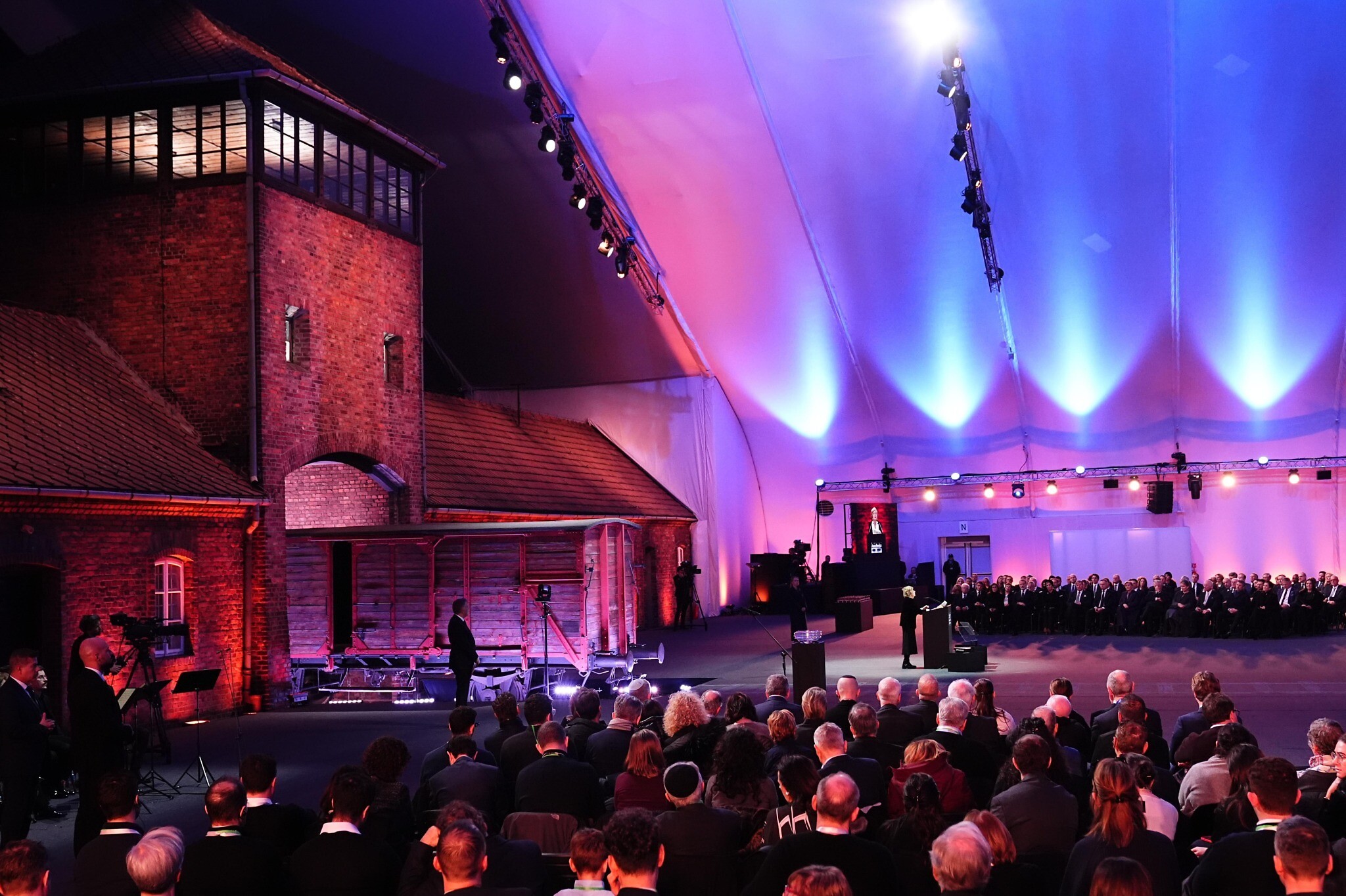
2S9RTJA Auschwitz survivor Tova Friedman speaks during commemorations at Auschwitz-Birkenau in Poland to mark 80 years since the liberation of the concentration camp on 27th January 1945. Picture date: Monday January 27, 2025.

Survivor Nova Friedman: I speak for the children

Speaking at a commemoration event from Auschwitz, Nova Friedman said she spoke for the children and told the guests she was six years old when she was liberated from the Nazi death camp.

She described her journey to the concentration camp: “Hungry, thirsty and very terrified I held on tightly to my mother’s hand in the dark cattle car for countless hours while the cries and the prayers of so many desperate women permeated my soul and haunt me to this day.

“Finally, we arrived at Auschwitz, a gloomy Sunday with a sky obscured by smoke and a terrible stink hung in the air, and there were rows and rows of naked women all around me.”

During her time in the camp she thought it was “normal” to die if you were a Jewish child.

She went on to urge the guests: “We all, all of us, must reawaken our collective conscious to transform this violence, anger, hatred and malignancy, that has so powerfully gripped our society, into a humane and just world. Before this terrible, terrible negative forces will destroy us all.”

Next generation must learn of ‘catastrophic moral failure’ of Holocaust – Lammy

The next generation must not be allowed to focus on online “clickbait” and ignore the grim lessons of the Holocaust, David Lammy said.

The Foreign Secretary said youngsters needed to understand “how the seeds of such a catastrophe are still around us”.

Speaking at a reception co-hosted by the Israeli embassy in the UK, Mr Lammy said: “‘Never again’ is a solemn promise which we owe to the victims, but also which we must uphold for our own sake, and for the sake of future generations.

“We need Holocaust remembrance. Holocaust education. Action against antisemitism – it is how we build a better future for us all together.”

At the event in the Foreign Office he highlighted a digital exhibition featuring 80 objects from filmed testimonies of British Holocaust survivors and refugees, presented as 80 individual social media posts.

King Charles: ‘The responsibility of remembrance rests heavy on our shoulders’

After meeting members of Krakow’s Jewish Community, the King gave a speech and told the guests to be in Poland to mark 80 years since the liberation of Auschwitz was “sombre and indeed a sacred moment”.

He went on to say: “It is a moment when we recall the depths to which humanity can sink when evil is allowed to flourish, ignored for too long by the world.

“And it is a moment when we recall the powerful testimonies of survivors such as Lily Ebert, who so sadly passed away in October, and who collectively taught us to cherish our freedom, to challenge prejudice and never to be a bystander in the face of violence and hate.”

He added those lessons could not be more important in a world that has seen the “dangerous re-emergence of antisemitism” and remains “full of turmoil and strife”.

The King said: “As the number of Holocaust survivors regrettably diminishes with the passage of time, the responsibility of remembrance rests far heavier on our shoulders, and on those of generations yet unborn.

“The act of remembering the evils of the past remains a vital task and in so doing, we inform our present and shape our future.”

Kate to attend Holocaust Memorial Day event with William in London

The Princess of Wales will join her husband to attend official commemorations to mark Holocaust Memorial Day.

William and Kate will pay their respects at a service in London on the 80th anniversary of the liberation of Auschwitz on Monday.

Prime Minister Sir Keir Starmer is also expected to attend and speak at the service, along with faith and civic leaders and survivors of the Holocaust and more recent genocides.

The annual event remembers the six million Jewish people murdered during the Holocaust, as well as the millions of other people killed under Nazi persecution and those who died in subsequent genocides.

Both the prince and princess, then the Duke and Duchess of Cambridge, attended a service marking the 75th anniversary in 2020, while Kate also took photographs of Holocaust survivors at Kensington Palace.

Kate, 43, made a surprise return to public appearances earlier this month when she gave thanks to medical teams at The Royal Marsden hospital in London, where she received her cancer treatment.

She later said it was “a relief to now be in remission” and that she was “looking forward to a fulfilling year ahead”.

The Holocaust Memorial Day Trust has encouraged people across the UK to join in a ‘national moment’ by lighting candles and placing them in their windows at 8pm on Monday.

Famous buildings and landmarks will also be lit purple as a show of solidarity.

The King has travelled to Auschwitz in Poland for the anniversary, where he will join survivors and other dignitaries at the site of the former concentration camp for his own service.

Deputy First Minister criticises Higgins over Gaza comments at Holocaust event

Northern Ireland’s deputy First Minister has criticised Irish president Michael D Higgins for raising the ongoing conflict in Gaza during his speech to an annual Holocaust memorial event in Dublin.

Emma Little-Pengelly said the Republic’s president was “absolutely wrong” to raise the issues, accusing him of “politicising” the event.

Protesters were removed from the memorial event during an address by Mr Higgins on Sunday.

A number of people objected to the invitation to Mr Higgins to deliver the keynote address to the National Holocaust Memorial Day commemoration in Dublin.

Survivors of the Holocaust were among the audience who gathered at the Mansion House for the event which included readings, survivors’ recollections and a recitation of the Scroll of Names featuring relatives and ancestors of Irish residents who died in the Holocaust.

As Mr Higgins spoke about the events that unfolded on October 7 2023, when Hamas attacked in southern Israel leading to the conflict in Gaza, a small number of people stood up and and turned their backs to the stage and were removed by security.

Asked about Mr Higgins’ speech, Ms Little-Pengelly told reporters in Belfast: “I believe that President Higgins was absolutely wrong to raise these issues at that event.

“President Higgins has many opportunities to talk about these issues, and indeed, he has taken up those opportunities.

“But Holocaust Memorial Day, which it is today, is a time for a sombre reflection upon the loss of six million Jewish people in the Holocaust.

“I understand that the request was made of him not to politicise that event. No one should be politicising those events or causing any further hurt or discomfort.

“So I believe that he was wrong to say what he said at that place. It was the wrong place and the wrong thing to say.

“There were plenty of other opportunities that he had, and he ought not to have done that at that event.”

King visits Jewish community in Krakow ahead of Auschwitz commemorations

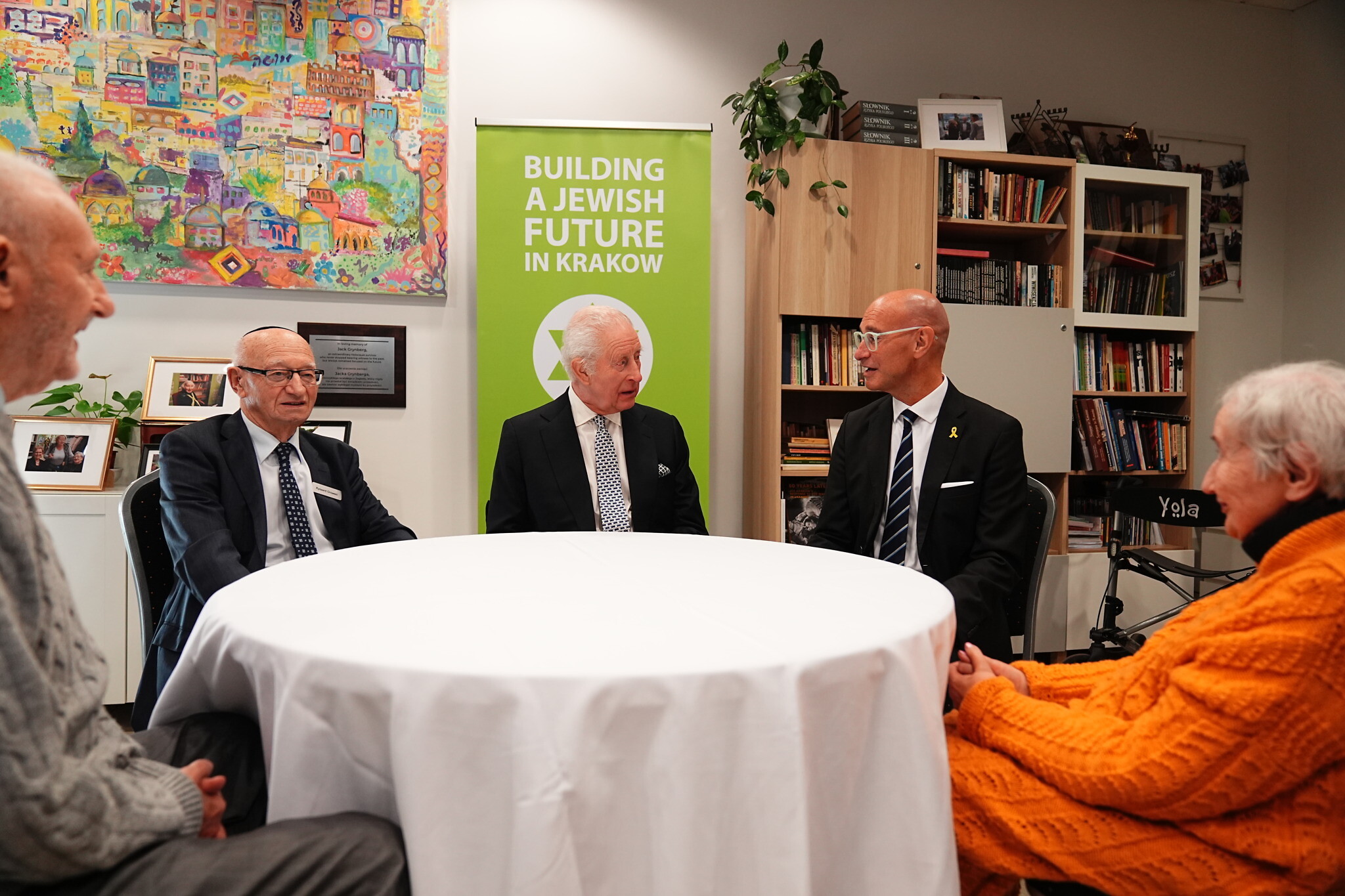
King Charles III (centre) during his visit the Jewish Community Centre (JCC) Krakow, to meet Holocaust survivors and hear from volunteers and members about the centre's support for people of all ages and backgrounds as part of its mission to rebuild Jewish life in the city.

The King visited the heart of Krakow’s Jewish community as commemorations began marking the 80th anniversary of the liberation of the former Nazi death camp Auschwitz-Birkenau.

Heads of state and world leaders will gather at the site later to remember those who perished at the hands of the Nazi regime.

Ahead of the ceremony, Charles met Holocaust survivors at the Jewish Community Centre (JCC) Krakow he opened in 2008 and greeted dozens of well-wishers outside the building.

Some people held out their hands for the King to shake, while others held up their smartphones to capture his visit.

During a Buckingham Palace event earlier this month to mark Holocaust Memorial Day, held annually on the day Auschwitz – which was in German-occupied Poland – was liberated, the King said: “I feel I must go for the 80th anniversary, (it’s) so important.”

Commemorations at the former death camp began earlier when Poland’s president Andrzej Duda joined Auschwitz survivors laying wreaths and candles at the site.

Their tributes were left at a reconstruction of the Death Wall, the site where several thousand people, mainly Polish political prisoners, were executed.

In a speech, Mr Duda said “we Poles are the guardians of memory today” and had a duty to maintain the life stories of the survivors.

More than a million people, mostly Jews but also Poles, Soviet prisoners of war and other nationalities, were murdered by the Nazis at Auschwitz-Birkenau during the Second World War as part of the Holocaust in which six million Jewish men, women and children were killed.

The camp was liberated by soldiers of the 60th Army of the First Ukrainian Front who opened the gates on January 27 1945.

The ceremony will be held in front of the gates of the former Nazi death camp which had the words Arbeit Macht Frei – work sets you free – above it.

Auschwitz survivors will address the invited guests who are expected to include France’s president Emmanuel Macron, German chancellor Olaf Scholz, King Willem-Alexander and Queen Maxima of the Netherlands and Spain’s King Philip VI and Queen Letizia.

Ukrainian president Volodymyr Zelensky has also been confirmed as attending.

Deputy PM of Ireland defends Higgins’ decision to raise Gaza in Holocaust speech

Simon Harris said that while people have a right to protest, the president has been “very clear” in calling out the horrors of the Holocaust.

“I think it was important that the president of Ireland attended the event yesterday. I think it’s the seventh time he has attended the event, and this is always an event carried out with great solemnity and sensitivity,” Mr Harris said on Monday.

“I believe yesterday’s event was a very moving occasion, obviously for survivors and their families, most particularly, and Minister (Paschal) Donohoe was there on behalf of the government.

“I understand there were a small number of people who protested, and of course people have a right to protest, but I think the president was very clear, as is the government, as are the people of Ireland, in calling out the horrors of the Holocaust and making sure we remember that we record that, that we acknowledge that each year, and of course, people have a right to protest.”

Asked whether he believed it was appropriate for the president to raise the issues in Gaza during his speech about the Holocaust, Mr Harris said: “I think the president was very clear in relation to, obviously specific issues regarding the Holocaust and his absolute condemnation of the horror, the murder of the Jewish people, but also, I think, rightly mentioning the situation in the Middle East as well.

“Also calling very much for hostages to be released. I am conscious, though, that this is a very, very sensitive time, and I don’t want to say anything to distract from that.

“Today is the 80th anniversary of the liberation of Auschwitz, today is International Holocaust Memorial Day. I think it’s really important that we keep the focus on that.”

OPINION: Can humanity truly learn from the past?

The chief executive of the Holocaust Memorial Day Trust on why the fight for a better world is a marathon, not a sprint. READ HERE

OPINON: 80 years on, the weight of memory grows heavier

The Holocaust Educational Trust’s chief executive Karen Pollock writes from today’s memorial at the infamous death camp. READ HERE

Sadiq Khan: ‘Vital need for Holocaust education could not be stronger’

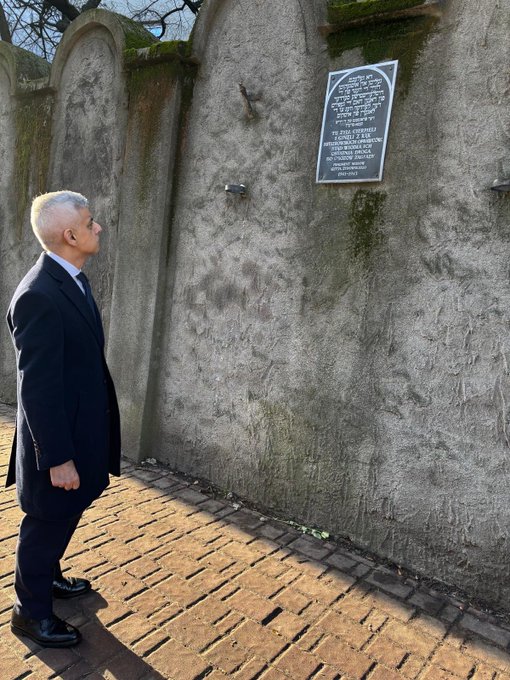
The mayor of London, who is in Krakow, has spoken to our political editor Lee Harpin. Interview to follow later today…

Princess Royal pays tribute to man who fled Nazi regime and founded Scottish school

The Princess Royal has paid tribute to the founder of an independent boarding school who fled his home country of Germany to escape the Holocaust.

Gordonstoun founder Kurt Hahn, a German Jew, fled his homeland to Moray in 1933 after speaking out about the Nazis’ rise to power.

He would soon settle in Moray and founded the school in 1934 – where the late Prince Philip, Duke of Edinburgh, was one of the first students.

On Sunday, a plaque by the Association of Jewish Refugees (AJR) was unveiled at a special service at the school, also marking Holocaust Memorial Day.

Association of Jewish Refugees (AJR) second generation member Michael Flesch unveiled the plaque.

He was a student at Gordonstoun, and his father was at Salem School in Southern Germany, where Mr Hahn was headmaster before fleeing to Scotland.

In a letter, the Princess Royal said: “This plaque will be a permanent monument, informing students, teachers and visitors of Kurt Hahn’s bravery and accomplishments.

“It will serve as a reminder of how it came to be that Hahn came here to Gordonstoun, and also serves as a warning of what happens when a society succumbs to the dangers of indifference in the face of extremism and racial hatred.

“My late father, the Duke of Edinburgh, thrived during his time here and counted Kurt Hahn as a personal friend, having already benefited from his wisdom in the formative years in Germany.

“I am sure that he would have deeply approved of this unveiling.”

This year marks the 80th anniversary of the liberation of Auschwitz-Birkenau, the largest Nazi concentration camp complex. It also marks the 30th anniversary of the Bosnian genocide.

Gordonstoun Principal Peter Green said: “Our founder Kurt Hahn showed immense courage in publicly standing up to the Nazi party in the face of extreme adversity.

“Without his selfless determination, Gordonstoun would not exist today. We owe Hahn an eternal debt of gratitude for his vision in setting up a school with an educational philosophy focused on service and compassion.

“Hahn was ahead of his time in his thinking and today his memory lives on through the achievements of our wonderful students with their passion and instinct to help others, whether it’s in the local community or further afield.

Protesters removed as Irish President talks of Gaza at Holocaust memorial event

Screenshot
Screenshot

Protesters have been removed from a Holocaust memorial event during an address by Irish President Michael D Higgins.

It comes after some objected to the invitation to Mr Higgins to deliver the keynote address to the National Holocaust Memorial Day commemoration in Dublin on Sunday.

Survivors of the Holocaust were among the audience who gathered at the Mansion House for the event which included readings, survivors’ recollections and a recitation of the Scroll of Names featuring relatives and ancestors of Irish residents who died in the Holocaust.

But some had objected to Mr Higgins over recent remarks he made about the conflict in Gaza.

Tom O’Dowd, chairman of Holocaust Education Ireland, which organised the event, said some Jewish people were critical of this year’s invite, but others supported Mr Higgin’s seventh address to the annual commemoration.

The president emphasised the importance of education in his address to prevent another such atrocity from happening.

He also addressed the current conflict in the Middle East.

During that section of the speech, a small number of protesters reportedly turned their backs on Mr Higgins and were removed by security.

Access to the event had been limited to very few media outlets, but voices could be heard during that section of the speech in a livestream as Mr Higgins referenced the ceasefire agreement in Gaza, describing it as long overdue and that a heavy price had been paid for it.

The Irish president continued: “The grief inflicted on families by the horrific acts of October 7, and the response to it, are unimaginable. The loss of civilian life, their displacement, loss of homes and necessary institutions for life itself.

“The current agreement must end the killing, but as a matter of urgency deliver the massive scale-up in humanitarian aid which is urgently needed to save more lives. It is important that all remaining hostages are released and that all phases of the agreement are fully implemented.

“It is to be hoped that the agreement will not only bring an end to the horrific loss of life and destruction but that it will also mark the beginning of the meaningful discussions, the sustained diplomatic initiatives, which have been missing from the international community, with tragic consequences, and that it will commence a meaningful peace and security to Israel, Palestine and the greater region.”

Earlier during his keynote address Mr Higgins said the Holocaust is a foundational space, important for all of humanity.

“What people could see at the opening of the gates of Auschwitz-Birkenau was not only the dead, the emaciated, they were confront with the consequences of something that had a complex design and history, a cruelty aimed at the extermination of the Jewish population of Europe… and with them were included other categories, the disabled, Romani, those of same sexual orientation, all defined as an other, to be eliminated,” he said.

“It is important that all in each generation and political leaders are made acutely aware of not just the consequences of an attempted genocide but of the complicit actions of silence or the averted gaze of those who, by their indifference, allowed the Holocaust to be planned, prepared and to occur.”

Mr Higgins emphasised the importance of education in ethical remembrance of the Holocaust.

“It is education that can play a critical role in ensuring not only that an atrocity like the Holocaust never happens again but a basis of building a peaceful future can be made possible,” he said.

“That is why the work of Holocaust Education Ireland is so important, playing as it does a crucial role in ensuring that Ireland abides by its commitments under the 2000 Stockholm Declaration to counter antisemitism, Holocaust denial, distortion of the Holocaust facts, and xenophobia and racism in as many insidious guises through the provision of accurate comprehensive information about prejudice, discrimination, hate speech and misinformation.”

He said humanity needs to build a peaceful mindset, rather than one of war.

“It will be difficult work, but we must co-operate to envisage and deliver peace,” he said, praising Israeli and Palestinian peace activists.

“Ethical remembrance is an important resource but ethical remembrance must actively take the responsibility of addressing the sources that are seeking to stoke old divisions and bitterness.”


Holocaust survivor calls for tolerance because ‘we all come from same family’

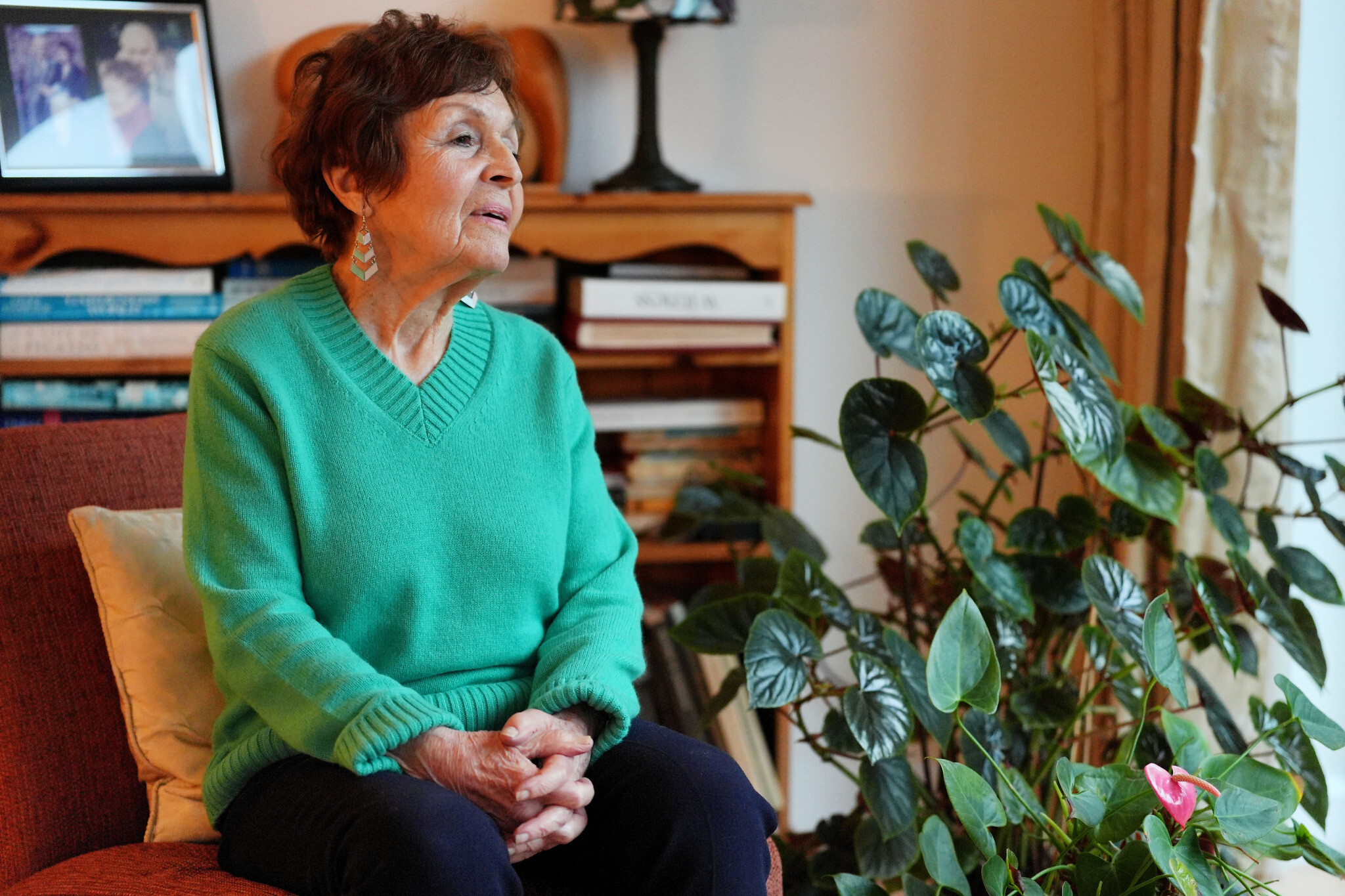
Holocaust survivor Janine Webber in her north London home during an interview with the PA news agency ahead of Holocaust Memorial Day. Picture date: Thursday January 16, 2025. PA Photo. See PA story MEMORIAL Holocaust Webber. Photo credit should read: Jonathan Brady/PA Wire

A Holocaust survivor has stressed the importance of being tolerant towards minority groups, saying all people “come from the same family”.

Janine Webber, 92, hid under a wardrobe with her family before working as a shepherdess and living in a convent under a false identity to avoid Nazi persecution during the Second World War.

She also lost both of her parents within months of each other by the age of nine.

Now an experienced public speaker, Ms Webber, who lives in north-east London, said she was unable to talk about her story for 50 years and only decided to share her experience after encouragement from her own children.

She told the PA news agency: “In 1996, my son said my story ought to be known. I was interviewed and filmed for a foundation.

“When I was interviewed for the first time I told my story in total. I could not stop crying.”

Born in Lviv, Poland, now in modern-day Ukraine, in 1932, Ms Webber was living in the city when Germany invaded the region, then occupied by the USSR, in June 1941.

Thousands of people were murdered within weeks of the invasion as Jewish communities in the city were immediately targeted.

Ms Webber said: “My first experience seeing the Nazis, what we used to call the Gestapo, was when I was in our flat with my mother and brother.

“They were rounding up the Jewish men and my father came running in. He said ‘The German’s after me’, and he jumped from our second floor balcony to escape being taken.

“I saw these armed police and I became very frightened.”

Ms Webber and her family were initially forced from their home to live in a single small room on the edge of Lviv, where she said they “hid in the closet in this hole under the ground” during German raids.

They were then moved into a ghetto where her mother fell ill and died of typhus at just 29.

After a series of failed attempts to lay low and hide with farming families in the Polish countryside, Ms Webber returned to Lviv and took refuge with her aunt, uncle and a group of other Jewish people in a convent.

Reflecting on the time, she said: “My story is a little different because I was never in a camp.

“I was moving because I wanted to improve my life.”

With the situation becoming more dangerous and the group now staying in an underground bunker, Ms Webber obtained false identity papers from her aunt and was sent to a second convent in Krakow, where she lived with a priest.

“The nuns prayed several times a day. I did not know the prayers, so I was worried they would find out (my true identity),” she said.

“It seemed very easy to lie because I wanted to live. When it is a question of life and death, one can lie.”

Ms Webber remained in Krakow until the city was liberated in early 1945, going on to work as a maid while living with an elderly couple.

She said a Nazi officer had spent the night at their home in the days before the liberation.

Reunited with her aunt after the war, they moved to Paris where Ms Webber was put in a children’s home.

“They didn’t want us to talk about the war.

“The people in charge (of the home) were Jews, but they wanted us to forget.”

In 1956 Ms Webber came to the UK to improve her English, before she met her husband in a “very banal story”.

She went on to marry a second time and have two sons and two grandsons.

Ms Webber has been giving talks on her experiences to schools and businesses for more than 20 years with the Holocaust Educational Trust, in an effort to ensure the events of the Holocaust are never repeated and to remember her family and other Jewish people caught up in the atrocities.

She is due to speak at the Israeli embassy, Foreign Office and Southampton University on Holocaust Memorial Day on Monday, with this year marking the 80th anniversary of the event.

Asked what the day means to her, Ms Webber said: “It means to respect people.

“My message is always to be tolerant towards the minorities, to respect and be kind to people even if they look different, speak differently or have a different religion or different colour of skin.

“I hope that people will give this message.”

She added: “We are all human beings. We all come from the same family.”

Just 50 Holocaust survivors will be at Auschwitz for 80th anniversary

Twenty years ago, about 1,000 survivors attended commemoration ceremonies at the site, in bitter cold. Now, that is the total number of Auschwitz survivors alive worldwide, according to an estimate by the Claims Conference, which negotiates restitution for survivors and recently launched a campaign featuring messages from 80 of them. (The group found last year that there were fewer than 250,000 survivors alive globally.) Most are in their 90s, and relatively few are able to make the trip.

Holocaust survivor calls for tolerance because ‘we all come from same family’

Holocaust survivor Janine Webber in her north London home during an interview with the PA news agency ahead of Holocaust Memorial Day. Picture date: Thursday January 16, 2025. PA Photo. See PA story MEMORIAL Holocaust Webber. Photo credit should read: Jonathan Brady/PA Wire

A Holocaust survivor has stressed the importance of being tolerant towards minority groups, saying all people “come from the same family”.

Janine Webber, 92, hid under a wardrobe with her family before working as a shepherdess and living in a convent under a false identity to avoid Nazi persecution during the Second World War.

She also lost both of her parents within months of each other by the age of nine.

Now an experienced public speaker, Ms Webber, who lives in north-east London, said she was unable to talk about her story for 50 years and only decided to share her experience after encouragement from her own children.

She told the PA news agency: “In 1996, my son said my story ought to be known. I was interviewed and filmed for a foundation.

“When I was interviewed for the first time I told my story in total. I could not stop crying.”

Born in Lviv, Poland, now in modern-day Ukraine, in 1932, Ms Webber was living in the city when Germany invaded the region, then occupied by the USSR, in June 1941.

Thousands of people were murdered within weeks of the invasion as Jewish communities in the city were immediately targeted.

Ms Webber said: “My first experience seeing the Nazis, what we used to call the Gestapo, was when I was in our flat with my mother and brother.

“They were rounding up the Jewish men and my father came running in. He said ‘The German’s after me’, and he jumped from our second floor balcony to escape being taken.

“I saw these armed police and I became very frightened.”

Ms Webber and her family were initially forced from their home to live in a single small room on the edge of Lviv, where she said they “hid in the closet in this hole under the ground” during German raids.

They were then moved into a ghetto where her mother fell ill and died of typhus at just 29.

After a series of failed attempts to lay low and hide with farming families in the Polish countryside, Ms Webber returned to Lviv and took refuge with her aunt, uncle and a group of other Jewish people in a convent.

Reflecting on the time, she said: “My story is a little different because I was never in a camp.

“I was moving because I wanted to improve my life.”

With the situation becoming more dangerous and the group now staying in an underground bunker, Ms Webber obtained false identity papers from her aunt and was sent to a second convent in Krakow, where she lived with a priest.

“The nuns prayed several times a day. I did not know the prayers, so I was worried they would find out (my true identity),” she said.

“It seemed very easy to lie because I wanted to live. When it is a question of life and death, one can lie.”

Ms Webber remained in Krakow until the city was liberated in early 1945, going on to work as a maid while living with an elderly couple.

She said a Nazi officer had spent the night at their home in the days before the liberation.

Reunited with her aunt after the war, they moved to Paris where Ms Webber was put in a children’s home.

“They didn’t want us to talk about the war.

“The people in charge (of the home) were Jews, but they wanted us to forget.”

In 1956 Ms Webber came to the UK to improve her English, before she met her husband in a “very banal story”.

She went on to marry a second time and have two sons and two grandsons.

Ms Webber has been giving talks on her experiences to schools and businesses for more than 20 years with the Holocaust Educational Trust, in an effort to ensure the events of the Holocaust are never repeated and to remember her family and other Jewish people caught up in the atrocities.

She is due to speak at the Israeli embassy, Foreign Office and Southampton University on Holocaust Memorial Day on Monday, with this year marking the 80th anniversary of the event.

Asked what the day means to her, Ms Webber said: “It means to respect people.

“My message is always to be tolerant towards the minorities, to respect and be kind to people even if they look different, speak differently or have a different religion or different colour of skin.

“I hope that people will give this message.”

She added: “We are all human beings. We all come from the same family.”