Prefer Jewish News on Google

Netanyahu’s Likud claims Arab parties “stole” Israeli elections after record turnout
Mansour Abbas of the Arab-Israel Ra'am party hits back, citing allegations that the Israeli Prime Minister 'employs Qatari agents in his office'
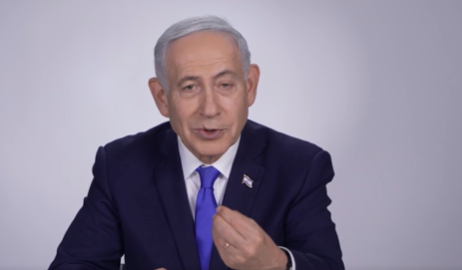
The chair of Israel’s Central Elections Committee has asked the country’s security services to look into allegations of “foreign interference” in this week’s general election, with Israeli Prime Minister Benjamin Netanyahu’s Likud party explicitly claiming that “the elections were stolen by Arab parties”.
Judge Noam Sohlberg, who also sits on Israel’s Supreme Court, confirmed on Thursday that he had asked the Shin Bet to look into allegations, saying that “serious suspicions have been brought to my attention regarding improper influence on the elections — exerted through funding provided by foreign entities acting against Israeli interests.
“While I cannot attest to the substance of these suspicions, it is my view that — given they involve foreign entities — there is an obligation to investigate them thoroughly.”
Although not all votes have yet been counted in the Israeli election, which took place on Tuesday, polling suggests that Arab parties are on course to take an unprecedented 17 or 18 seats in the Knesset, after far higher voter turnout was recorded.
In a statement from Likud, the right wing party claimed that “The elections in the State of Israel were stolen by Arab parties that support terrorism and the elimination of the Jewish state through serious criminal offenses of bribery, threats, violence, forgeries, and the use of prohibited software to mobilize voters.



“The Likud party is transferring to the police, the Shin Bet, and the Central Elections Committee hundreds of testimonies and pieces of evidence regarding election theft in many Arab polling stations—thousands of envelopes with cash and Ra’am notes, threats and violence against polling station members, multiple voting behind the curtain, voting under double identities, discrepancies between the number of envelopes and the number of voters, use of prohibited mobilization software, and more.
“We demand from the police and the Shin Bet a thorough investigation into the election theft by the Arab parties and the full prosecution of the criminals. We demand from the Central Elections Committee an immediate response to investigate these criminal offenses that have severely undermined the integrity of the elections in Israel and the election results. This is a severe blow to Israeli democracy and the voting rights of Israeli citizens. The law enforcement agencies must act with an iron fist and immediately.”
Posting on social media, Netanyahu himself referred to the allegations as “Ra’amgate”, citing supposed “foreign entities that interfered and bribed voters in favour of the Arab parties”, and going on to say that “after it was revealed that foreign entities tried to take over the Knesset, it is clear that no Zionist party should cooperate with Ra’am and the Joint List, replace the Knesset Speaker through votes bought for cash, and form a government that is dangerous to Israel.”
Responding to the claims as well as to the announcement from the Central Elections Committee, Mansour Abbas, chairman of the Arab-Israeli Ra’am party, said that “Ra’am welcomes the decision of the Chairman of the Central Elections Committee, Justice Noam Solberg, to investigate the suspicions of an attempt to improperly influence the elections through foreign funding. Preserving the purity of the elections and the rule of law is a civic and democratic duty that we have emblazoned on our flag.
“Ra’am has no connection whatsoever to the discussed affair or to other affairs, and we declare that we will fully cooperate with all law enforcement authorities to ascertain the truth.”
Abbas also took aim directly at Netanyahu, referring to him by his patronymic and citing his own words in response to allegations of foreign influence within the Israeli Prime Minister’s own office, saying:
“And to Abu Yair, who employs Qatari agents in his office, we have one message in response to the incitement and de-legitimization campaign he is conducting against Arab citizens: ‘There will be nothing, because there is nothing.’ Except that, unlike you, with us this is the truth and not another lie.”
Gadi Eisenkot, leader of the Yashar party, which is projected to win the second-most seats after Likud, also referenced the allegations of Qatari bribery within the Israeli Prime Minister’s office, writing that he “commend[ed] Netanyahu for finally condemning Qatari involvement in the State of Israel. Foreign involvement in the State of Israel is an unacceptable and gravely serious matter, especially when it involves a country that funds and supports the Hamas organization. This is grave when it happens in the Prime Minister’s Office and grave if it occurs in the election system. The Shin Bet must investigate the suspicions impartially, thoroughly, and immediately.”
Eisenkot, a former Chief of Staff of the IDF, went on to say that “Netanyahu, who has grown accustomed to dealing with reality through lies, consciousness engineering, and sowing chaos, is leading, along with his partners, an illegitimate influence operation on the Israeli public aimed at delaying the publication of election results on time and creating fictitious delegitimization for the activities of the 26th Knesset.
“The attempt to exploit information (which has not yet been investigated) whose details and scope of suspicions have not yet been clarified in order to undermine the official election results—in which the Israeli public voted against the government of failure—is unacceptable and must be rejected outright.”
Neither the bloc of parties associated with Netanyahu nor the bloc associated with the opposition currently have the 61 seats necessary to form a stable governing coalition. If it proves impossible to form such a coalition, then a minority government can be formed, but this would likely lead to further elections early next year. Between early 2019 and late 2022 there were five sets of Knesset elections held in Israel.

Keep community journalism free.
Jewish News is free for everyone. No paywall. No barriers. Just trusted journalism for anyone who wants to stay connected to Jewish life in Britain.
If you value that, please support us.
From as little as £5 a month, you can help keep our journalism free and accessible to all.
Every day, we report on the issues that matter to our community. We celebrate achievements, support charities, challenge antisemitism and ensure Jewish voices are heard more widely.
From as little as £5 a month, you can help us continue to:
- Report on the stories shaping Jewish life in the UK and beyond
- Bring our community together through shared stories, events and campaigns
- Celebrate the people, culture and moments that define our community
- Support organisations doing vital work across Jewish Britain
You can make a one-off donation or become a regular supporter. Every contribution helps keep our journalism free, independent and accessible to all.
If everyone who values Jewish News gave a small amount, it would make a real difference to our future.