Prefer Jewish News on Google


Flights from the UK to Israel have been packed to the brim – with some tickets costing £6,000 – and others have flown via other parts of Europe as thousands of dual citizens head to Israel to exercise their democratic rights in the 2026 election, billed as one of the most important in Israel’s history.
With polls showing Benjamin Netanyahu and his main rival, former military chief Gadi Eisenkot, almost neck-and-neck, every vote counts. Israelis – apart from diplomats and those in the IDF – have to be in the country when they make their choice, hence the exodus.
According to Israeli financial newspaper Calcalist, Israeli telecoms company Bekesher estimated that nearly 90,000 Israelis living abroad were in Israel as of 25 October, approximately 74,000 more than on a typical October day. The company projected that the figure could reach 111,000 by election day.
Separately, The Jerusalem Post reported that Fly&Vote, an initiative aimed at helping Israelis living overseas return to vote, estimated that 67,000 Israelis planned to travel to Israel specifically to cast their ballots.
If all 111,000 Israelis indeed cast their ballots, their votes would be equivalent to approximately two to three Knesset seats, depending on overall voter turnout. That could be enough to tip the balance, but only if most people vote one way.



Netanyahu’s Likud party, aware that many living in the diaspora would be voting against him, petitioned the Central Elections Committee to block or restrict the Fly&Vote effort – forcing it to stop offering discounted flights to expats.
But not everyone returning to Israel to vote from the UK is anti-Bibi.
Yochy Davis, the face of campaign group Stop the Hate, which counter-protests the pro-Palestinian demonstrations in London, is a Bibi fan who was planning to even wear a T-shirt with his name on while casting her vote in Tel Aviv.
“Wearing a Bibi T-shirt in Tel Aviv is a bit like wearing a Star of David in Tower Hamlets,” jokes Yochy, 63, whose fellow Stop the Hate Israeli members encompass views from the far left to Bibi.
Yochy, who was born in Israel but moved to the UK 40 years ago, still visits Israel at least four times a year and tries to come back to vote when she can.
“I think Bibi is strong, he will finish the job in Iran, and I agree with his values,” she says. “I think that this is his life’s mission; he is the only strong leader that we have. I don’t agree with or trust any of the others.”
Barak Seener, 47, an associate fellow at the Henry Jackson Society, who has Israeli citizenship through his mother, has also flown to Israel to vote.
“When I look at Netanyahu I see somebody who doesn’t simply implement policies but he actually changed platforms of Israel’s platforms of society,” he says. “He overhauled Israel’s economy to become a free market. He caused Israel to become a cybersecurity power. He evolved Israel from being a start-up nation to a defence tech nation.
“When you see President Trump endorsing Netanyahu, it’s quite clear that America values Israel because of its increasing military independence and power projection, and it has now become a strategic asset for the US. It is now able to deepen ties with the Gulf states because it is serving as a security provider for them and as a result of that, there will inevitably be normalisation with Saudi Arabia next.”
But many have flown back to Israel to vote against Netanyahu.
Lior Arbel, who has lived in the UK for the past 18 years, decided to return to Israel with his wife, Anat, to vote for the first time since they left the country.
Over the years, he debated whether it was morally right to return to vote, acknowledging that his vote would primarily affect the lives of those living in Israel. But today, Arbel tells Jewish News that these elections are “critical for the future”, highlighting that the decisions made by the current Israeli government have affected not only Israelis living in Israel, but also Israelis – and even Jews – worldwide.
“Our friends and family were supportive. Some of them even asked us to come and vote. My wife was also asked by one of our friends to publish a post on Facebook to encourage other people living abroad to come and vote for a better future,” Arbel says.
Noga, a master’s student at Oxford, moved to the UK last September with her husband, who is pursuing a PhD.
“We believe it’s our right and privilege to take part in these elections and affect the future of Israel,” she says.
According to Noga, who had to take a connecting flight via Poland, “every Israeli person we talked to in Oxford came to the elections. We simply could not find a plane ticket.”
Shaked Keidar, also from Oxford, emigrated just a month before 7 October and witnessed the repercussions reaching Britain as antisemitism and anti-Zionism surged following the attack.
Like Arbel, he stresses that “the current government is the one basically destroying Israel when it comes to our image in the world”.
Keidar also criticises the government for its treatment of anti-government protesters and Palestinians, as well as what he sees as its attempts to take control of the police and the judicial system.
He fears that Israeli democracy could slide into dictatorship: “Netanyahu has been in power for almost 20 years now. Except for the brief period of Naftali Bennett, some voters don’t remember any other Prime Minister than Netanyahu”.
Another Israeli, Alon Gurfinkel, a 50-year-old lawyer who has lived in the UK for nearly 20 years, has also returned to Israel, as he has for every election, to vote for the “bloc of change”.
“I think this is a crucial juncture for the state – it has to decide, which path it wants to take. Does it go even more extreme? It is the extreme parties in Netanyahu’s coalition that means I am voting for change.”
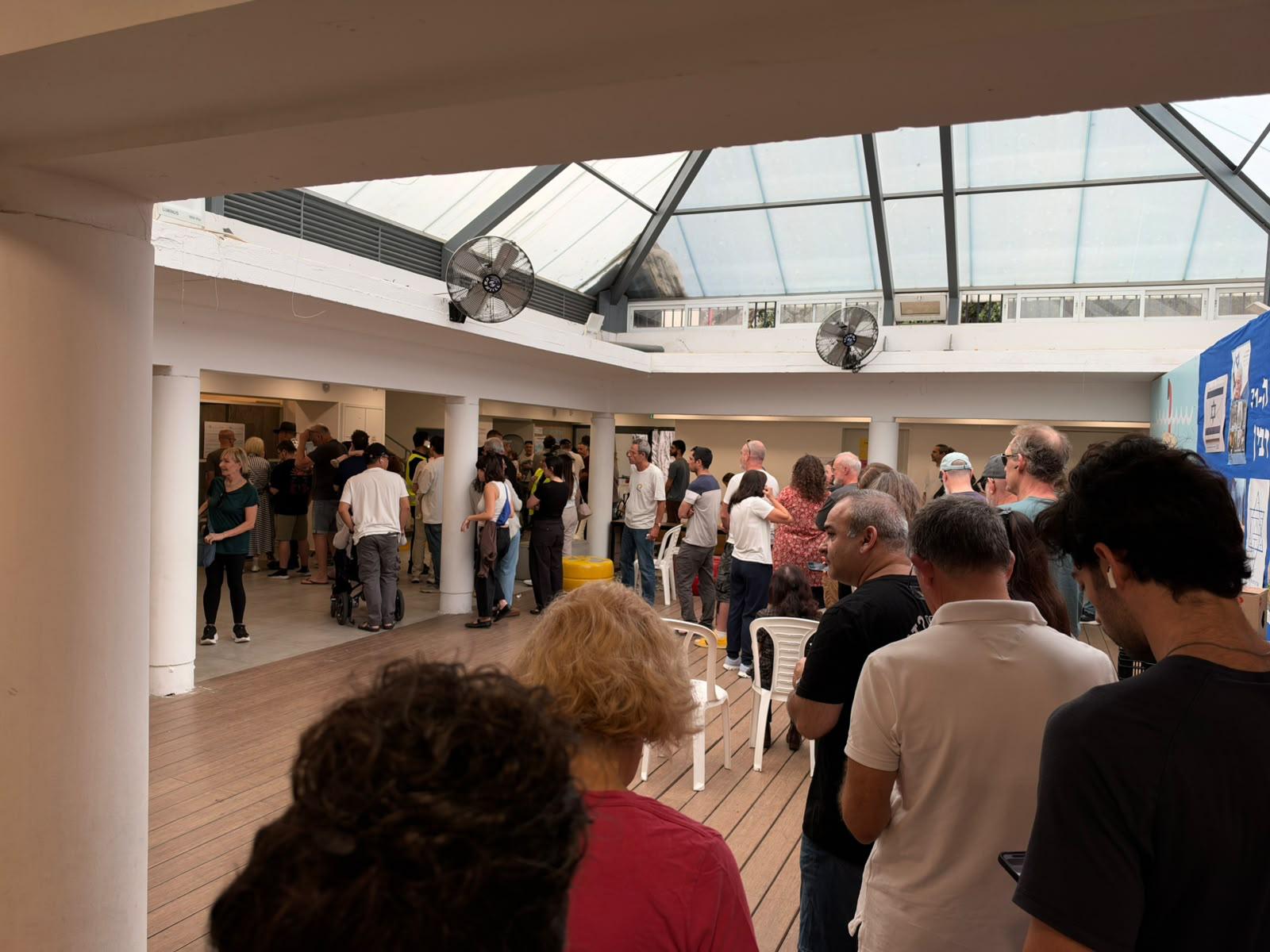
Julia, a Brit who made aliyah in her 20s but then returned to the UK, even got her Israeli passport renewed and flew via Germany to enable her to come to the country and vote.
On the morning of the vote, she was still deciding whether to choose Eisenkot’s party or the most left-wing Democrats.
“I would like to help reduce the horrific impression of Israel that we have in London. None of it is helped by Netanyahu’s corruption, lies and undemocratic behaviour,” she says.
“I have been thinking a lot about who to vote for and have narrowed it down to two in the block of change. It has been surprising to find how, even on the day of the election, many people haven’t made their decision, but there is an overwhelmingly big choice. Being back here in Israel has reminded me how important this country is to me, this is my home too, and I am there because I care about it.”

Barbara Goldberg, a nutritionist in her sixties who made aliyah in 2021 and shares her time between the UK and Israel, said it could not be more important to cast her vote.
“I think Smotrich and Ben Gvir are heinous, while Netanyahu has had three years to do with Hamas in Gaza, yet they are still in Gaza and regrouping. He’s had three years to reduce the Iranian nuclear deterrent, but it’s still there. He hasn’t achieved what I would want him to achieve. There has been a lack of accountability and the failure to organise an independent commission for inquiry – these were all good enough reasons for my husband and I to vote for the opposition block. We have been to eight or nine meetings with different candidates and for me it’s either Bennett or Eisenkot. The only thing that puts me off Eisenkot is his lack of experience and lack of English.”

Keep community journalism free.
Jewish News is free for everyone. No paywall. No barriers. Just trusted journalism for anyone who wants to stay connected to Jewish life in Britain.
If you value that, please support us.
From as little as £5 a month, you can help keep our journalism free and accessible to all.
Every day, we report on the issues that matter to our community. We celebrate achievements, support charities, challenge antisemitism and ensure Jewish voices are heard more widely.
From as little as £5 a month, you can help us continue to:
- Report on the stories shaping Jewish life in the UK and beyond
- Bring our community together through shared stories, events and campaigns
- Celebrate the people, culture and moments that define our community
- Support organisations doing vital work across Jewish Britain
You can make a one-off donation or become a regular supporter. Every contribution helps keep our journalism free, independent and accessible to all.
If everyone who values Jewish News gave a small amount, it would make a real difference to our future.