Prefer Jewish News on Google
Opinion: In the West Bank, a struggle for the soul of Judaism
Rabbi Jonathan Wittenberg writes that what is at stake are our fundamental values and beliefs: how we understand God, humanity and Torah.
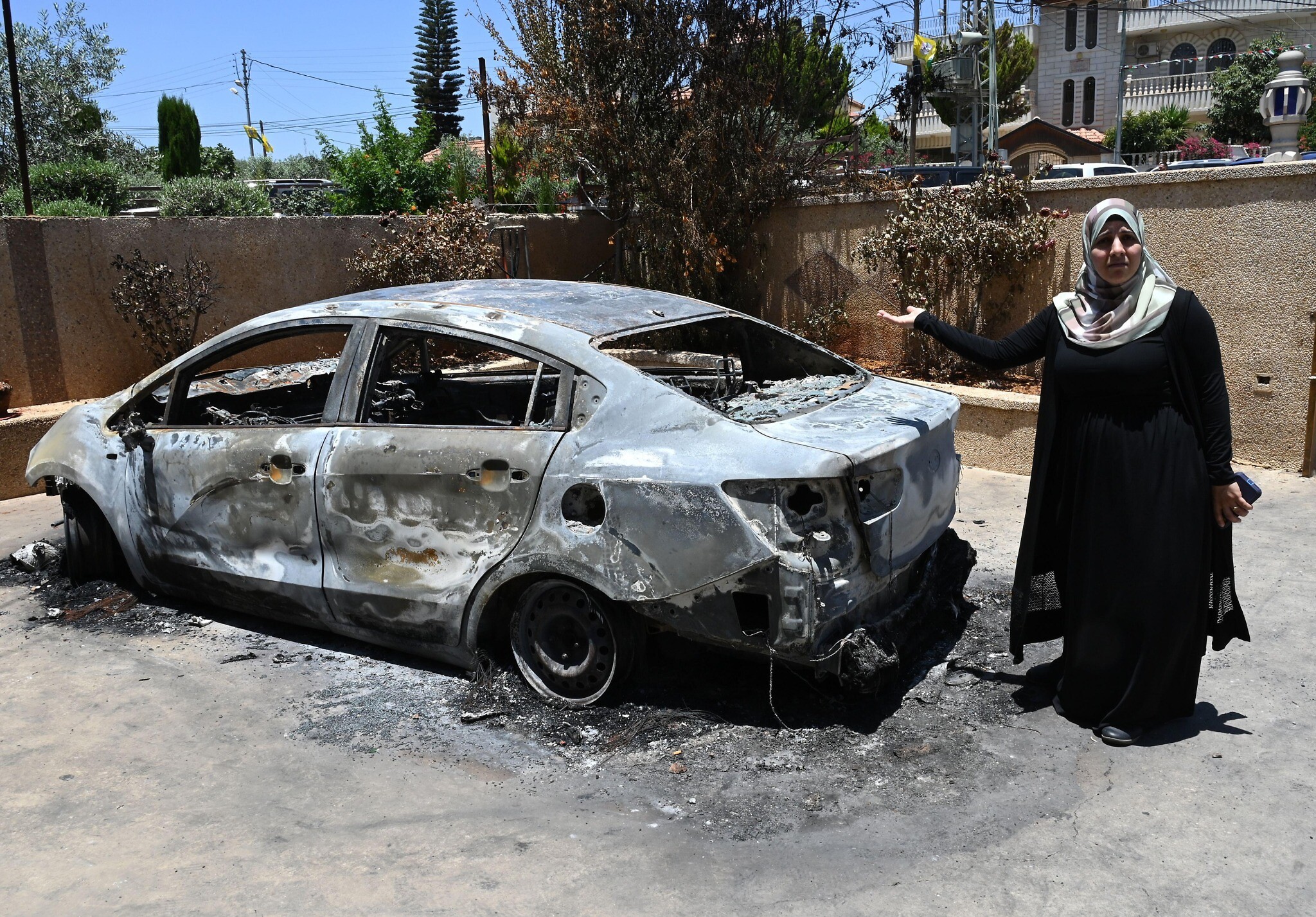
Even as the wars against Hamas and Iran are ongoing, while we worry desperately for Israel, the hostages, the soldiers, and innocent people caught in the horror, a different struggle is taking place, about the essential values of Judaism.
It came to a head for me in an encounter I witnessed in the West Bank together with Rabbi Arik Ascherman, founder of Torat Tzedek. We were called to a Palestinian village where settlers were grazing their cattle, a widespread form of unlawful action aimed at dispossession. As Arik moved the animals away, the hill-top settler youths mocked him. He responded calmly: All human beings are created in God’s image. All therefore have rights.
‘Racism in its purest form,’ David Shulman called such behaviour, mourning the fate of Mu’arrajat, from which, beaten and threatened with death, the villagers, whom he and his Israeli colleagues had tried to protect, finally fled. It is important to say that many living not only within, but also beyond the green line, take strong and principled issue with such conduct by bands of hill-top settlers.
For what is at stake are the fundamental values and beliefs of Judaism: how we understand God, humanity and Torah.
Judaism’s core teaching is that God is one, ‘God of all flesh.’ Judaism’s best-read text, the daily prayerbook, proclaims God as ‘Creator of everything’ and ‘Sustainer of all life.’ Admittedly, there are the challenging commandments to destroy Amalek and drive out the seven nations, but, in the Talmud, Rabbi Yehoshua ruled them no longer applicable two millennia ago. Turning God into the ultimate supremacist, in whose name the dispossession and even sometimes the killing of non-Jewish civilians may be justified, is a dangerous distortion of Jewish values.


The Torah teaches that humans are created in God’s image. The first human being, from whom we are all to be regarded as descended, is neither white or black, Jewish or non-Jewish, or, arguably, male or female. It follows that we should regard every human being as fashioned in God’s image and, according to the Mishnah, entitled to say, ‘For my sake the world was created.’ There are no ‘children of a lesser God’ whose lives don’t count.
The Torah repeatedly emphasises fairness and accountability: ‘Justice, justice shall you pursue.’ Non-Jews in the land must not be oppressed. ‘Beware,’ wrote Samson Raphael Hirsch, who fought for equal rights for Jews in the nineteenth century, ‘lest in your state you make the rights of anyone dependent on anything other than the simple fact of their humanity.’ Failure to do so ‘throws the door wide open to the whole horror of the experience in Egypt of the wilful mistreatment of other people.’
These foundational principles of rabbinic Judaism are threatened by a specific brand of mystical theology, other strands of which are so often universal, which regards Jews as ontologically superior and the possession of the land as a supreme goal above the pursuit of righteousness. Daniel Goldman, a religious Zionist, traces in an important article in Fathom how this ‘theological framework has become political orthodoxy’ and its policies ‘implemented with state power.’ He questions ‘whether Israeli society will recognise and intervene’ before it’s too late. The evidence is troubling.
We must ask whether this is truly the Judaism our ancestors preserved, debated, refined, and lived and died for through generations, maintaining their faith in the God of justice, compassion, and the sanctity of life despite repeated persecution, exile and slaughter.
Yuval Noah Harari has called this the biggest crisis in Judaism since the destruction of the second temple. Acknowledging this challenge does not diminish our loathing for the malignant and nihilistic cruelty of Hamas and its allies. Nor does it weaken our commitment to Israel. On the contrary, for the love of Israel, Torah and humanity we need to engage in this struggle for the soul of Judaism.
Rabbi Wittenberg is the senior rabbi of Masorti Judaism UK. He is writing here in a personal capacity

Keep community journalism free.
Jewish News is free for everyone. No paywall. No barriers. Just trusted journalism for anyone who wants to stay connected to Jewish life in Britain.
If you value that, please support us.
From as little as £5 a month, you can help keep our journalism free and accessible to all.
Every day, we report on the issues that matter to our community. We celebrate achievements, support charities, challenge antisemitism and ensure Jewish voices are heard more widely.
From as little as £5 a month, you can help us continue to:
- Report on the stories shaping Jewish life in the UK and beyond
- Bring our community together through shared stories, events and campaigns
- Celebrate the people, culture and moments that define our community
- Support organisations doing vital work across Jewish Britain
You can make a one-off donation or become a regular supporter. Every contribution helps keep our journalism free, independent and accessible to all.
If everyone who values Jewish News gave a small amount, it would make a real difference to our future.