Prefer Jewish News on Google
Peers urge UK to ban IRGC and Muslim Brotherhood at packed Lords briefing
Cross-party parliamentarians backed proscription push, warning sanctions alone leave Britain exposed
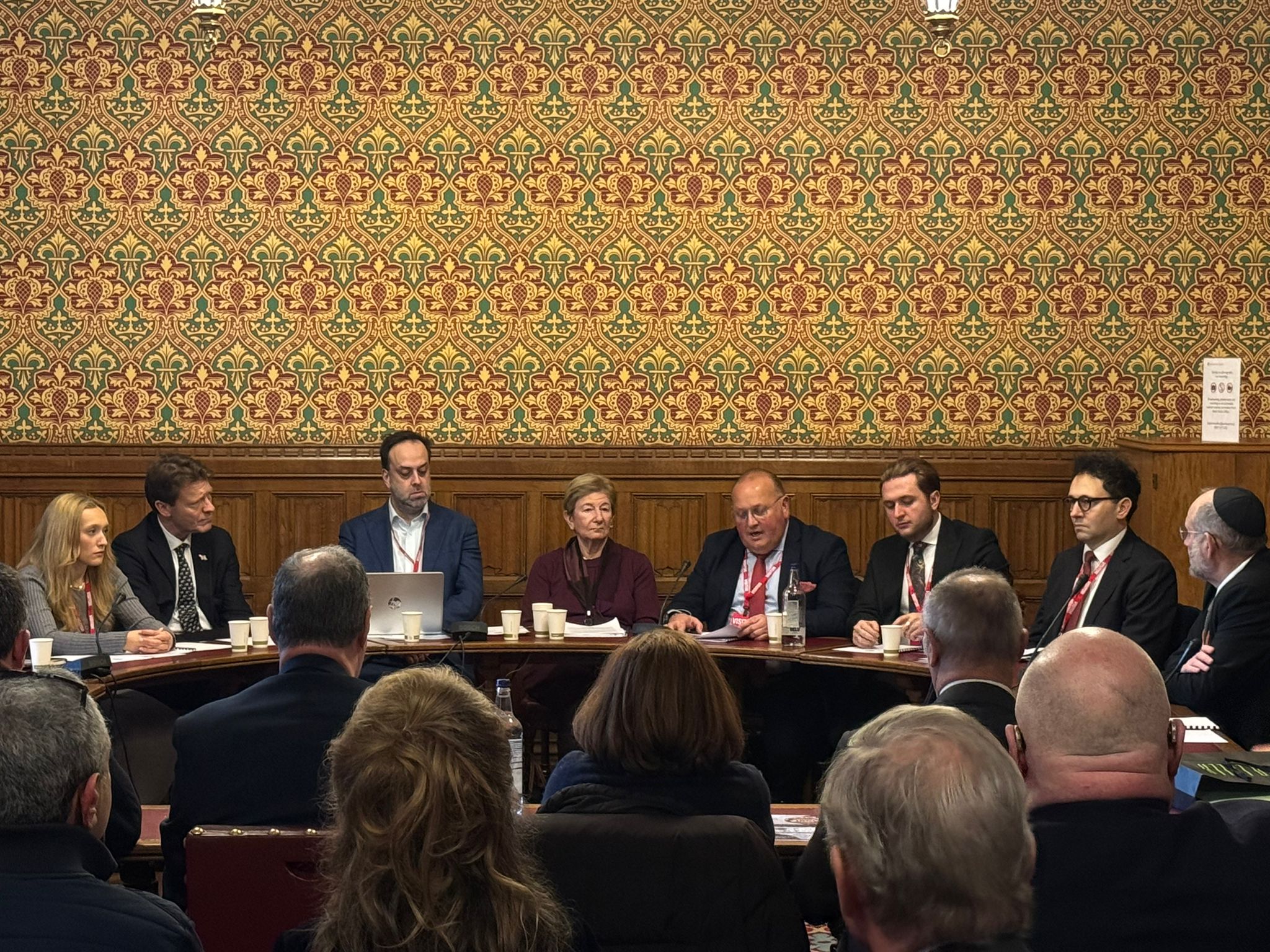
Senior peers, MPs and policy advisers packed a House of Lords committee room this week as a Jewish communal alliance urged the government to proscribe Iran’s Islamic Revolutionary Guard Corps (IRGC) and the Muslim Brotherhood, warning that existing measures fall short of protecting UK security.
The parliamentary briefing was convened by the We Believe Alliance – a new umbrella bringing together We Believe in Israel and the National Jewish Assembly – and was sponsored by Baroness Deech. The room was filled to capacity, with attendees including Lord Eric Pickles, Baroness Foster of Oxton, Lord Howard Leigh, parliamentary staff from MPs’ and peers’ offices, Reform UK MP Richard Tice and members of the public.
Opening the session, Simon Tobelem, chair of the We Believe Alliance, set out what he described as the strategic and moral case for proscription, arguing that the UK’s current approach allows hostile actors to operate below the criminal threshold. Baroness Deech echoed the urgency of action, praised the work of the two organisations and welcomed their formal merger under the new Alliance.
The panel drew on expertise spanning diplomacy, security and regional politics. Aurèle Tobelem, director of research at the Forum for Foreign Relations, outlined the ideological roots of Iran’s regime and described the IRGC as a central pillar of Iranian power, embedded across domestic governance and regional aggression.
Ghassan Ibrahim, CEO and founder of the Global Arab Network, criticised what he called a logical inconsistency in the UK counter-terror policy, noting that Hamas is proscribed while the Muslim Brotherhood – which he described as its parent movement – remains legal in Britain, despite warnings in the government’s 2015 review. He cautioned that targeting individual offshoots while leaving the wider movement untouched undermines long-term security strategy.


Barak Seener of the Henry Jackson Society focused on enforcement, arguing that the absence of proscription enables the IRGC to evade sanctions and maintain networks in the UK and beyond. He warned that internal pressure on the Iranian regime could increase the external threat posed by the IRGC if legal gaps remain.
Richard Tice MP described sanctioning the IRGC without proscription as “grossly negligent” and said the Foreign Office was receiving “woeful advice.” Baroness Foster, reflecting on her long-standing work on counter-terrorism, said she was concerned that too many Muslim MPs and peers were not speaking out more forcefully on the issue.
Lord Eric Pickles said attempts to move the Foreign Office towards proscription were “like pulling teeth”, citing claims that fresh legislation would be required. He, Baroness Foster, Mr Tice and UK Lawyers for Israel director Jonathan Turner all argued that existing laws already provide sufficient powers if there is political will.
Also present was Niyak Ghorbani, an Iranian dissident and campaigner against the Tehran regime, who told the meeting that eight members of his family had been killed since the start of the latest uprising in Iran. He said proscription “is not a symbolic gesture but a necessary and overdue security measure.”
The event concluded with thanks from Roger Walters, director of the We Believe Alliance, which said it would now launch a coordinated campaign across Parliament, policy circles, the media and civil society to press for proscription of both organisations, framing the issue as one of national security, democratic values and communal safety.

Keep community journalism free.
Jewish News is free for everyone. No paywall. No barriers. Just trusted journalism for anyone who wants to stay connected to Jewish life in Britain.
If you value that, please support us.
From as little as £5 a month, you can help keep our journalism free and accessible to all.
Every day, we report on the issues that matter to our community. We celebrate achievements, support charities, challenge antisemitism and ensure Jewish voices are heard more widely.
From as little as £5 a month, you can help us continue to:
- Report on the stories shaping Jewish life in the UK and beyond
- Bring our community together through shared stories, events and campaigns
- Celebrate the people, culture and moments that define our community
- Support organisations doing vital work across Jewish Britain
You can make a one-off donation or become a regular supporter. Every contribution helps keep our journalism free, independent and accessible to all.
If everyone who values Jewish News gave a small amount, it would make a real difference to our future.