Prefer Jewish News on Google

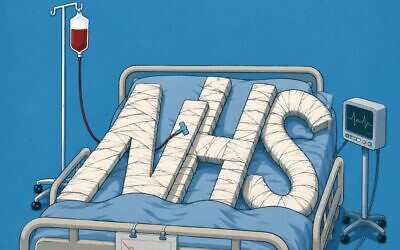
Royal Free Hospital targeted by leafleteers opposing reforms targeting antisemitism within the NHS
Pro-Palestinian campaigners claim their free speech rights will be violated; foundation trust condemns 'campaigning activity on our premises'
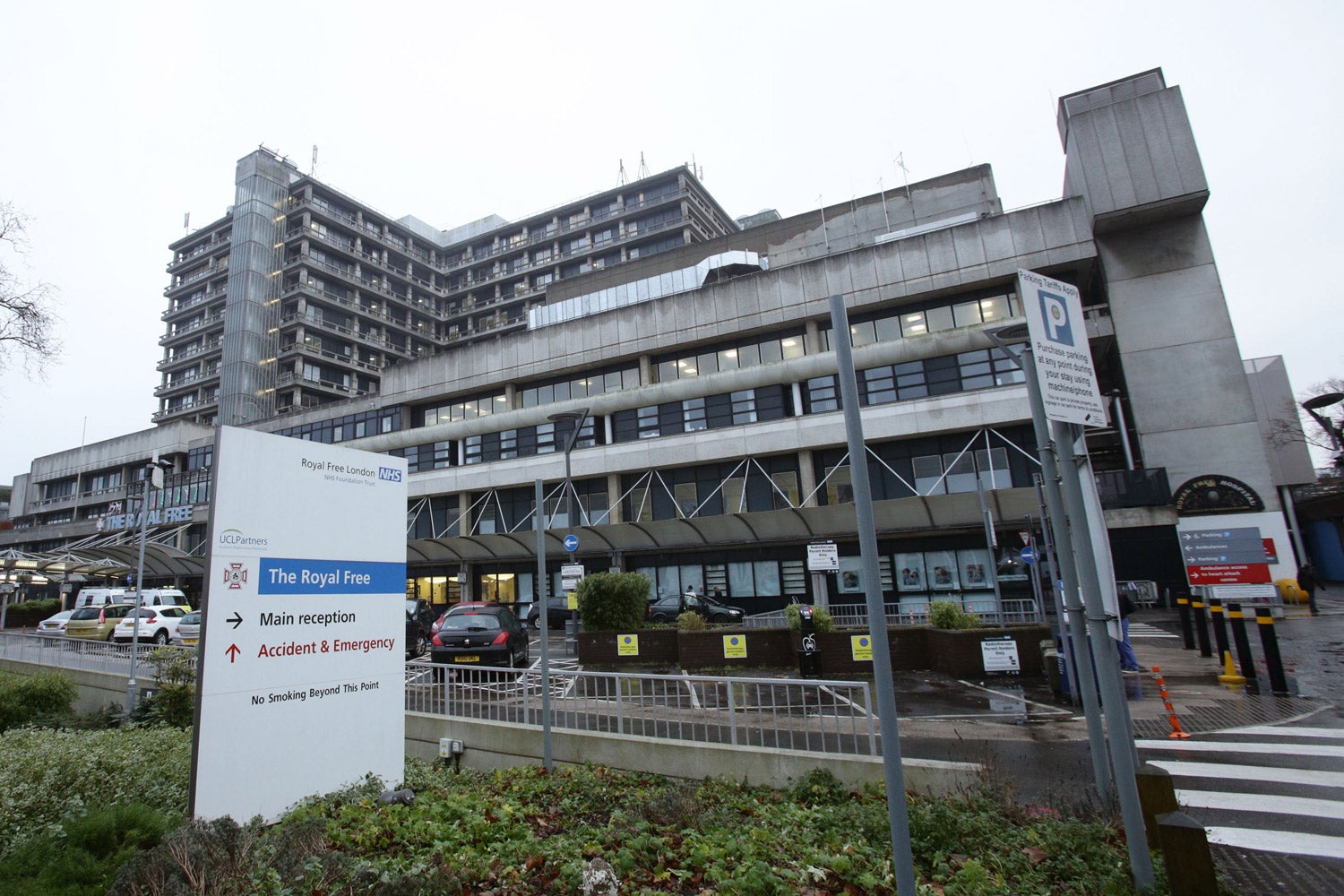
The Royal Free Hospital in Hampstead is the latest medical hub to have been targeted by pro-Palestinian activists distributing leaflets claiming that forthcoming antisemitism training within the NHS will be “pro-Israel indoctrination” and claiming that a recent review of antisemitism within the NHS is “racist”.
As reported by The Telegraph, the ‘Global Health for Palestine’ group has targeted treatment rooms and waiting areas inside the hospital, in activity condemned by the Royal Free London Foundation Trust. A spokesman for the trust said:
“Our priority is to ensure the Royal Free London is a safe and welcoming environment for everyone, and that patients, visitors and members of staff feel respected and valued, regardless of their background or beliefs.
“Campaigning activity of any kind is not permitted on our premises and as soon as we became aware of the leaflets being distributed, our security team asked the individuals involved to leave the site and the leaflets were destroyed.”
The Royal Free serves a large Jewish population in North West London.



Lord Mann, the independent advisor to the government on antisemitism, published his review of the NHS earlier this year. It described how Jewish people in the NHS experience “routine ostracism”, with Jewish staff being the only religious group in the latest NHS staff survey for whom discrimination from colleagues is rising rather than falling, resulting in some considering leaving the NHS. It made a number of recommendations, including “holding trusts accountable through the publication of a new NHS staff standard focused on tackling racism, setting minimum expectations for how organisations must prevent, respond to and learn from incidents of racism”, and “requiring anti-racism training, specifically including antisemitism, for the chairs and chief executives of all NHS provider trusts within 6 months.”
The review also recommended that the IHRA definition of antisemitism, viewed as the gold standard definition by all mainstream Jewish communal organisations in the UK, be adopted by NHS trusts. It also called for the provision of “clear national guidance on uniform and NHS-issued equipment to ensure patients can access care with confidence, free from any perception of bias and on how trusts should respond to racist behaviour from the public.”
The government accepted the report and the recommendations in full, which has led to backlash from anti-Israel activists, who have accused the measures of silencing their right to free speech. At its conference in the summer, the British Medical Association voted to oppose the IHRA definition of antisemitism being adopted by NHS trusts, and multiple trusts were subsequently sent a legal opinion drafted on behalf of pro-Palestinian activists, which warned trusts of potential legal difficulties they might expose themselves to if they adopted the IHRA definition. Subsequently another legal opinion, this one sent out on behalf of the Jewish Medical Association, assured trusts that no such difficulties were likely to exist.
Caroline Turner, director of legal campaign group UK Lawyers for Israel, described the leaflets being distributed inside hospitals as “intimidating and upsetting to Jewish and Israeli patients and their families, particularly as they are in a vulnerable state…It is particularly offensive to describe measures to protect Jewish healthcare workers and patients from discrimination as ‘racist’, while encouraging political demonstrations within healthcare settings.
“Jewish patients and NHS staff are entitled to feel safe and respected, without being confronted by hostile political campaigning. The Royal Free Hospital should investigate how these inflammatory leaflets came to be distributed on its premises and take steps to prevent its facilities from being used to promote such divisive messaging.”
At a recent conference against antisemitism organised by Lord Mann, Dr Fiona Sim, chair of the Jewish Medical Association, described how since 7 October 2023, her organisation had received “hundreds” of submissions regarding NHS staff expressing antisemitic sentiments in their speech or behaviour, either on social media or directly in a healthcare setting.
She went on to say that of those, “I have submitted numerous complaints with an incredibly heavy heart because they are serious enough to merit action, but they are not handled in any way other than going to a regulator.”
Other participants described antisemitism experience in both hospital and GP settings. In the examples given by a Jewish NHS staffer with more than 30 years experience, the NHS trust in question consistently refused to properly escalate when she made complaints about experiences of unquestionable antisemitism, leading to mediation processes which went nowhere. Examples given within General Practice included a Jewish medical professional being told that she shouldn’t put a picture of family members wearing Jewish garb on her desk at work because “you’ll alienate our local community”, and a receptionist wearing a Star of David necklace receiving antisemitic abuse.
At the conference, Health Minister Karin Smyth MP confirmed that “94 [NHS] trusts have so far agreed to adopt the IHRA [International Holocaust Remembrance Alliance] definition of antisemitism”, and that the government would continue to press the others to do so. With 207 NHS trusts in the UK, this means that 45% have so far adopted the definition.

Keep community journalism free.
Jewish News is free for everyone. No paywall. No barriers. Just trusted journalism for anyone who wants to stay connected to Jewish life in Britain.
If you value that, please support us.
From as little as £5 a month, you can help keep our journalism free and accessible to all.
Every day, we report on the issues that matter to our community. We celebrate achievements, support charities, challenge antisemitism and ensure Jewish voices are heard more widely.
From as little as £5 a month, you can help us continue to:
- Report on the stories shaping Jewish life in the UK and beyond
- Bring our community together through shared stories, events and campaigns
- Celebrate the people, culture and moments that define our community
- Support organisations doing vital work across Jewish Britain
You can make a one-off donation or become a regular supporter. Every contribution helps keep our journalism free, independent and accessible to all.
If everyone who values Jewish News gave a small amount, it would make a real difference to our future.