Prefer Jewish News on Google
Shabbat Shalom: To Those Who Refuse to Let the Chain Break
Every week there are people who make a difference - by protecting lives, standing proudly in public, educating children, by preserving history itself.
There are weeks when writing this column feels easy and there are weeks when it feels almost impossible.
I have not written a Shabbat Shalom column for the past two Fridays. The first week, in the immediate aftermath of the stabbings in Golders Green, it did not feel like a moment for celebration, but a moment of anger, fear and reflection. The following week, my focus turned to the wholly inadequate response from our political leadership and to local election results that revealed something deeply troubling about the direction parts of this country are now heading in, a sectarianism increasingly comfortable showing itself in public life.
There are moments when the weight of all of that makes recognising anything positive feel almost indulgent. But perhaps it is precisely in those moments that it matters most.
For if all we leave ourselves with is despair, then those who seek to intimidate, isolate and demoralise us have already achieved something significant. Jewish history has never merely been about survival, it has been about continuing. Continuing to build, to educate, to celebrate, to stand proudly and visibly as Jews even when others would prefer we shrink ourselves.
Especially then.

So this week’s Shabbat Shalom is dedicated to those who, in very different ways, reminded us not simply how Jews survive, but how we endure. Those who protected Jewish life, defended Jewish dignity, secured Jewish futures and reinforced Jewish memory.
So this week, I want to say Shabbat Shalom to the following people.
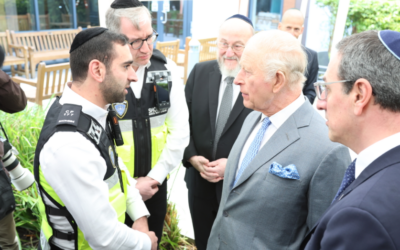
Shabbat Shalom to the volunteers of Shomrim.
Two weeks ago, as terror unfolded on the streets of Golders Green, ordinary men made extraordinary decisions.
While others understandably ran from danger, members of the Shomrim ran towards it. Not because they are superheroes, not because they are immune to fear, but because they understood in that moment that the safety of their community depended upon somebody being willing to act.
One volunteer described it as a “split second decision.” But the truth is those decisions are built long before the moment itself arrives. They are built through a culture of responsibility, through a belief that protecting one another is not somebody else’s job, but all of ours.
There is something profoundly Jewish about that instinct. Across history, Jewish communities have often understood that if we do not look after one another, nobody else will do it for us quickly enough. It is not cynicism, it is lived experience. There is also something deeply tragic about the fact that such organisations are now once again so visibly necessary in Britain in 2026.
Still, in the face of hatred and violence, these men did not retreat. They moved forward, calmly, courageously and without hesitation.
Shabbat Shalom to the volunteers of Shomrim, and to those who understand that communities survive because there are people willing to place themselves between danger and everyone else.
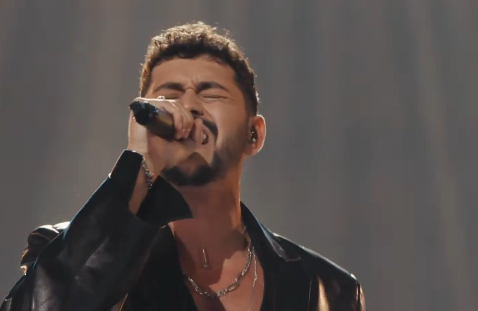
Shabbat Shalom to Noam Bettan
If the volunteers of Shomrim represent physical courage, then Noam Bettan represents something equally important, the courage to stand proudly and visibly as a Jew and as an Israeli in public.
This week, he walked into the Eurovision arena carrying the Israeli flag. A simple act one might think, except that in today’s climate it is anything but simple.
Over the past two years, we have watched parts of the cultural world attempt to transform Israeli identity into something shameful. To make Jewish public expression feel provocative by definition. To create an atmosphere where simply existing openly as an Israeli on an international stage invites hostility, intimidation and abuse.
Still he walked in carrying that flag, still he performed with dignity and poise, still he smiled.
That matters because intimidation only works if it succeeds in making people smaller. If it convinces them to lower their voice, hide their identity or apologise for their existence. But Jewish history has never been written by those who disappeared quietly.
There is a particular kind of strength required to stand in front of millions knowing there are those who resent your very presence there, and to perform not with bitterness or anger, but with grace.
Shabbat Shalom to Noam Bettan, and to those who understand that dignity itself can become an act of resistance.

Shabbat Shalom to the parents, Chabad rabbis and Aaron Etingen who helped save Immanuel College
In many ways, this may be the most important story of all.
A coalition of determined parents, Chabad rabbis from America and education entrepreneur Aaron Etingen achieved what at one stage appeared impossible. They rescued Immanuel College from the brink of closure, raising millions in a matter of days and in doing so protecting something far greater than a single institution.
They protected the future.
At a time when many British Jews increasingly question what the future of Jewish life in this country looks like, when parents worry not only about security outside schools but about confidence and identity within them, saving a Jewish school becomes an act of enormous significance.
Jewish continuity is not sustained through statements or hashtags. It is sustained through education, through classrooms, through teachers, through children growing up knowledgeable enough and confident enough to understand who they are.
There is a reason that throughout Jewish history, wherever Jews arrived, one of the very first things they built was a school. Empires rise and fall, governments change, public opinion shifts with astonishing speed. But a people that educates its children in its history, values and identity gives itself a future.
That is what these individuals fought for. Not simply the survival of a building, but the continuation of Jewish life itself.
In the Britain of today, where so many Jews increasingly ask themselves difficult questions about what the future here may hold, ensuring that no Jewish child in London loses the opportunity to receive a Jewish secondary school education feels more important than ever.
Shabbat Shalom to those who refused to allow Immanuel College to disappear, and to those who understand that every Jewish child educated proudly as a Jew is an investment in the future of our people.
Shabbat Shalom to those who helped recover and return an ancient menorah coin to Israel
Sometimes the battle for Jewish continuity takes place not in the present or the future, but in the past.
This week, a remarkable operation led to the recovery and return of a 2,000-year-old coin bearing the earliest known depiction of the seven-branched menorah alongside symbols from the Second Temple in Jerusalem. A small object perhaps, but carrying the weight of an entire civilisation.
Why does this matter so much?
It matters because we are living through a period in which one of the great lies being spread about Israel and the Jewish people is that Jews are foreign to the land itself. That we are “colonisers,” “occupiers,” outsiders with no indigenous connection to the place from which our history, language, faith and civilisation emerged.
It is a lie repeated so often because those who spread it understand something important, if you can sever a people from its history, you can begin to dehumanise them in the present.
But history has a stubborn habit of leaving evidence behind: coins, ruins, synagogues, Hebrew inscriptions. Archaeological records scattered across thousands of years, all telling the same story long before modern politics ever existed.
The truth is that Jews do not need ancient artefacts to validate our connection to the land of Israel, we have always known who we are and where we come from. But every recovered piece of history matters nonetheless, because every piece of evidence makes the lie harder to sustain.
Shabbat Shalom to those who recovered this extraordinary piece of Jewish history, and to those who understand that memory is not merely something we inherit, but something we must actively preserve.
Every week there are people who make a difference. Sometimes by protecting lives, sometimes by standing proudly in public, sometimes by educating children, sometimes by preserving history itself.
This week’s Shabbat Shalom is dedicated to those who reminded us that Jewish continuity is not accidental, it is defended.
Defended by those willing to run towards danger. By those unwilling to hide who they are. By those determined to educate the next generation. By those who preserve the evidence of where we came from and why we are still here.
For thousands of years, Jews have faced those who believed we would eventually disappear. Assimilate, break apart, lose faith in ourselves, forget our history, surrender our identity.
For thousands of years, generation after generation has answered in exactly the same way, by continuing.
So if someone made a difference this week, by protecting Jewish life, strengthening Jewish pride, securing Jewish education or preserving Jewish memory, add their name. Because there are far more people worthy of a Shabbat Shalom than can ever fit into a single column.
Shabbat Shalom and may we remember that continuity is not passive. It is built, protected and carried forward by ordinary people who refuse to let the chain break on their watch.

Keep community journalism free.
Jewish News is free for everyone. No paywall. No barriers. Just trusted journalism for anyone who wants to stay connected to Jewish life in Britain.
If you value that, please support us.
From as little as £5 a month, you can help keep our journalism free and accessible to all.
Every day, we report on the issues that matter to our community. We celebrate achievements, support charities, challenge antisemitism and ensure Jewish voices are heard more widely.
From as little as £5 a month, you can help us continue to:
- Report on the stories shaping Jewish life in the UK and beyond
- Bring our community together through shared stories, events and campaigns
- Celebrate the people, culture and moments that define our community
- Support organisations doing vital work across Jewish Britain
You can make a one-off donation or become a regular supporter. Every contribution helps keep our journalism free, independent and accessible to all.
If everyone who values Jewish News gave a small amount, it would make a real difference to our future.