Prefer Jewish News on Google
The Muslim voices that refuse to look away from antisemitism
A powerful public letter has confronted rising antisemitism directly and shown what real solidarity looks like
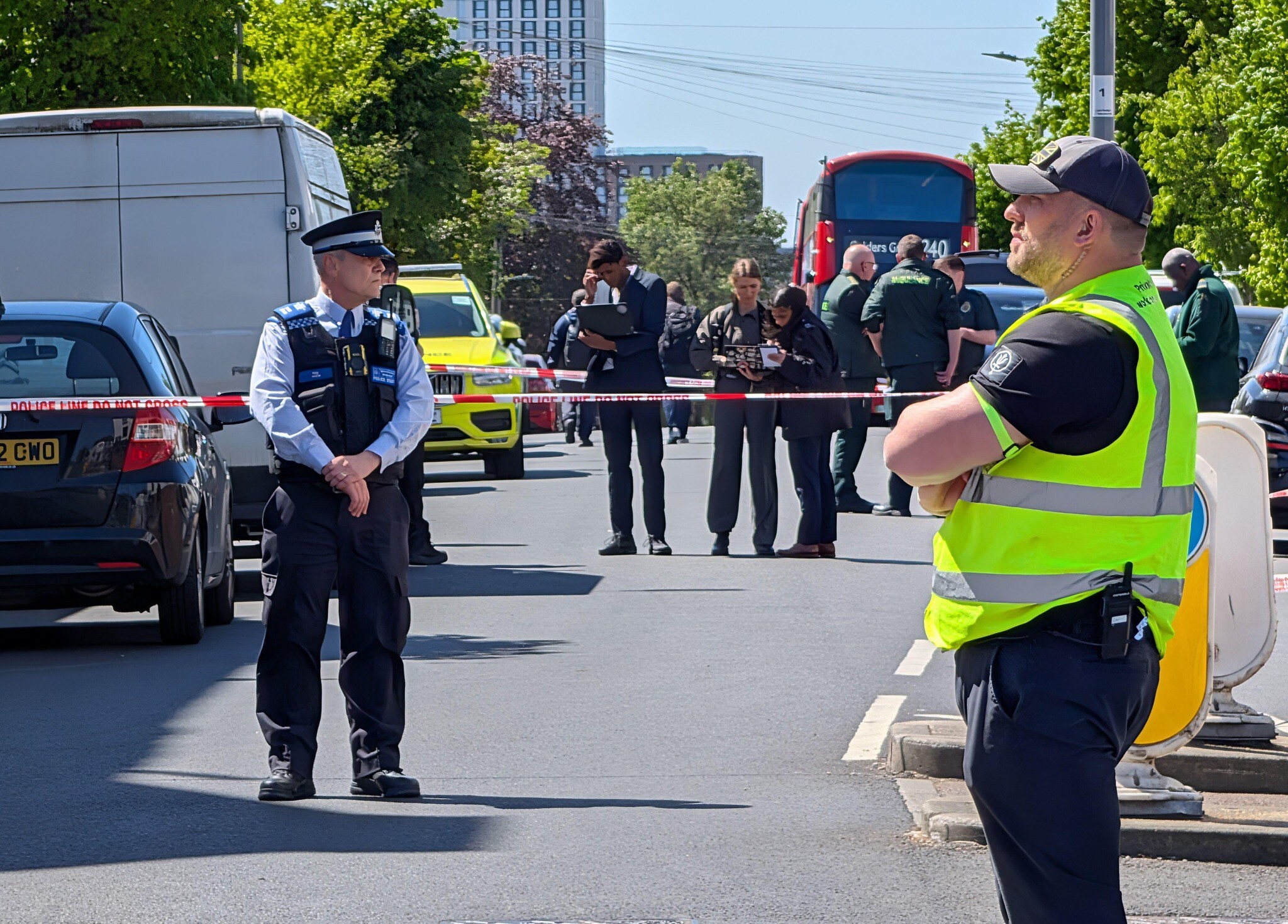
“We as British Muslims hear you…We say to our Jewish friends and neighbours: we see you, we hear you, and we are with you.”
British Jews have been waiting a long time for those words, and when they came last night in a letter to The Times newspaper, they were clear, resolute, and heartfelt.
“Antisemitism in the UK has worsened dramatically since 7 October, 2023,” they wrote. “On one side, the drumbeat has been raucous and relentless; on the other, the response has been weak and underwhelming. This cannot go on.”
The 12 Muslim signatories, headed by Dame Sara Khan, the former counter-extremism commissioner, spelt it out – not in the now hackneyed “thoughts and prayers” robotic way, but from the deeply empathetic standpoint of an ordinary Jew, so much so that it’s worth quoting this particular paragraph in full:
“We have watched with alarm how legitimate protest has been used by some to normalise slogans, symbols and rhetoric that glorify violence. Sometimes it is explicit, but more often it is messaged through a series of subtle codes: a refusal to condemn, an equivocation or equivalence, triangle hand-signs, gliding parachutes and endless placards with antisemitic imagery and tropes. This is unacceptable and inexcusable – as it would be with any other form of racism or bigotry. This includes assigning collective responsibility to Jews for the actions of the Israeli government.”



This is what real anti-racism looks like, much superior to the hedged Corbynite mantra about “condemning all forms of racism, including antisemitism”.
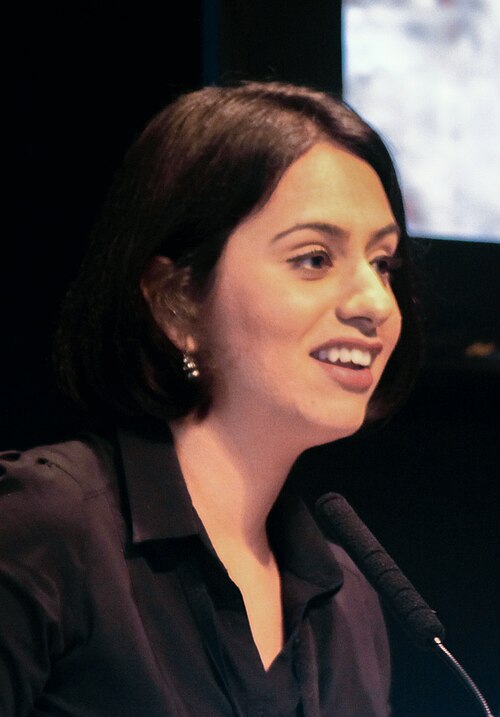
Or, the Muslim Council of Britain’s recent condemnation of the “abhorrent rise in antisemitism” and expression of solidarity with “those affected by the attack in Golders Green”, only for the next sentence to bring it all back to Muslims by complaining that “far less attention” had been paid to the Muslim victim, alleged to have been attacked by the same man that morning.
Essa Suleiman has been charged with attempting to kill a long-standing friend, Ismail Hussein, at the latter’s flat. Without in any way downplaying the seriousness of that incident, having a murderous argument with a mate is not the same as setting off to Golders Green with a knife to hunt down some Jews, any Jews, just as long as they are Jews.
It’s a puzzle to me why the MCB couldn’t see that by failing to distinguish between the two incidents, they’d diluted the very solidarity they wished to express, no doubt very sincerely.
The whole point of the letter to The Times from the 12 Muslims was to offer rock-solid solidarity, which it did, again and again: ‘No other community endures the indignity of private security outside almost all of its communal buildings, places of worship or, perhaps most appallingly, schools. It is unconscionable and intolerable.”
There was no kvetching as there was, for example, from the MCB’s offshoot, the “Campaign for Media Monitoring”, about BBC Panorama’s recent programme “Antisemitism – Why British Jews are Afraid”.
The CfMM were gefrunzled that reporter Judith Moritz had pointed out that while Muslims were the single most targeted minority for hate crimes, proportionately Jews “experienced more than eight times as many hate crime(s)” as Muslims.
The whole point of the letter to The Times from the 12 Muslims was to offer rock-solid solidarity, which it did, again and again
As Moritz rightly explained, that’s because the Muslim community is at least 10 times larger (in fact, it’s closer to 13 times larger) than the tiny Jewish community. Yet the CfMM complained that the BBC had downgraded the fact that Muslims faced the “highest absolute number of hate crimes” into a mere “footnote.
The programme was about anti-Jewish bigotry, for heaven’s sake, not anti-Muslim bigotry! I also think most people would understand the proportional point was the more telling indicator of societal animus, without in any way minimising the horrible bigotry endured by many Muslims.
The letter also demonstrated how it’s perfectly possible to show solidarity with British Jews whilst being trenchantly critical of Israel.
A few hours before The Times published it, one of its signatories, Rashad Ali, a senior fellow at the Institute for Strategic Dialogue, drew public attention to some disturbing comments by the IDF’s West Bank commander about his rules of engagement.
Major General Avi Bluth is reported by the Israeli newspaper Haaretz to have told a closed forum that his soldiers avoid shooting Jewish stone-throwers but not Palestinian stone throwers: “The Arabs understand that ‘If someone comes to kill you, kill them first’ is the norm in the Middle East, so we’re killing like we haven’t killed since 1967.”
42 Palestinian stone throwers were shot in 2025, reported the major general, whilst emphasising that he didn’t support shooting settler stone throwers. He also said they’d shot “1500 terrorists in three years” – some 450 of whom, he acknowledged, were unarmed.
In response, Ali posted, “Tell me again how this is not a systematic problem but just some bad individuals and incidents…” A far more effective riposte than ranting on about “Zionist Nazi scum” and the like.
Ali and his fellow signatories also acknowledged the “existence of antisemitic hate … from some of our fellow co-religionists.” Both anecdotal and other evidence from the CST indicate that Muslims appear to be responsible for a disproportionately large number of antisemitic incidents in relation to the size of their community. The letter urged Muslim communal and religious leaders to be ”more robust in challenging antisemitism whenever and wherever it appears in our communities.”
In the past, when some of the same signatories spoke out against extremism, they were abhorrently dismissed by Islamists as “Muslim reformers” who’d departed from “normative Islam”, akin to “coconuts” or “Oreo” biscuits – dark on the outside but white on the inside. Hence, their appeal this time to fellow Muslim leaders not to be “intimidated by other Muslims who are hostile” to strengthening Jewish engagement.
Last week, The Guardian columnist Jonathan Freedland asked poignantly where all the voices had gone that were normally so quick to speak out against racism.
And what about the bands, the rappers, the proud anti-racists without an antisemitic bone in their bodies? “I. Can’t. Hear you,” observed Luciana Berger.
After multiple incidents of street harassment, arson, and murder – plus the continued attempts at all three – wasn’t it time, said Freedland, for anti-racists to stand shoulder to shoulder with one of Britain’s oldest and, right now, most vulnerable communities – no ifs, no buts, no caveats, no squeamish reluctance for fear of being seen as an apologist for Netanyahu’s conflation of criticism of Israel with antisemitism?
Just a straightforward dose of “uncomplicated solidarity”.
That is exactly what these 12 principled Muslim signatories have delivered and hopefully inspired others to follow, so that we can all get back to trying to live better with each other.
- John Ware is a British journalist and author

Keep community journalism free.
Jewish News is free for everyone. No paywall. No barriers. Just trusted journalism for anyone who wants to stay connected to Jewish life in Britain.
If you value that, please support us.
From as little as £5 a month, you can help keep our journalism free and accessible to all.
Every day, we report on the issues that matter to our community. We celebrate achievements, support charities, challenge antisemitism and ensure Jewish voices are heard more widely.
From as little as £5 a month, you can help us continue to:
- Report on the stories shaping Jewish life in the UK and beyond
- Bring our community together through shared stories, events and campaigns
- Celebrate the people, culture and moments that define our community
- Support organisations doing vital work across Jewish Britain
You can make a one-off donation or become a regular supporter. Every contribution helps keep our journalism free, independent and accessible to all.
If everyone who values Jewish News gave a small amount, it would make a real difference to our future.