Prefer Jewish News on Google

This Holocaust Memorial Day, we also remember the survivors we have lost
We remember those who shared their experiences with us, as well as the six million whose voices were taken from us
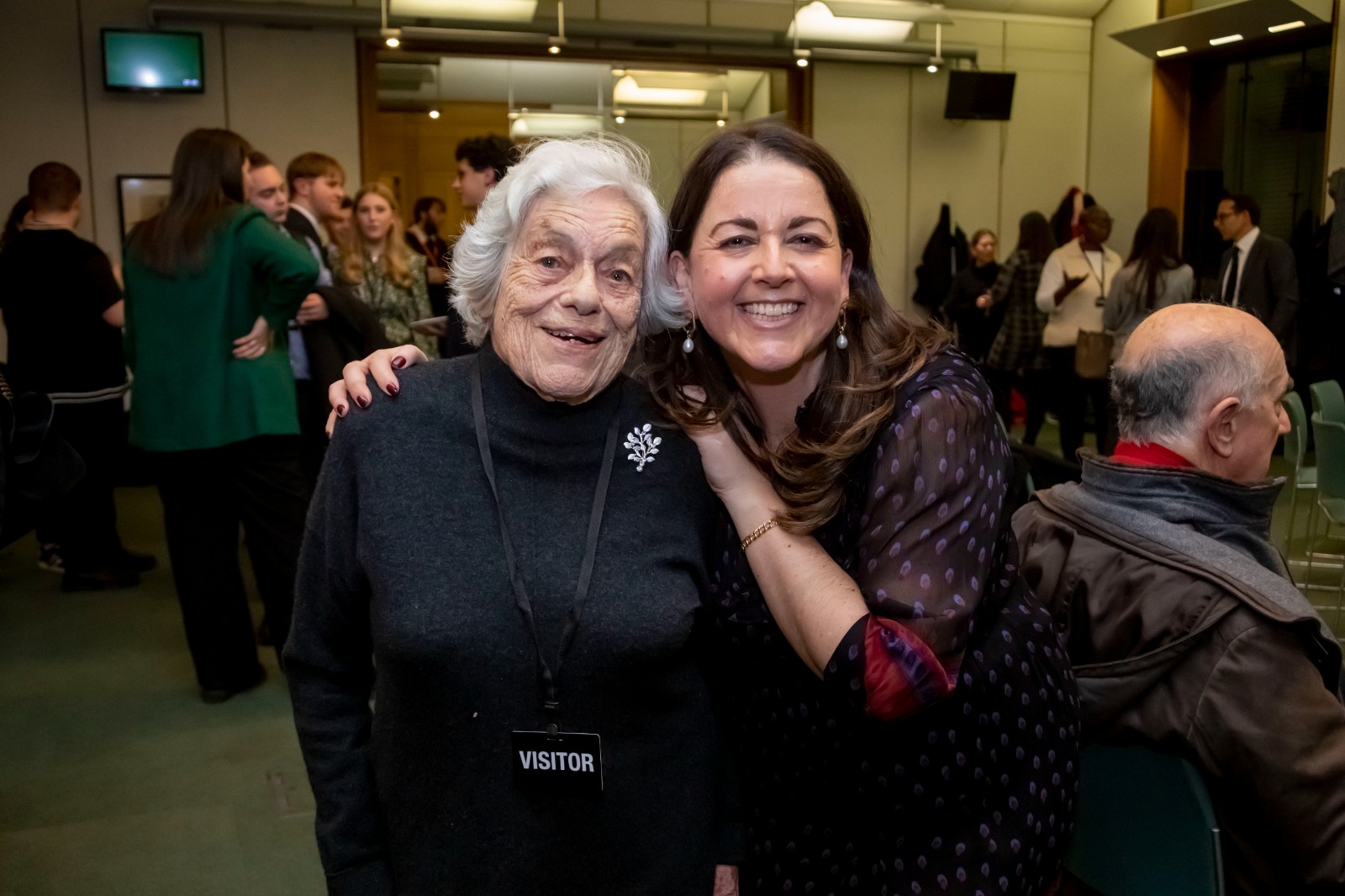
Last year we marked the 80th anniversary of liberation on Holocaust Memorial Day surrounded by world leaders including His Majesty The King and the Prime Minister. The Holocaust was on rolling news, survivors’ stories were on the front pages of national newspapers, the world paused and remembered.
This year, we are marking Holocaust Memorial Day in the most difficult circumstances, with antisemitism at levels we had hoped never to see again. This day should stand as a reminder of where antisemitism can lead, and should be a moment where we pledge to take action to stop this most heinous hatred from continuing to spread unabated.
This is a hope that many survivors have publicly wished for as they have shared their testimonies across the country for decades.
Among those who shared their story most passionately were dear friends of the Trust, who are sadly no longer with us.
Eve Kugler was just seven years old when the Nazis ransacked her home during Kristallnacht in Germany. She remembered watching as her father was dragged from their home and taken to Buchenwald. Her mother bravely campaigned, in the end successfully, for his release. Eve and her sister Ruth were eventually able to travel to America, and in a unique set of circumstances were reunited with their parents and youngest sister Lea after the war. In one of her final interviews, Eve said her hope for her children was never to have to fear being Jewish.

Vera Schaufeld was nine when she was separated from her parents. I cannot help but think of Vera, a young child, completely alone, on a train to England, not speaking a word of English and terrified of what the future held. And of her brave parents, who loved her so much that they would send her away, knowing they might never see her again. Vera spent the war not knowing whether they were alive or dead, but after five years without contact from them, she learnt the horrifying truth that they had both been killed by the Nazis.
Manfred Goldberg survived ghettos, camps and a death march. He carried the lifelong pain of losing his younger brother Hermann, who vanished with other children from the Precu labour camp. He would recall hearing his mother’s desperate cry – “Where is my child?” – a sound that never left him. Manfred relived his most painful memories to share his story with the world, and his kind and thoughtful way of opening up about the horrors he witnessed won him profound respect from everyone he met, from school students to Royalty and Prime Ministers.
Harry Olmer witnessed scenes no child should witness. His mother and his sisters were loaded on to a cattle wagon bound for Bełżec extermination camp, where they were murdered on arrival. Harry, his brother and his father were sent to work as forced labourers in the Płaszów labour camp in Kraków, those unfit for work were murdered on the spot. Harry was sent on to a number of camps, forced to work and live in desperate and inhumane conditions, and eventually liberated in May 1945 from Terezin. He came to the UK as one of The Boys – a group of child survivors who were orphaned by the Holocaust.
Those children, who arrived with nothing, are an inspiration today. Like Harry they all learnt English, learnt how to reintegrate into society after enduring years of depravity, and went on to live good lives and give back to the country that took them in. These Boys took joy in the lives they created.
So as we mark Holocaust Memorial Day, I will remember Harry, Manfred, Vera and Eve; their parents, brothers, sisters; aunts and uncles. I will remember the thousands of stories of survival, each and every one of them unique; and I will remember the 6 million Jewish men, women and children who do not have a voice. I hope that as people around the country mark the day and hear these powerful stories, it will be a sobering reminder that anti-Jewish hate has consequences.
Karen Pollock CBE is Chief Executive of the Holocaust Educational Trust

Keep community journalism free.
Jewish News is free for everyone. No paywall. No barriers. Just trusted journalism for anyone who wants to stay connected to Jewish life in Britain.
If you value that, please support us.
From as little as £5 a month, you can help keep our journalism free and accessible to all.
Every day, we report on the issues that matter to our community. We celebrate achievements, support charities, challenge antisemitism and ensure Jewish voices are heard more widely.
From as little as £5 a month, you can help us continue to:
- Report on the stories shaping Jewish life in the UK and beyond
- Bring our community together through shared stories, events and campaigns
- Celebrate the people, culture and moments that define our community
- Support organisations doing vital work across Jewish Britain
You can make a one-off donation or become a regular supporter. Every contribution helps keep our journalism free, independent and accessible to all.
If everyone who values Jewish News gave a small amount, it would make a real difference to our future.