Prefer Jewish News on Google
Why Eric Roth’s latest project made him nervous
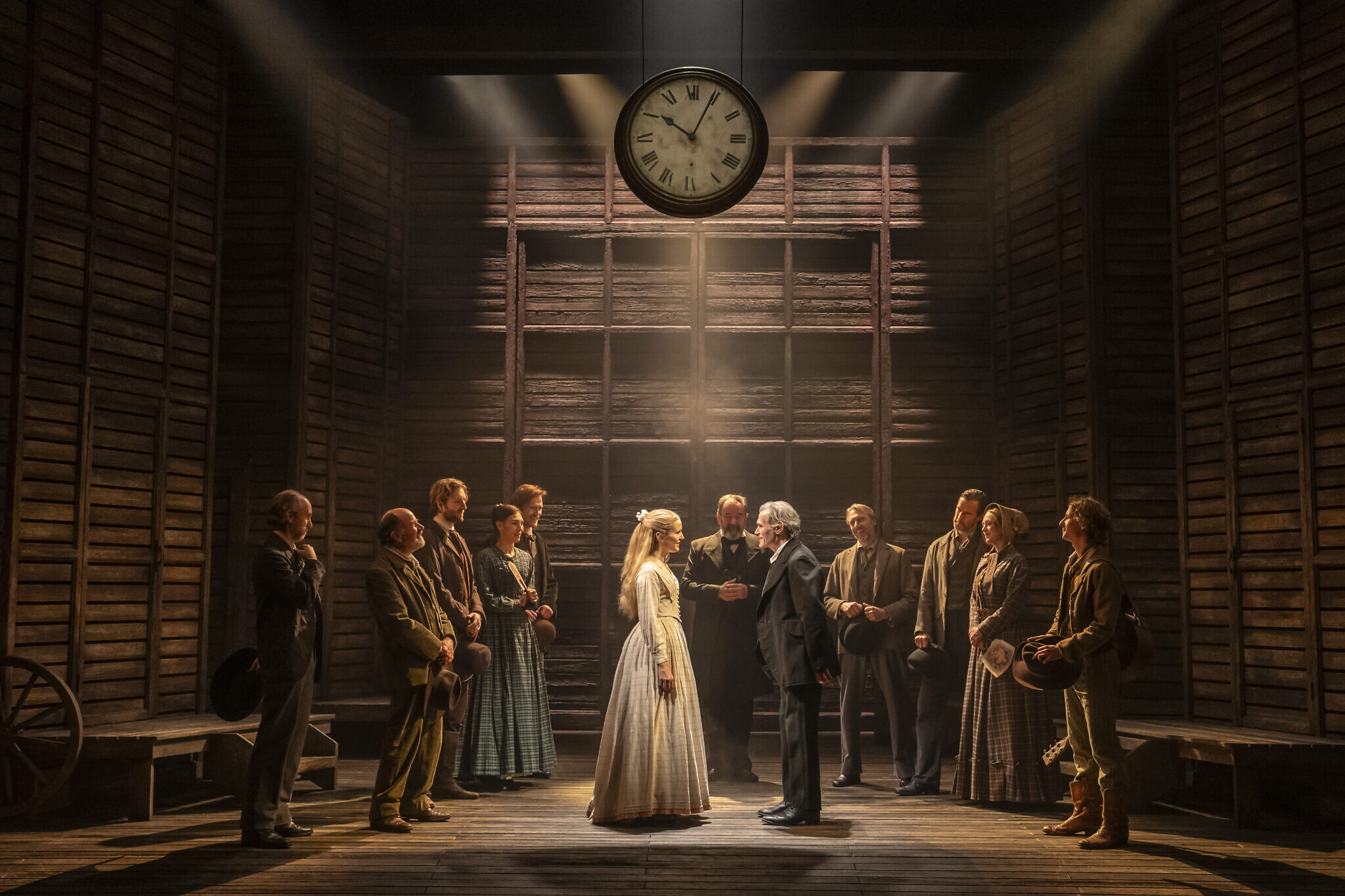
High Noon opens on stage in London
Eric Roth, who has a storied career in Hollywood as the writer of around 40 films — including such hits as Forrest Gump, Killers of the Flower Moon, and Munich — has embarked on his most ambitious project yet. At the age of 80 he decided to switch directions and write a stage play.
When I spoke to him on opening night he told me he was feeling nervous. “As anybody should be on the eve of something,” he said. For this is not just any stage play: Roth settled on a reworking of one of the most treasured and iconic of films, 1952’s High Noon, a black- and-white Western starring the taciturn Gary Cooper and the emerging star Grace Kelly.
The film was written by Carl Foreman, produced by Stanley Kramer, and directed by Fred Zinneman. For many years it served as a sort of moral barometer in Hollywood. It came out at the height — or should that be the depth — of the McCarthy era, and spoke to critics and admirers alike about the struggle against fear and bigotry.
The central figure in the story is US Marshal Will Kane, who the audience meets when he hands in his badge of office on his wedding day to the devout Quaker, Amy Fowler. The couple are literally about to drive off into the sunset to start new, if prosaic lives, running a grocery store in a little Western town, when Kane receives shattering news — that the villain Frank Miller, whom he put in jail, has been released and is arriving on the noon train.
Kane knows he has to put his plans on hold and challenge Miller. But his bride calls on all her Quaker beliefs and begs him not to face the outlaw. Kane, however, insists that he has no choice. The film’s evocative theme tune, Do Not Forsake Me, O My Darlin’ [On This Our Wedding Day] echoes across the bleak Western landscape as the suddenly friendless Marshal Kane prepares for the gunfight of his life.
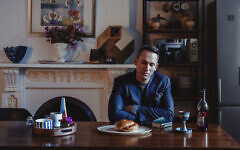
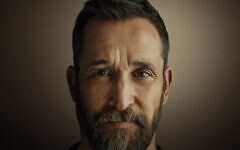
In his programme note, Roth writes that High Noon is “a Greek tragedy at its core, one man standing for something where the consequence is the end of a gun, to lie dead on a dusty prairie street, looking up at an eternal sky”. Roth’s version— a tight 90 minutes with no interval and a ticking clock to alert the audience of the imminent arrival of the noon-time train — features a spectacular closing gunfight, amid atmospheric clouds of railway steam.
It has taken him six years, Roth tells Jewish News, to conceive of re-shaping High Noon for the theatre, persuading backers that it was not a crazy idea to stage a Western. He says: “I thought that nobody had ever done a Western as a drama performed as a play. Musicals galore, but not that most traditional of genres that inhabits an American’s DNA, the making of and the keeping of the lawless, that manifest identity of ours, the West”.
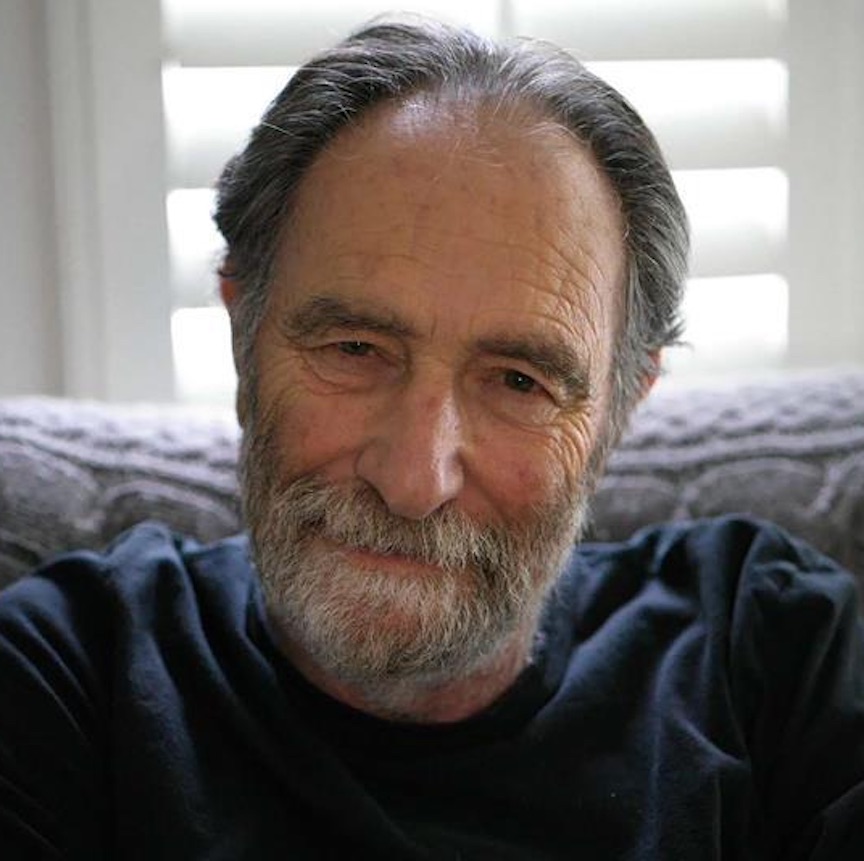
He was not fazed by the length of time it took to bring High Noon to the stage — some film projects have taken a decade or more. “Carl Foreman, a wonderful writer and director, was blacklisted and felt that no-one stood up for him.” Roth draws parallels with the Holocaust, in which he notes “the courage of people who stood up and even hid Jews during the war”; and he believes that the story of High Noon also “speaks to some of the ways that the US is taking now, with the president, and of people having courage to challenge what is right or wrong under this administration”.
Roth knows whereof he speaks — his parents were Communists and he describes himself as “a Red Diaper baby — I spent a lot of time standing in the rain waving placards which said “Free Julius and Ethel Rosenberg” [the Rosenbergs were executed in 1953 for spying for Russia], and we grew up quite poor in Bedford-Stuyvesant, in Brooklyn”.
His parents, Leon and Mimi, were from Germany on his father’s side and Hungary on his mother’s. Roth recalls that his grandfather, who was very Orthodox (“and spoke Yiddish and Russian and was a big influence on me”), had arrived in America in 1905, while his Hungarian family came much earlier, around 1850. “My father was a publicist and also taught at film school, and my mother was a teacher and development executive. We went to Communist summer camps — my father was conflicted about being Jewish and Communist, but he and my mother both identified very strongly as Jewish”.
Roth’s daughter Vanessa is also a hugely talented film-maker, though she has specialised in documentaries, meaning that to date they have never worked together. Nevertheless, both father and daughter are Oscar winners and nominees — Roth won for Forrest Gump and she won for her short documentary Freeheld. Vanessa also directed The Righteous Road Trip, in collaboration with Jewish News’ Justin Cohen.
Having worked with some of the best directors in the world – including Martin Scorcese, with whom he is currently considering another film, and Steven Spielberg – Roth could not be blamed if he abandoned the stage after High Noon and returned to what he knows best: the movies. But he says he has “loved” the experience of working in the theatre and would happily look at writing another play if High Noon gets the plaudits he hopes for. He has an idea for a play about “a famous musician” but he is not yet ready to bring that to the stage.
High Noon, starring Billy Crudup and Denise Gough, is showing at London’s Harold Pinter Theatre until March 7

Keep community journalism free.
Jewish News is free for everyone. No paywall. No barriers. Just trusted journalism for anyone who wants to stay connected to Jewish life in Britain.
If you value that, please support us.
From as little as £5 a month, you can help keep our journalism free and accessible to all.
Every day, we report on the issues that matter to our community. We celebrate achievements, support charities, challenge antisemitism and ensure Jewish voices are heard more widely.
From as little as £5 a month, you can help us continue to:
- Report on the stories shaping Jewish life in the UK and beyond
- Bring our community together through shared stories, events and campaigns
- Celebrate the people, culture and moments that define our community
- Support organisations doing vital work across Jewish Britain
You can make a one-off donation or become a regular supporter. Every contribution helps keep our journalism free, independent and accessible to all.
If everyone who values Jewish News gave a small amount, it would make a real difference to our future.