Prefer Jewish News on Google

British Jews ‘terrified’ as protests outside synagogues help fuel fears, MPs and peers told
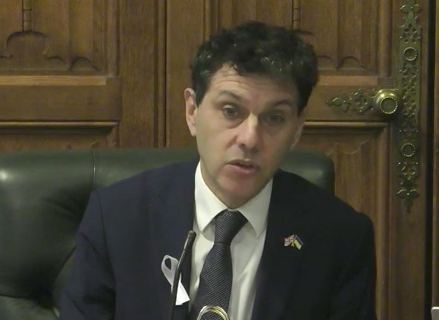
CST's Dr Dave Rich and JLC chief executive Claudia Mendoza appear before the Human Rights Joint Committee
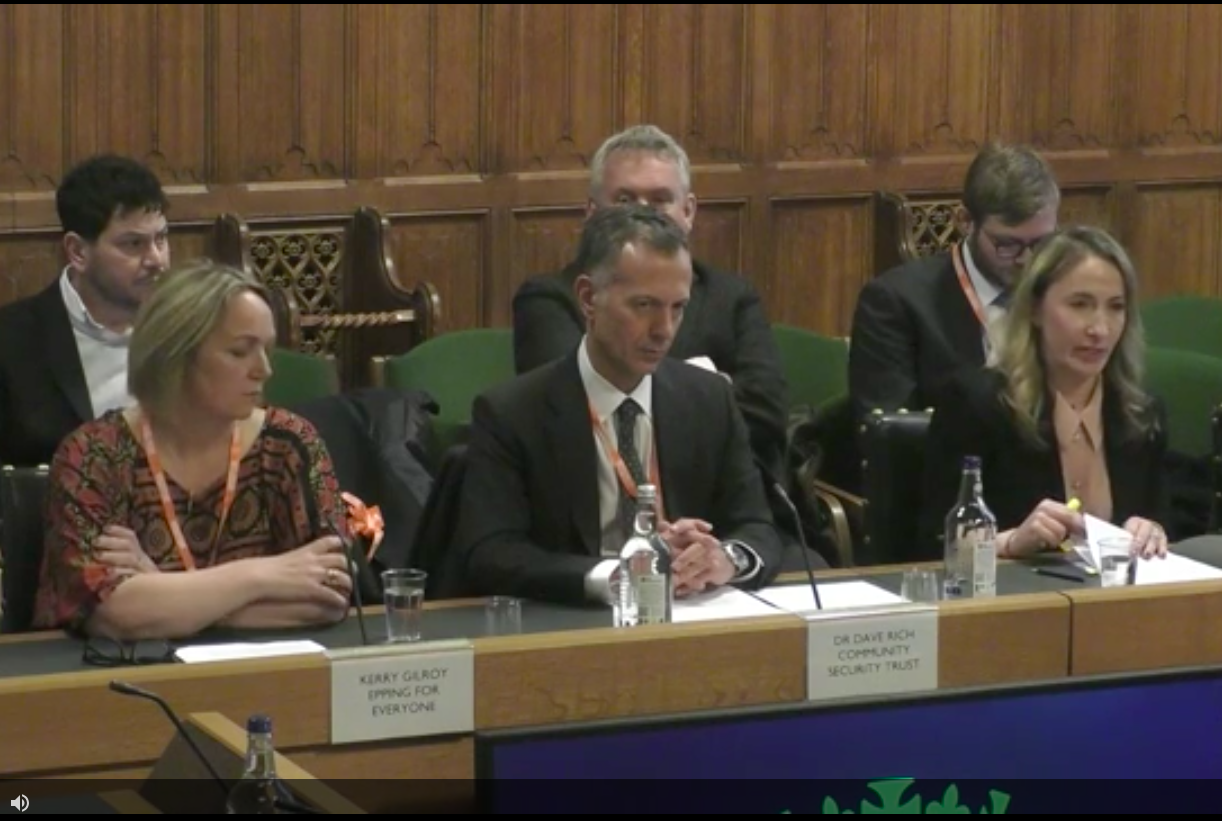
Increasing numbers of British Jews are attending events offering them the opportunity to move to Israel because they are “terrified” by events unfolding at home, including protests by pro-Palestinian activists outside synagogues, a Westminster committee has been told.
Dr Dave Rich told the Human Rights Joint Committee that his organisation, the Community Security Trust (CST), was receiving messages and calls from Jews who were “frankly terrified by what they see.”
Also appearing as a witness as part of the committee’s inquiry into security, safety and protest was Jewish Leadership Council chief executive Claudia Mendoza, who told a group of six MPs and six peers that many in the community now feel the wider society does not fully understand how they have to live their lives.
“Jewish communities will attend synagogue, they will attend services, they will go to events at Jewish community buildings, and there will be a relief when they get home, and no incident has taken place,” Mendoza said.
Wednesday’s committee hearing was chaired by Alex Sobel, the Jewish Labour MP for Leeds Central and Headingley. Near the start of the hearing, he said he had turned to the CST for help after being subjected to threats and antisemitic abuse by a man who was later convicted.
Also appearing as a witness was Kerry Gilroy, from the Epping For Everyone organisation, set up by locals in response to repeated far-right protests against refugees in the area. While not directly related to communal concerns about rising antisemitism, some of Gilroy’s concerns about the way protests are policed and exploited by those wanting to cause maximum hurt chimed with complaints made by British Jews.
To illustrate growing concern about protests said to be in support of Palestine but increasingly affecting Jewish communal life, CST head of policy Dr Rich cited last Sunday’s demonstration outside Giffnock Newton Mearns Synagogue, in Glasgow’s south side.
Dr Rich added: “On Sunday evening, just gone, there was an anti-Israel protest outside of a synagogue in Glasgow.
“Why were they protesting outside of the synagogue? Because the synagogue was holding a meeting for people who wanted to explore what it would involve to move to Israel.
“Not to move to the West Bank settlements, to move to Israel. Why are more of these meetings happening? Because more and more British Jews are genuinely thinking about leaving their home country because of antisemitism.”
Rich continued: “And when Scottish Jews see a protest outside their synagogue, we then get the calls, as we have done this week: Is it safe to go to synagogue on Saturday for Shabbat morning services?
“And we’re getting calls not even from regulars, but from people who aren’t even interested in going to synagogue. But when they see what’s happening, they’re terrified by it.”
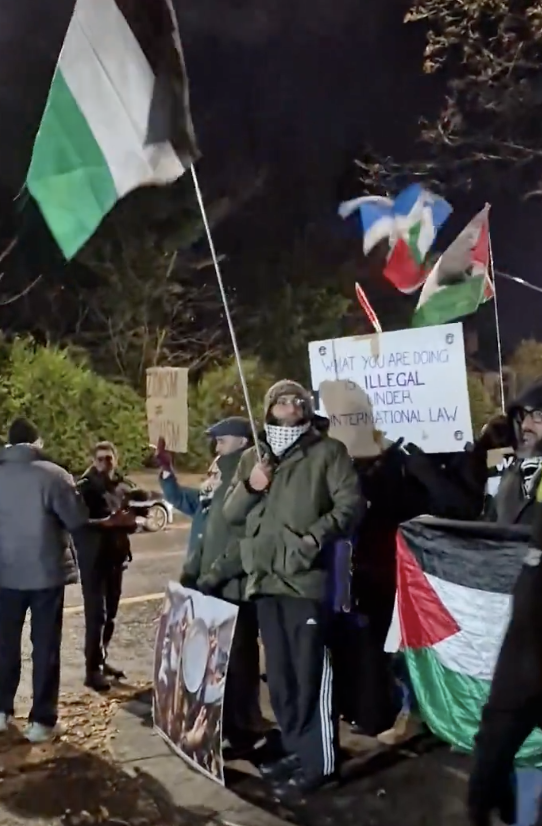
He told the cross-party committee of MPs and peers that similar protests had taken place in recent weeks outside shuls in Leeds and Manchester.
“The irony is that these are protests outside meetings about what it takes for British Jews to move to Israel,” Rich said. “More Jews are going to move to Israel if this [protesting outside synagogues] becomes normalised.”
Rich said: “I think when we look at the rights of protesters, freedom of assembly and so on, we don’t just have to look at the impact on the Jewish community in that immediate moment of can they access their synagogue or their Jewish community centre on that day?”
Offering further insight into the current state of affairs for many in the community, Mendoza said: “I’d like to start by explaining to the committee how the Jewish community goes about its normal life, because I think it’s unknown to many.
“The Jewish community, I think, has probably internalised the fact that all of our buildings, our synagogues, our communal buildings, our schools, there is security,” she added.
“We have professional security guards, we have volunteer security guards… This is the way that the community has operated for many, many years, and unfortunately recent events have shown why these measures and these security measures are necessary.”
Mendoza later said the response to rising antisemitism had been “mixed”. But both she and Dr Rich agreed that recent changes to the Crime and Policing Act had been welcome.
But regulations now need to go further on protests that take place close to places of worship.
“We need to see stronger and more consistent measures to make sure that Jews who are participating, whether it’s worship or not, are free to do so without the threat of intimidation or the threats of violence,” Mendoza said.
Rich added: “For the big national marches that take place in central London, that’s something that I think the police tend to have in hand.
“For smaller protests either outside central London or in other parts of the country, or ones that are more spontaneous, I think they find that quite difficult.”
He told the committee that police had struggled with the language used at these protests, a point Mendoza also agreed with.
“I think the issue is the language used at these protests, and identifying and intervening when racial incitement or proscription offences are taking place,” Rich said.
“One of the most troubling things that we’ve heard is calls for intifada,” Mendoza said.
“Long live the intifada, victory to the intifada, globalise the intifada, victory to the intifada—intifada is widely understood by the Jewish community to be a call for violent uprising.”
Later, committee chair Sobel spoke about the impact of antisemitism on Jewish students’ campus life. His constituency has seen pro-Palestinian demonstrations that also targeted Hillel House, a communal hub and home for some University of Leeds students.

Keep community journalism free.
Jewish News is free for everyone. No paywall. No barriers. Just trusted journalism for anyone who wants to stay connected to Jewish life in Britain.
If you value that, please support us.
From as little as £5 a month, you can help keep our journalism free and accessible to all.
Every day, we report on the issues that matter to our community. We celebrate achievements, support charities, challenge antisemitism and ensure Jewish voices are heard more widely.
From as little as £5 a month, you can help us continue to:
- Report on the stories shaping Jewish life in the UK and beyond
- Bring our community together through shared stories, events and campaigns
- Celebrate the people, culture and moments that define our community
- Support organisations doing vital work across Jewish Britain
You can make a one-off donation or become a regular supporter. Every contribution helps keep our journalism free, independent and accessible to all.
If everyone who values Jewish News gave a small amount, it would make a real difference to our future.