Prefer Jewish News on Google
Cable Street 90 festival launches with warning over modern antisemitism
East London programme marks 90 years since Jewish residents and their allies stood against Mosley’s Blackshirts
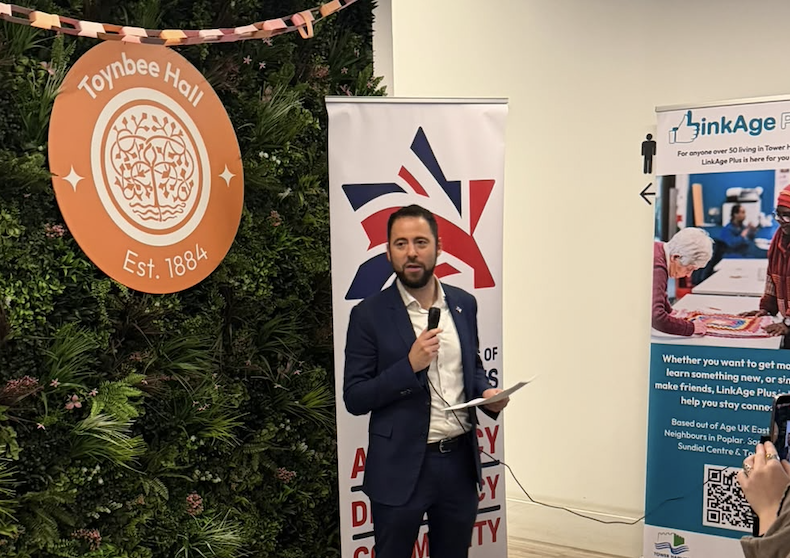
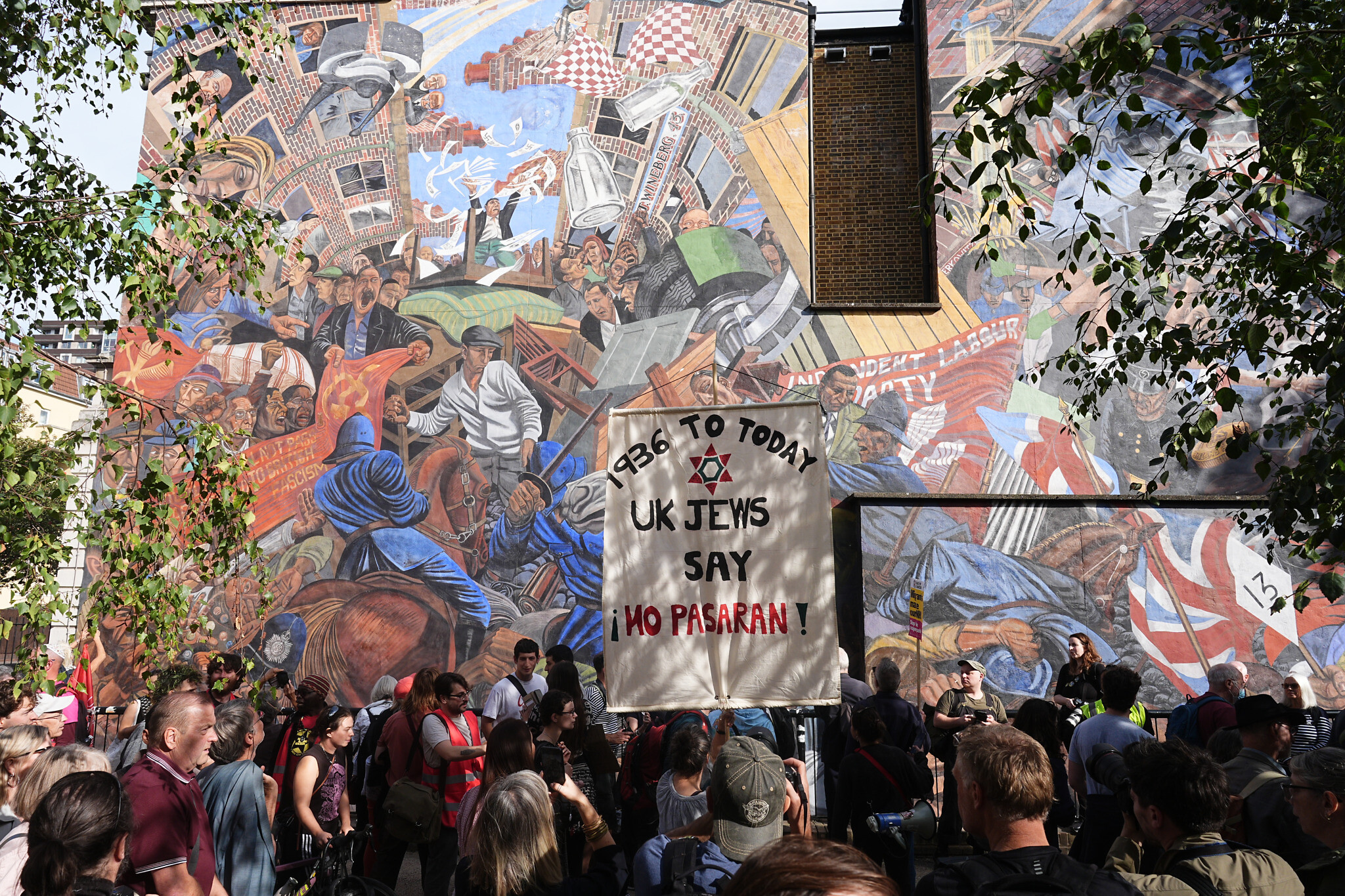
A festival marking the 90th anniversary of the Battle of Cable Street has opened in East London with a warning that the fight against antisemitism remains unfinished.
Around 40 people attended a reception launching Cable Street 90, a programme of music, film, theatre, talks, tours and art exploring the history of the Jewish East End and the legacy of the landmark anti-fascist protest.
The festival marks nine decades since thousands of local people blocked Oswald Mosley’s British Union of Fascists from marching through the heavily Jewish East End on 4 October 1936.
Speaking at the launch, Board of Deputies president Phil Rosenberg reflected on the organisation’s own controversial role at the time, when its predecessors urged Jewish residents to stay away from the confrontation.
“The Board of Deputies’ role in the history of Cable Street has long been debated,” he said. “There are legitimate criticisms of our predecessors for calling on our community to stay away from Cable Street.”

Rosenberg said the organisation had nevertheless worked against fascism through other means, including efforts that contributed to the passage of the Public Order Act later that year.
“Different Jewish leaders pursued different strategies in extraordinarily difficult circumstances,” he said.
But he drew a sharp distinction between the politics of the 1930s and today, accusing parts of the far-left of abandoning the anti-antisemitism represented by Cable Street.
“From a noble heritage of protesting against antisemitism at Cable Street, parts of the modern far-left has sunk to promoting antisemitism on our streets, online and on university campuses,” Rosenberg said.
“We see it whenever Jewish people’s right to self-determination is singled out and denied. We have seen it in attempts to revive the toxic lie that Zionism is racism.”
The launch also heard from Lizzie Stevenson of Toynbee Hall, who spoke about the organisation’s historic relationship with the East End Jewish community, including the role of Yiddish and its involvement in the campaign that led to the Public Order Act.
Debby Lee, who developed the festival to mark the anniversary, spoke about her own family history and connection to Cable Street, while artist Inam Zimbalista discussed his work and thanked those involved in the project.
Rosenberg said the festival was intended not only to remember the stand against Mosley but to celebrate the Jewish culture and community that flourished in the East End.
“For British Jews, Cable Street became much more than a historical event. It became a symbol,” he said. “A reminder that antisemitism can be challenged. That hatred is not inevitable. And that when communities stand together, they can change the course of history.”

Keep community journalism free.
Jewish News is free for everyone. No paywall. No barriers. Just trusted journalism for anyone who wants to stay connected to Jewish life in Britain.
If you value that, please support us.
From as little as £5 a month, you can help keep our journalism free and accessible to all.
Every day, we report on the issues that matter to our community. We celebrate achievements, support charities, challenge antisemitism and ensure Jewish voices are heard more widely.
From as little as £5 a month, you can help us continue to:
- Report on the stories shaping Jewish life in the UK and beyond
- Bring our community together through shared stories, events and campaigns
- Celebrate the people, culture and moments that define our community
- Support organisations doing vital work across Jewish Britain
You can make a one-off donation or become a regular supporter. Every contribution helps keep our journalism free, independent and accessible to all.
If everyone who values Jewish News gave a small amount, it would make a real difference to our future.