Prefer Jewish News on Google
Cases of ‘extreme violence’ on campus recorded by CST for the first time
Coming from both staff and students, 2024-2026 paper paints troubling picture of situation in Higher Education

CST’s latest campus antisemitism report shows that Jew hate at universities and colleges remains at significantly higher levels than before the 7 October Hamas terror attacks, with abusive behaviour accounting for a large number of the incidents in question.
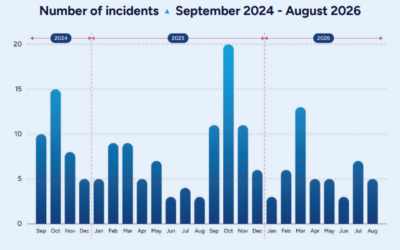
Published today, the new dossier, Campus Antisemitism in Britain 2024-2026 shows that 178 university-related antisemitic incidents took place over the two academic years: 83 incidents in 2024/25 and 95 incidents in 2025/26, representing a 14% year on year increase. While the figure is far lower than the extreme surge seen during the 2023-2024 academic year, during which 272 antisemitic incidents were reported, the overall figures show a similar story to that of antisemitism figures in general – a significant spike being followed by a higher rate of antisemitic incidents in general than there were before the spike occurred.
Abusive behaviour remained by far the most common type of antisemitic incident recorded, representing 84% of all university incidents, including verbal abuse, antisemitic comments in person and online, antisemitic graffiti, and written abuse directed at Jewish students, staff and organisations. For the first time ever when logging university-related incidents, CST recorded two cases of extreme violence (an attack potentially causing loss of life or grievous bodily harm), one in Edinburgh and the other in Leeds. Also recorded were assaults, damage and desecration to Jewish property, threats and mass produced antisemitic literature.
Examples of antisemitism cited in the report included an incident in August 2025 on a fresher’s whatsapp group, when someone identified that a student was Jewish. Someone then wrote: “wait we have a Zionist here” and then said, “when I find you … I’ll run u over with my car” [sic], with another student asking if they could join in. In another incident logged in November 2024, two Jewish students were at a house party. When another guest discovered they were Jewish, he said: “what you two are doing in Lebanon is terrible”; “Jews think they are better than everyone else”; “I could make myself even more Jewish” while pointing to his nose; and then, “I could grow those tentacles from the side of my head”.
Overall, the report shows that antisemitic incidents occurred at 52 higher education institutions across 27 cities, with the highest number of incident recorded in locations with the largest Jewish student populations, mirroring the national trend whereby antisemitic incidents are concentrated in areas with larger Jewish communities. The first three months of the academic year (September-November) saw a much higher percentage of antisemitic incidents (42%) than other quarters, which CST attributes to possible factors including freshers activities, the visibility of Jewish life during the High Holy Days, activity by student societies, anniversaries linked to 7 October, and novel interaction between students who are unfamiliar with each other.



The antisemitic incidents included students against other students or staff, as well as staff against other staff or students. Staff perpetrated incidents were much more likely to refer to Hitler, the Nazis or the Holocaust (56%, compared to 23% of all other university incidents) and draw an explicit comparison between Israel and the Nazis (38% compared to 10% of all other university incidents).
Other examples of antisemitic incidents mentioned in the report included one in September 2025, when a Jewish student was out with her friends who did not know she was Jewish. They were handed some vouchers for an Israeli restaurant. One friend said: “This business is owned by a Jew,” and the group proceeded to rip up their vouchers. In March 2026, in the wake of the arson attack on Hatzola ambulances in Golders Green, a university staff member commented on social media that “If everyone in the world hates a certain group of people doesn’t it mean that something is off?”
In a foreword to the report, Raphi Leon, President of UJS, said: “One of the impacts of the normalisation of antisemitism is a fall in reporting. When ‘low-level’ incidents become part of the norm of university life, students don’t feel the need to report as often. It is therefore likely that the true number of incidents that occurred is higher than reported.
“On campuses we’ve seen terrorist groups and acts glorified and defended, staff and students isolated due to their identity, lecturers, guest speakers and student groups crossing the line from legitimate criticism of Israel to antisemitism, and online activity which purposefully targets and harms the Jewish community. Extremists, whether on the right, the left or Islamist, have perpetuated this hatred.
“This isn’t a problem unique to universities, but rather a societal threat with a flash point on campus. We must have zero-tolerance for antisemitism and that means working to tackle a campus culture where antisemitism is socially inexpensive. It means Jewish students defining the narrative that surrounds them. It means pride and joy being the story of the day.”
CST Chief Executive, Mark Gardner said: “These figures show that Jews are still facing a very serious campus antisemitism problem. Figures have fallen from their post 7 October 2023 peak but are still far higher than before that dreadful day. It is particularly troubling that a growing proportion of the anti-Jewish actions involve university staff, who carry authority and make victims feel especially vulnerable.
“Universities have a duty to ensure that Jewish students and staff can study, work and participate on campus the same as anyone else. Sympathy is not enough, it needs action against those who abuse, threaten or target Jews, whether they are students, staff or external activists.”
Education Secretary Lucy Powell said: “Antisemitism has no place in our education system or our society, and the findings in this report are deeply troubling. No student should have to choose between expressing their identity and feeling safe on campus, yet for too many Jewish students that remains a reality. We expect universities to take a zero-tolerance approach to antisemitism, and are providing training to help university staff identify and respond to incidents swiftly.”
Board of Deputies Vice President Karen Newman said: “Three years on from 7 October, Jewish students continue to face unacceptable levels of antisemitism on campus. While the unprecedented surge immediately after the attacks has subsided, these figures show that anti-Jewish hatred remains significantly higher than it was before 7 October, leaving many Jewish students feeling isolated and unwelcome.
“Universities must ensure that campuses are places where Jewish students and staff can participate fully and confidently in academic life. We are grateful to CST for its vital work in documenting these trends, and urge university leaders to take robust action to tackle antisemitism wherever it occurs.”
“We will continue to support UJS in their advocacy with universities and with government to ensure every Jewish student can thrive at university.”
The full report can be accessed here

Keep community journalism free.
Jewish News is free for everyone. No paywall. No barriers. Just trusted journalism for anyone who wants to stay connected to Jewish life in Britain.
If you value that, please support us.
From as little as £5 a month, you can help keep our journalism free and accessible to all.
Every day, we report on the issues that matter to our community. We celebrate achievements, support charities, challenge antisemitism and ensure Jewish voices are heard more widely.
From as little as £5 a month, you can help us continue to:
- Report on the stories shaping Jewish life in the UK and beyond
- Bring our community together through shared stories, events and campaigns
- Celebrate the people, culture and moments that define our community
- Support organisations doing vital work across Jewish Britain
You can make a one-off donation or become a regular supporter. Every contribution helps keep our journalism free, independent and accessible to all.
If everyone who values Jewish News gave a small amount, it would make a real difference to our future.