Prefer Jewish News on Google

Ed Miliband: UK-Israel security ties unaffected by sanctions
Appearing before Westminster's Foreign Affairs Select Committee, the Foreign Secretary condemns 'collective punishment' in Gaza
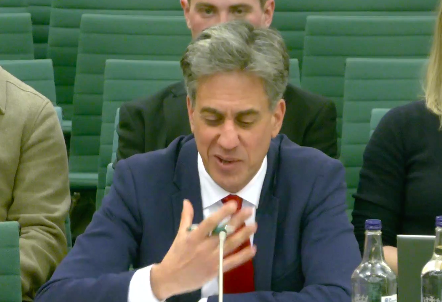
Foreign Secretary Ed Miliband told Westminster’s Foreign Affairs Select Committee that the UK’s recently imposed sanctions on Israel over West Bank settlement expansion have had “no impact” on the close security and intelligence relationship between the two countries.
Pressed over concerns that sanctions might threaten long-standing security ties, Miliband was clear: “There has been no impact on this relationship since sanctions were announced in September.”
Asked specifically about criticism from communal leaders, including Chief Rabbi Ephraim Mirvis, regarding the possible effect of sanctions on security, Miliband was equally direct: “There has been no impact on our intelligence work with Israel, that obviously continues.”
While expressing “great respect” for the Chief Rabbi, Miliband added, “I disagree with him.”
Miliband elaborated that the UK maintains “an important relationship, an important channel with Israel in relation to [security],” but said he would “be careful what I say about this.”



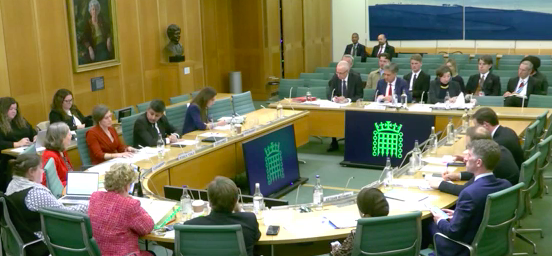
He also revealed discussions about the likely impact of sanctions on UK-Israel relations took place prior to their announcement. “It hasn’t [impacted security cooperation], and I just want to clarify whether there was an assessment carried out about that… Absolutely, and it didn’t have an impact,” he said.
The hearing ranged widely, with the Foreign Secretary also facing questions on the UK’s support for Ukraine, sanctions against Russia, and the fallout from COP31, before the focus turned to Israel, Gaza, and the West Bank.
On Gaza, Miliband condemned Israel for imposing “collective punishment” by blocking vital aid, vowing further UK action against organisations supporting illegal settlements.
He said, “the best thing that can happen is that we have a (new) Israeli government in place … an Israeli government that says we’re going to stop doing this. We’re just going to stop doing this, and it’s absolutely maddening.”
Describing the humanitarian situation as “horrifying” and “shameful,” Miliband said: “When you see tens of thousands, 150,000 tents being blocked from going into Gaza, when you see these frankly absurd claims of dual-use equipment being made, you can only conclude the collective punishment of the people of Gaza. That’s what it looks like.”
He noted growing international frustration with Israeli Prime Minister Benjamin Netanyahu, referencing a statement from the Trump-initiated Board of Peace accusing Netanyahu of stalling the plan to end the war in Gaza and seeking to blame Hamas alone.
“I do think it’s important to say that it is a good thing that the U.S. government has tried to find a way through on Gaza,” Miliband said. “The Board of Peace called out Israel for what it was doing.”
Miliband also revealed that he had received no pushback from the US administration over the UK’s tougher approach: “I was told by a lot of people ‘the US administration is going to be absolutely furious with you, and they’re going to take action’… but they haven’t.”
He was bullish about the impact of the first round of UK sanctions, announced last week against eight Israeli construction firms involved in settlement building and an activist group accused of blocking aid into Gaza. Miliband said the sanctions regime is “designed to eventually see an end to the occupation as a two-state solution, and that is our north star, if you like.”
“We’re introducing a ban when it comes to the import of goods from the occupied territories, from the illegal settlements in the occupied territories. But we’ve also said we want to cut off the supply lines of finance, construction, and other services,” he explained.
However, Miliband was careful to clarify: “We are not seeking to target Green Line Israel.
“You know, I have no tract with those people who question Israel’s right to exist. I think Hamas is an appalling terrorist organisation that I utterly condemn.”
He concluded, “But this is about the pursuit of the two-state solution, which, in my view, is essential not just for the security and dignity of Palestinians, but the security, dignity, safety of the Israeli people as well.”
Asked about the activities of UK organisations accused of advertising in illegal West Bank settlement areas, Miliband said he would not comment on claims about individual groups but insisted, “We do not want to see advertising settlement property. We do not want to see advertising for those sorts of opportunities… We will ensure that we have a comprehensive regime.”

Keep community journalism free.
Jewish News is free for everyone. No paywall. No barriers. Just trusted journalism for anyone who wants to stay connected to Jewish life in Britain.
If you value that, please support us.
From as little as £5 a month, you can help keep our journalism free and accessible to all.
Every day, we report on the issues that matter to our community. We celebrate achievements, support charities, challenge antisemitism and ensure Jewish voices are heard more widely.
From as little as £5 a month, you can help us continue to:
- Report on the stories shaping Jewish life in the UK and beyond
- Bring our community together through shared stories, events and campaigns
- Celebrate the people, culture and moments that define our community
- Support organisations doing vital work across Jewish Britain
You can make a one-off donation or become a regular supporter. Every contribution helps keep our journalism free, independent and accessible to all.
If everyone who values Jewish News gave a small amount, it would make a real difference to our future.