Prefer Jewish News on Google

Inside the Holocaust museum teaching children who have never met a Jew
The National Holocaust Centre and Museum is confronting antisemitism, ignorance and indifference by introducing thousands of British schoolchildren to the everyday joys of Jewish life
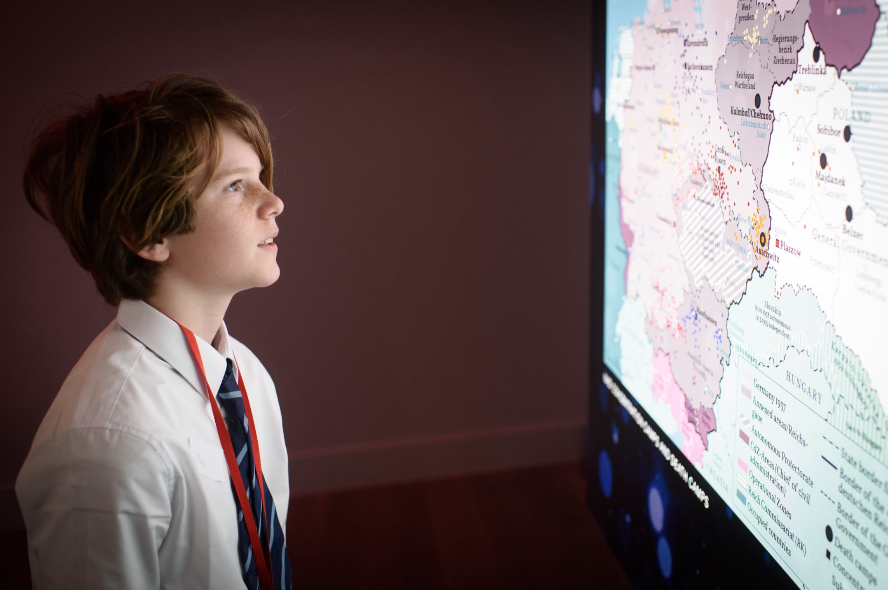
A farm in rural Nottinghamshire is perhaps an unlikely place to learn what it means to be Jewish. And yet, off a winding country lane, surrounded by fields and cows, is where thousands of British schoolchildren come each year to do just that.
Most children arrive having never met a Jewish person. What they do arrive with is some rudimentary understanding of the Holocaust and, depending on their age, they spend a day with educators who introduce them to a programme which it is hoped will leave them with a deeper understanding than any textbook could offer.
Immersive exhibitions, historical artefacts and first-hand testimony from survivors are among the tools staff use when working with groups of between 30 and 60 children at a time.
On the day I visited the National Holocaust Museum, there were 180 Year 5 and 6 pupils on site from three visiting schools, from Stoke-on-Trent, Derbyshire and Nottinghamshire.
The museum itself is the brainchild not of the Jewish community, but of a Christian family whose visit to Israel in 1991 left them questioning their own education, their responsibilities and what the Holocaust should mean to them as individuals.


Having visited Yad Vashem, brothers James and Stephen Smith reflected on the inadequacy of their own Holocaust education at school and university. Together with their mother, Marina, they set about creating a place where others could consider not only what happened during the Holocaust, but what it might mean to them personally.
More than three decades later, their legacy has taken on a renewed significance.
“Is this Jewish bread, Miss?” one pupil asks excitedly as the group of children I am shadowing find themselves inside a recreation of a Jewish family’s living room in 1930s Germany, part of the museum’s interactive exhibition, The Journey.
For Abbie Howe, one of the museum’s educators, it is these seemingly mundane encounters with Jewish life that are among the most important parts of the children’s visit.
“It is important the children get to see how a regular Jewish family would have lived. I love bringing them to this bit because they get to touch and feel the items. Most of the time they have never seen a challah before and they don’t know what it is. But these small things are usually windows into the worlds of Jewish people. It is how the students humanise people, see them as normal people, families, potentially just like them.”
For the museum’s educators, one of the greatest challenges in teaching children about the persecution of Jews is that many have little understanding of who Jews are in the first place.
Nicola Strauther, the museum’s director of learning and a former teacher, recalls one of the more revealing questions that arose from conversations she has had with pupils: why didn’t Jews simply stop being Jewish?
Paraphrasing the children’s questions, she says: “I don’t understand. You’ve told me terrible things happen to people who were Jewish. Just don’t be Jewish anymore.”
The museum, which is largely staffed by non-Jews from the surrounding area, has spent the past few years adapting its educational programmes in response to some of the misconceptions children arrive with.
When secondary school pupils visit the museum, she says, one of the first things they are asked to do is write down what they understand being Jewish to mean.
“Really low tech, because they’ve just got a whiteboard and a pen, and they will always write kosher, synagogue, religion,” says Strauther.
“They’ll never write ethnicity, culture, family.”
For many of these children, their only previous encounter with Jews has been through religious education.
“Understanding how someone who is entirely secular could have been persecuted for being Jewish is something that requires explaining,” she says.
Perhaps even more troubling is that some children believe Jewish people no longer exist, having encountered them predominantly in the context of the Holocaust.
She says: “It is partly why the museum has developed an outreach programme called Joys of Judaism, which introduces children as young as six and seven to Jewish life, traditions and festivals.
“Educators can go into schools, lay a Shabbat table, make challah out of Play-Doh with the children and show them videos of a rabbi opening the ark in a synagogue.
“For children growing up in former mining and industrial towns, it may be the closest they ever get to seeing the inside of a synagogue.”
The hope is that by the time they come to learn about the Holocaust in Year 6, they will already have some understanding of Jewish life, having encountered Jews in an entirely different context.
Strauther says: “For older children, the emphasis is increasingly on challenging their thinking rather than simply providing them with historical information they could access on their phones.”
Another common misconception among pupils is that Hitler alone was responsible for the Holocaust. A workshop on responsibility encourages them to consider the complicity of ordinary people, those whose names do not appear in their history textbooks but whose actions made the Holocaust possible.
Even primary school pupils are encouraged to grapple with these questions. After walking through a recreation of the aftermath of Kristallnacht, one boy offered a remarkably perceptive insight for a 10-year-old into why ordinary people might have gone along with the Nazis.
“Maybe they were scared they would be put in prison or get in trouble; they might have felt pressured to do what everyone else was doing,” he explained.
It is an approach that feels particularly in keeping with the intentions of the museum’s Christian founders.
But what does Holocaust education look like in Britain in the aftermath of 7 October?
For Strauther and her colleagues, events in the Middle East and the subsequent rise in antisemitism have presented another set of challenges, some of which they are encountering even among primary school children.
While, unlike others in the sector, the museum did not experience schools cancelling visits altogether in the aftermath of 7 October, Strauther says some schools arrived with fewer pupils because parents had withdrawn their children.
In one instance involving a primary school, parents had objected to their children taking part in a programme about the Kindertransport, despite it having nothing to do with Israel.
The museum’s educators are also aware, through conversations with teachers, of instances of parents withdrawing young children from lessons about Judaism as part of their education about different religious festivals.
The museum does discuss Israel and contemporary antisemitism with its secondary school visitors, but it is not ordinarily something that features in its primary school programme.
“Unless the kids bring [it] up, it’s never mentioned in the primary,” Strauther says.
For secondary school pupils, educators have developed a workshop exploring the historical origins of some of the language being used about Jews today.
Being just half an hour away from Lincoln, the museum is well placed to introduce children to the history of the medieval blood libel, tracing its evolution through Nazi propaganda and examining how accusations of Jews killing babies continue to surface today.
The intention, Strauther explains, is not to discourage young people from taking part in political demonstrations, but to equip them with an understanding of the historical significance of some of the language they might encounter or use themselves.
“The idea behind that with the secondaries was to get them to know the history of what they were shouting, and the impact of what they were shouting,” she says.
The museum is also working with teachers, helping them to recognise antisemitism in their classrooms and giving them the confidence to respond to it.
And while much of the conversation within Britain’s Jewish community over the past few years has centred on hostility towards Jews, in this part of the country the museum’s educators are also grappling with something else: indifference.
“For the vast majority of people, this stuff is not on their social media. It doesn’t come up,” says Strauther.
“We feed the algorithm. You watch it, you get annoyed at it, but then it gives you more and more.”
For the museum, the challenge is not only educating those who might harbour prejudices about Jews, but also engaging those for whom Jews and Jewish life barely register at all.
And while the museum’s rural location might pose something of a logistical challenge for those travelling from London, it is arguably one of its greatest assets in terms of the people it is capable of reaching.
Abi Levitt, the museum’s interim chief executive, is keen for it to become better known beyond the schools that account for much of its visitor numbers.
“If you’re looking at ordinary visitors, we get 7,000 [a year] and we want to push that up considerably,” she says.
While tens of thousands of schoolchildren benefit from the museum’s educational work, Levitt believes there is enormous potential to attract more independent visitors, particularly from the surrounding areas.
Around four million people, she says, live within an hour’s drive of the museum, with both Nottingham and Sheffield within reach.
Like many regional museums, however, its financial sustainability remains a challenge.
“The main challenges of any small regional museum, and even the big ones, is money.”
There is also the increasingly pressing question of what Holocaust education will look like when there are no longer survivors able to share their experiences first-hand.
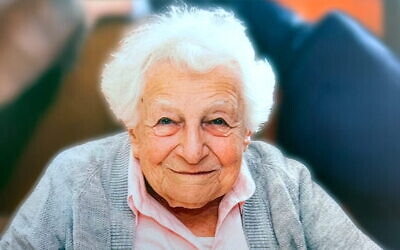
The museum still has around 15 Holocaust survivors in its extended survivor family, around 10 of whom speak regularly.
Through its Forever Project, it has created interactive digital testimonies, enabling schoolchildren to continue asking survivors questions long after their visit to the museum.
Its education and curatorial teams are also working to bring together objects from the museum’s collection with recorded survivor testimony, giving children an insight into the lives of the people to whom those objects once belonged.
But for as long as survivors are willing and able to make the journey to Nottinghamshire, the museum is determined to facilitate it.
An appeal to North London synagogues for volunteer drivers has resulted in around 20 people offering their time to drive survivors to and from the museum, providing a door-to-door service for those for whom travelling independently has become increasingly difficult.
Strauther explains: “Before the volunteers came forward, the charity was sometimes faced with taxi fares of around £600 to enable a survivor to speak in person.
“And as a charity, we pay it because we know how important it is that the survivor is here. Thankfully, so many people came forward and offered to drive.”
At a time when much of Britain’s Jewish community is asking what more wider society could be doing to confront antisemitism, there is something particularly heartening about spending a day in the company of people, most of whom are not Jewish, who have made educating others about Jews and the Holocaust their life’s work.
It is certainly something the museum’s Director of Development wants to shout about.
Adam Overlander-Kaye says: “There is something so heartening about watching a group of children in the middle of the Nottinghamshire countryside, excitedly discovering what a challah is.
“Watching children discovering something of themselves in the lives of people they might otherwise never have known.”
One of the things that struck me during my visit was how little the museum made of the remarkable story of its own founding.
While the museum itself encourages its students to consider the choices and responsibilities of ordinary people, there is surely also a lesson to be learnt from the choices made by the Smith family.
Levitt agrees. “I think we need to bring that out,” she says.
“It is a unique story.”

Keep community journalism free.
Jewish News is free for everyone. No paywall. No barriers. Just trusted journalism for anyone who wants to stay connected to Jewish life in Britain.
If you value that, please support us.
From as little as £5 a month, you can help keep our journalism free and accessible to all.
Every day, we report on the issues that matter to our community. We celebrate achievements, support charities, challenge antisemitism and ensure Jewish voices are heard more widely.
From as little as £5 a month, you can help us continue to:
- Report on the stories shaping Jewish life in the UK and beyond
- Bring our community together through shared stories, events and campaigns
- Celebrate the people, culture and moments that define our community
- Support organisations doing vital work across Jewish Britain
You can make a one-off donation or become a regular supporter. Every contribution helps keep our journalism free, independent and accessible to all.
If everyone who values Jewish News gave a small amount, it would make a real difference to our future.