Prefer Jewish News on Google

Israeli scientists develop blood test that detects early breast cancer with 95% accuracy
Experimental test could also identify women at risk of the disease returning after treatment
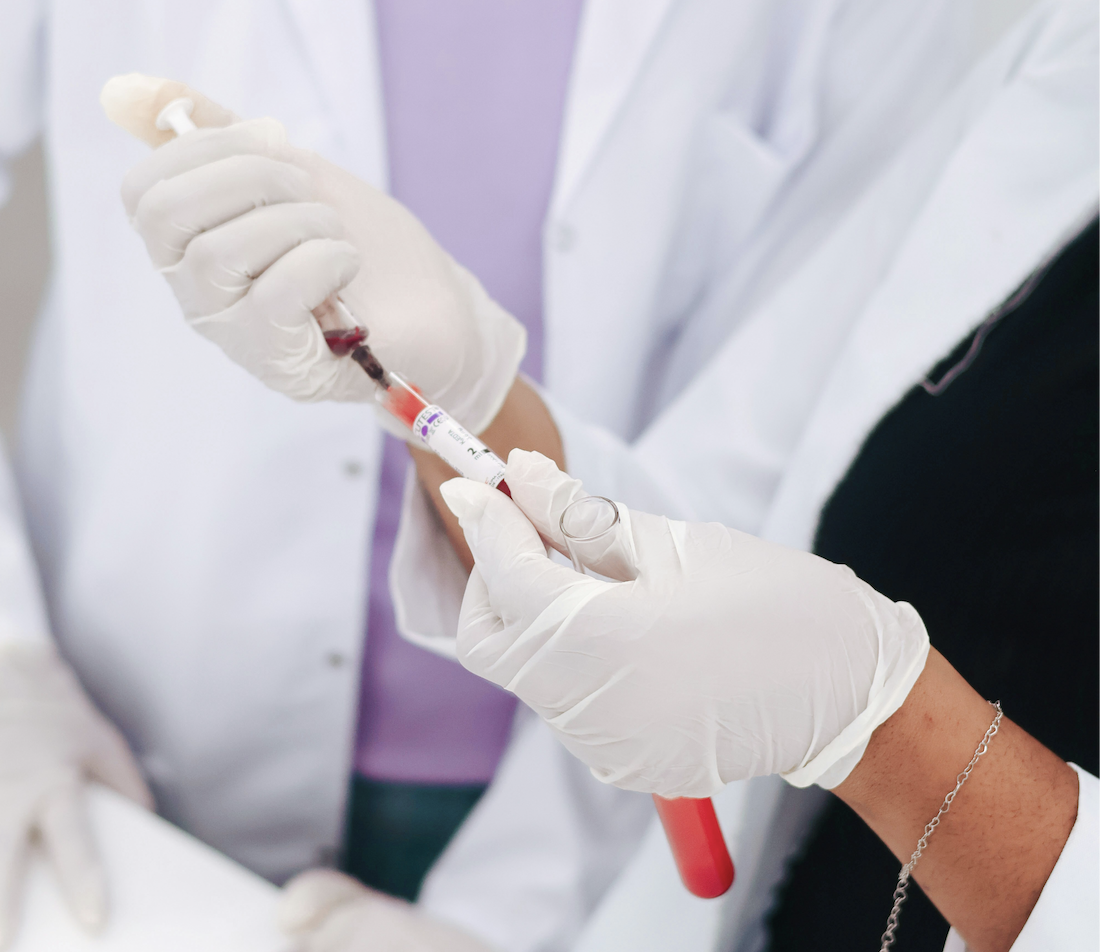
Israeli scientists have developed a blood test that can detect early-stage breast cancer with 95 percent accuracy and identify patients at a greater risk of the disease returning.
Researchers at the Weizmann Institute of Science and Hebrew University of Jerusalem hope the breakthrough could pave the way for earlier diagnosis, particularly among women whose tumours are difficult to detect through mammograms.
The study, published in the scientific journal Nature, was led by Dr Efrat Shema and Professor Guy Ron, working alongside doctors at Kaplan Medical Centre and researchers in France, Germany, Italy and the United States.
The test works by identifying tiny chemical markers released into the bloodstream when cancer cells break down.
Using advanced microscopes and artificial intelligence, researchers were able to distinguish between healthy women and those with breast cancer, even when tumours measured less than two centimetres and had not spread beyond the breast.



The team initially analysed blood samples from 77 breast cancer patients at the Mayo Clinic in Florida and 30 healthy women.
Further testing involving 188 patients, with the help of Kaplan and Sheba medical centres, found the technique was effective across different types of breast cancer.
“Breast cancer screening saves lives,” Shema said. “Regular mammograms reduce the risk of dying from the disease by 22 percent, but the denser the breast tissue, the easier it is for a tumour to ‘hide’ in the image.”
The researchers found that breast density did not affect the performance of the blood test.
Their work also uncovered a group of particularly aggressive cancer cells hidden among less aggressive cells within the same tumour, which could help explain why the disease sometimes returns years after successful treatment.
By looking for signs of these cells in the bloodstream, the team was able to predict breast cancer recurrence with 81 percent accuracy.
The test identified patients at risk of relapse who had previously been considered low risk using conventional methods.
“The differences appear to be mainly epigenetic,” Shema explained. “When we grew breast cancer models in the lab starting with nonaggressive cells, an aggressive population always emerged eventually.”
The researchers are now exploring whether treatments could prevent cancer cells from becoming more aggressive.
“In the future, they could help us not only predict recurrence but also search for ways to prevent it,” Shema said.
Around 2.3 million women worldwide were diagnosed with breast cancer in 2022, according to the World Health Organisation, with 670,000 dying from the disease.
In Israel, approximately 4,500 women are diagnosed each year.
The blood test remains experimental and is not yet available for routine screening.

Keep community journalism free.
Jewish News is free for everyone. No paywall. No barriers. Just trusted journalism for anyone who wants to stay connected to Jewish life in Britain.
If you value that, please support us.
From as little as £5 a month, you can help keep our journalism free and accessible to all.
Every day, we report on the issues that matter to our community. We celebrate achievements, support charities, challenge antisemitism and ensure Jewish voices are heard more widely.
From as little as £5 a month, you can help us continue to:
- Report on the stories shaping Jewish life in the UK and beyond
- Bring our community together through shared stories, events and campaigns
- Celebrate the people, culture and moments that define our community
- Support organisations doing vital work across Jewish Britain
You can make a one-off donation or become a regular supporter. Every contribution helps keep our journalism free, independent and accessible to all.
If everyone who values Jewish News gave a small amount, it would make a real difference to our future.