Prefer Jewish News on Google

Knesset elects speaker from the ‘change’ bloc opposing Netanyahu
A key Eisenkot priority is establishing a commission of inquiry into Hamas’ deadly 7 October 2023 mass terror attack
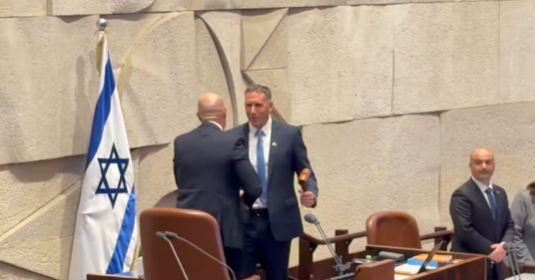
Israel’s opposition leader, Gadi Eisenkot, has scored a major boost in his effort to unseat Prime Minister Benjamin Netanyahu, after ally Matan Kahana of the Yashar party was elected Speaker of the Knesset.
Yet, despite this legislative breakthrough, Eisenkot still faces steep obstacles in forming a viable government before a looming December deadline.
On Tuesday night, following a dramatic six-hour filibuster by Netanyahu’s allies, lawmakers voted 66–52 in favour of Kahana, ousting Likud’s Amir Ohana from the Speaker’s chair.
The result hands Eisenkot control over the Knesset’s agenda and legislative priorities. Kahana secured backing from Eisenkot’s bloc, alongside support from the Arab-majority Ra’am and Joint List parties.
The opposition has also taken charge of key parliamentary committees, including Foreign Affairs and Defence, as well as Finance, signalling a dramatic shift in power and increasing oversight of Netanyahu’s caretaker administration.


However, every potential route to a 61-seat majority would require the opposition to break core campaign promises, risking backlash from their own supporters.
Eisenkot’s preferred option—a 48-seat minority government relying on outside support from Arab-led factions—has been vetoed by Avigdor Lieberman, leader of the Yisrael Beiteinu party, who staunchly opposes any deal dependent on Arab backing.
Lieberman’s alternative, bringing ultra-Orthodox parties into the coalition, has met fierce resistance over long standing disputes on military conscription and religious legislation.
Meanwhile, unity talks with Likud have broken down, as Netanyahu remains firm on leadership and policy demands. The result: a political stalemate, leaving the future of any stable government in doubt despite opposition gains.
Tensions escalated further after former Prime Minister Naftali Bennett met with Netanyahu, reportedly without first informing Eisenkot.
Senior Yashar figures accused Netanyahu of trying to destabilise the opposition alliance as coalition negotiations continue.
Sources inside Eisenkot’s bloc labelled the meeting “a strategic disaster”, after Bennett, now chairman of the Beyachad party, spent over two hours with Netanyahu at the Knesset—an encounter the Prime Minister’s Office described as a ‘security briefing’.
However, Bennett’s camp later insisted he would not serve in a Netanyahu-led government. They said Bennett had told Eisenkot he would only support a premiership rotation if Eisenkot took the first turn as Prime Minister.
Adding to the turmoil, Likud has launched legal challenges aiming to disqualify votes from Arab communities, citing alleged irregularities in election day monitoring.
However, the Central Elections Committee on Wednesday signalled the appeal was insufficient to annul the October 27 election results.
Observers have condemned Likud’s efforts as a bid to delegitimise the Arab vote and shift the Knesset’s balance of power.
If Eisenkot cannot form a majority coalition by December, the mandate could revert to Netanyahu , or Israel may face yet another round of elections, prolonging political uncertainty.

Keep community journalism free.
Jewish News is free for everyone. No paywall. No barriers. Just trusted journalism for anyone who wants to stay connected to Jewish life in Britain.
If you value that, please support us.
From as little as £5 a month, you can help keep our journalism free and accessible to all.
Every day, we report on the issues that matter to our community. We celebrate achievements, support charities, challenge antisemitism and ensure Jewish voices are heard more widely.
From as little as £5 a month, you can help us continue to:
- Report on the stories shaping Jewish life in the UK and beyond
- Bring our community together through shared stories, events and campaigns
- Celebrate the people, culture and moments that define our community
- Support organisations doing vital work across Jewish Britain
You can make a one-off donation or become a regular supporter. Every contribution helps keep our journalism free, independent and accessible to all.
If everyone who values Jewish News gave a small amount, it would make a real difference to our future.