Prefer Jewish News on Google
Masterclass by anthropologist Michael Nachman combined theatre and food
One-woman show Blessed Hands invited audience to create Sephardi dishes
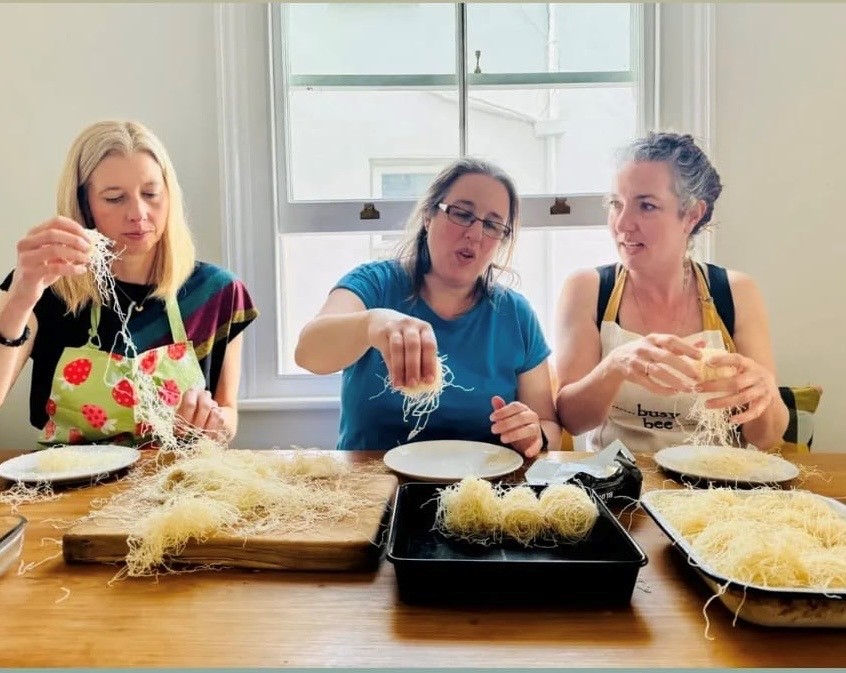
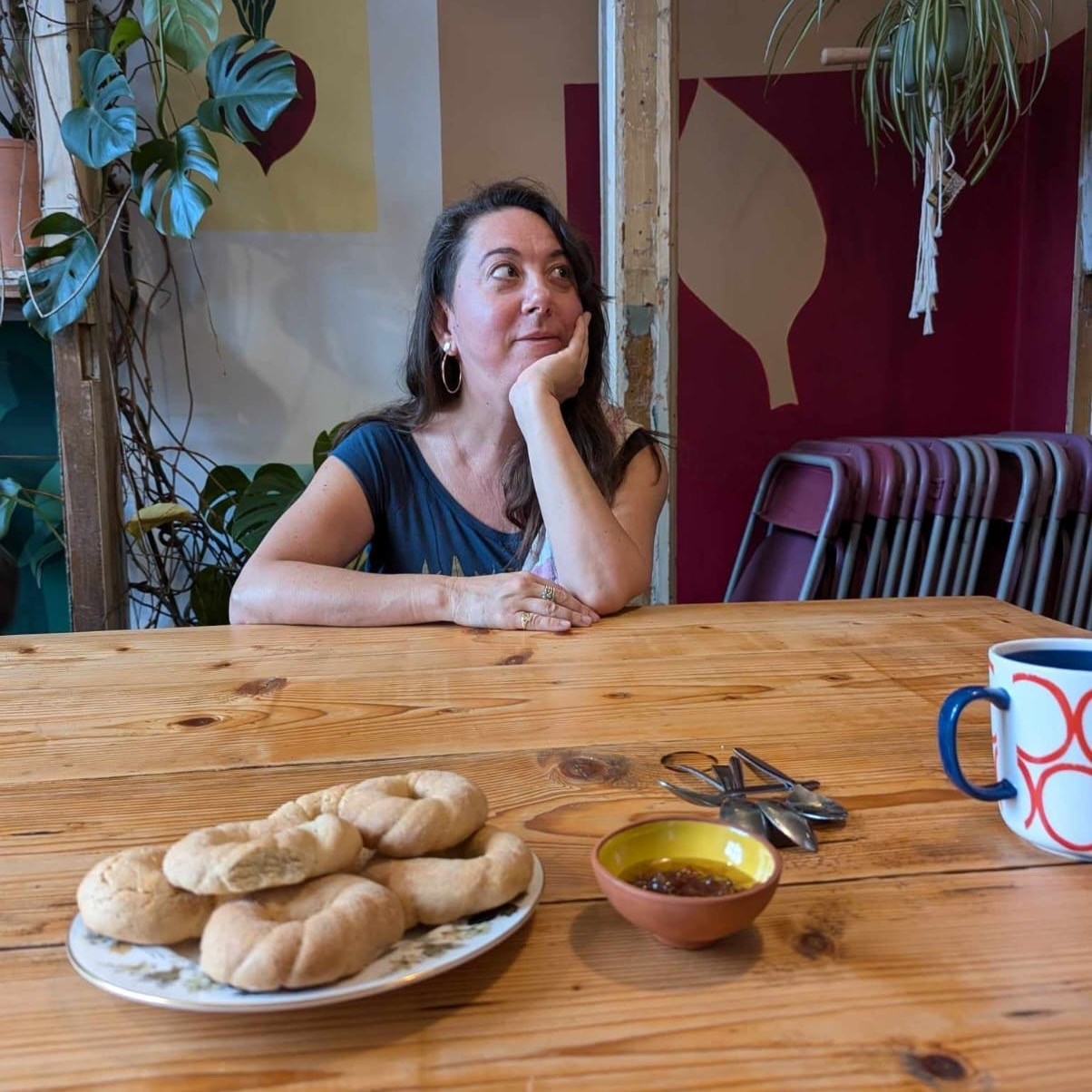
Anthropologist Michal Nachman spends her working days examining the lives and customs of peoples across the world and her leisure time enjoying her favourite pastime, cooking.
And one day Michal who is an Associate Professor in Social Anthropology at the University of the West of England in Bristol, realised that she had been so busy examining everyone else’s lives when really, she had an amazing story to tell.
But how best to tell it? For Michal, who trained as a classical singer, actor and professional dancer, the answer was to combine her many talents and create a performance that would take her audience on a culinary journey using theatre and food to tell her family’s history.
Her performance Blessed Hands, which was at the Jewish Vegetarian Society in Golders Green last week, takes its title from “bendichas manos”, the traditional thanks given to someone who serves a meal; it means “your hands are blessed.”
“The performance is a one-woman show where we come together and cook a beautiful meal. A food master class, the audience is transported to late Ottoman Turkey, to Spain of 1492, to the winding backstreets of an unnamed Middle Eastern city,” said Michal.
“Food is so personal. As an anthropologist I spent the past eight years researching Sephardi food and food cultures from the Middle East and Africa. The food I create during the performance is the food that is authentic to my family. That is the thing about food, everyone has their own experiences. So I am not saying these are the correct Sephardi recipes, I am saying these are the dishes that my family ate through the generations.
“My parents come from Israel, and I was brought up in Canada, in Toronto, eating Middle Eastern food. There were so many influences because my father was Turkish and my mother Romanian.
“I am very interested in this idea of who does food belong to? What is an authentic dish? and I researched migrants’ experiences of food heritage.
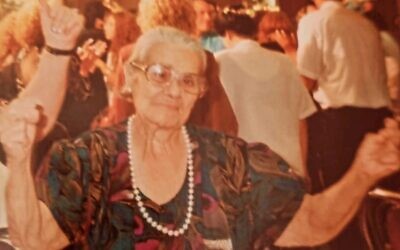
“My family fled Spain at the time of the Inquisition. When I talked to my relatives I heard so many stories. They told me my grandma, my Savta Rachel, was an angry woman. She was the daughter of Esther Modiano, an illustrious Sephardi famiy originally based in Salonika (now Thessaloniki) in Greece). She became impoverished through the when she lived in Turkey and there was so much change in the country and such hatred of foreigners. She went to Israel but even there she experienced prejudice because she was a member of the Mizrahi (people from Jewish communities originating in the Middle East, North Africa, and Central Asia).
“In the show we prepared a delicious meal using recipes based on several years of interviews with my Sephardi Jewish relatives along with collaborators from Jewish, Muslim, Christian, and British backgrounds people I interviewed in my research into food diasporas in the UK. The food unites us and, as the stories unfold, we will cook, we will laugh and maybe even cry a little.”
During the show participants made a piaz salad – a Turkish/Sephardi white bean salad with red onions, sumac, and pomegranate molasses, chraymeh – Tunisian/Mizrahi spicy tomato stew, with caraway, fresh coriander, aubergine schintzel – smoky, crispy, panko and sesame seed-encrusted aubergines, and kataif with grilled stone fruit – golden kataif filo thin noodles, soaked in her homemade rose petal syrup, topped with a dollop of plant-based crème fraiche and a grilled fruit.

Keep community journalism free.
Jewish News is free for everyone. No paywall. No barriers. Just trusted journalism for anyone who wants to stay connected to Jewish life in Britain.
If you value that, please support us.
From as little as £5 a month, you can help keep our journalism free and accessible to all.
Every day, we report on the issues that matter to our community. We celebrate achievements, support charities, challenge antisemitism and ensure Jewish voices are heard more widely.
From as little as £5 a month, you can help us continue to:
- Report on the stories shaping Jewish life in the UK and beyond
- Bring our community together through shared stories, events and campaigns
- Celebrate the people, culture and moments that define our community
- Support organisations doing vital work across Jewish Britain
You can make a one-off donation or become a regular supporter. Every contribution helps keep our journalism free, independent and accessible to all.
If everyone who values Jewish News gave a small amount, it would make a real difference to our future.