Prefer Jewish News on Google

To Bibi or not to Bibi? That’s anyone’s guess but here are a few possible scenarios
From the heart of Israel's democracy, Nicole Lampert explores the options facing Benjamin Netanyahu and his rivals over the coming weeks
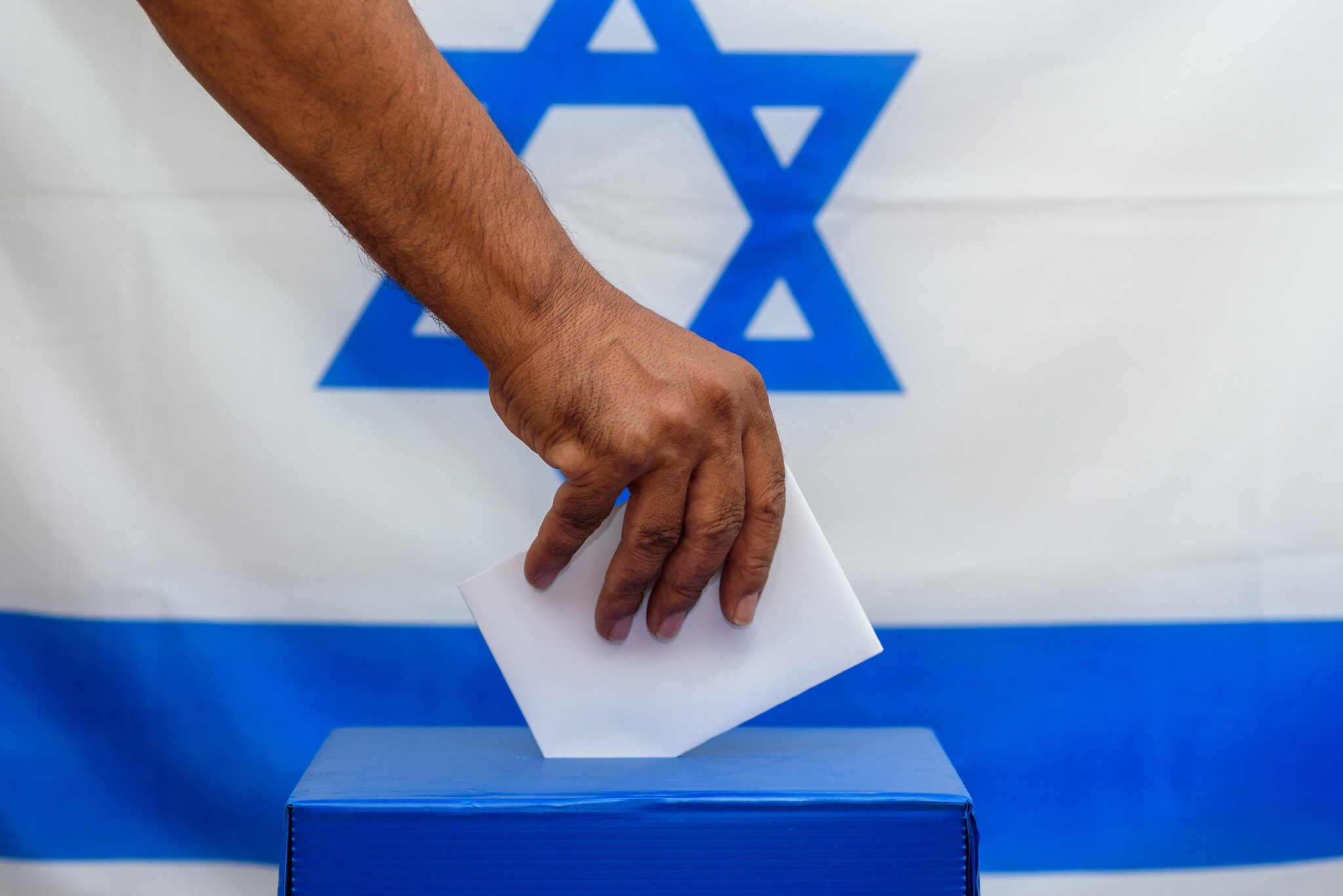
Considering the upheaval of the election, the votes counted which seem to point to chaos, things seem exceedingly calm at the Knesset.
Israel’s parliamentary building is a quiet buzz of activity, only the odd pizza boxes with the remnants of a long night give away the stress of making sure this election went without a hitch.
For the next few days it will be the HQ of the Central Election Committee which oversees the elections. It has been a busy time. An almost unprecedented turn out – of 77.7 per cent – led to huge queues to vote. Flooding in the south of the country meant some polling boxes, having been counted on site, had to be picked up by helicopter to bring to the government building in Jerusalem where the chits are all kept in case of dispute.
A huge screen shows how many votes have been counted, how many polling centres have given their results and what that all looks like.
The votes are still being counted; it can take a long time because of the ‘double envelope’ electoral chits from people who are away from home – whether in the army, in hospital, evacuated, in prison. Each name on the first envelope has to be checked manually before the vote inside the second envelope can be counted and there are 600,000 of them. This too is unprecedented and is because of the war and could make the difference for around 17 seats.



This wasn’t the result most people expected. Then again, most people in Israel know to always expect the unexpected. Polls before the election had Benjamin ‘Bibi’ Netanyahu’s Likud either losing or being neck and neck with his main rival Gadi Eisenkot’s Yashar party. They were wrong. Even most of the exit polls were wrong.
The column of votes on the large screen in the Knesset committee room doesn’t lie: Likud remains the most popular party. But to remain so, Netanyahu has eaten into the vote of some of his coalition parties. The way things stand neither he (as I write on 26 seats) nor Eisenkot (21) – even with the coalitions surrounding them has enough seats – 61 – to form a government but President Isaac Herzog will likely have to give him the first opportunity to try.
And the horse trading has already begun. Political pundits believe the easiest and most likely scenario will see him trying to take seats for Eisenkot’s ‘change’ coalition – perhaps even removing some of his more extremist coalition partners to please the bigger guns on the other side.
Some believe the far-right extremist Itamar Ben-Gvir – whose actions as security minister including turning too much of a blind eye to extremist settler violence which has sparked worldwide condemnation – may be jacked. And if Netanyahu wants a sort of Zionist unity government, he will also get rid of the Haredi party – with conscription of the ultra orthodox being a huge issue.
Could Eisenkot work with Bibi? Perhaps even sharing power and taking turns as Prime Minister? There are some in Israel who would favour this route as it would bring Netanyahu back to the centre while also meaning Trump’s favourite Israeli politician will be at his side for the next two years of his own time in power.
Less likely is a deal with the the Arab parties even though they hold around 17 seats.
The election saw an unprecedented turnout from Israel’s Arab population which makes up 21.7 per cent of the electorate. Normally relatively apathetic about elections, this one saw them voting in droves – with a turn out of up to 80 per cent, larger even than the Jewish vote.
Bedouins showed up to polling booths on camels, so many lined up in Arab towns that new voting centres had to be set up. Some centres saw close to 100 per cent turnout.
One Arab party – Ra’am, whose leader Mansour Abbas, a former Muslim Brotherhood protege – was briefly in government before Netanyahu was elected and showed what could be achieved to have a voice for this community: increased funding for Arab majority towns, cities and schools. The more Arabs were encouraged to think about voting, the more they started to become interested in the politics of the country they live in.
Democrat leader Yair Golan said the opposition change coalition should try and join forces with the Arabs: ‘We can no longer accept Netanyahu’s racist distinction between Jewish and Arab votes,’ he wrote on X. ‘Anyone who tries to erase the votes of Arab citizens is surrendering to Netanyahu and giving up on Israel. We have an opportunity to form a change government in partnership with Israel’s Arab citizens.’
While there were conversations within the Eisenkot coalition about working with Abbas, when the party leader said any party had to describe Hamas as a terrorist organisation as a condition for joining his coalition – but not even Abbas would accede, saying only he condemned the actions of October 7.
The larger Joint List is made up of three parties which are all explicitly antizionist and so even less likely to form part of a government.
After the votes are counted, the parties will each speak to President Herzog about their preferences and he will decide which coalition is most likely to be able to form a government to try first. It is likely Netanyahu will get first dibs. He will have 24 days to do it and then may get an additional 14 days. If he fails, Eisenkot will get the chance. In the meantime, Netanyahu will continue as caretaker Prime Minister.
Altogether the process could take three months and if the parties can’t find a workaround, there will be another election. This is not unusual; from 2018 to 2022 there were five elections and no one will be surprised if the stalemate will persist.

Keep community journalism free.
Jewish News is free for everyone. No paywall. No barriers. Just trusted journalism for anyone who wants to stay connected to Jewish life in Britain.
If you value that, please support us.
From as little as £5 a month, you can help keep our journalism free and accessible to all.
Every day, we report on the issues that matter to our community. We celebrate achievements, support charities, challenge antisemitism and ensure Jewish voices are heard more widely.
From as little as £5 a month, you can help us continue to:
- Report on the stories shaping Jewish life in the UK and beyond
- Bring our community together through shared stories, events and campaigns
- Celebrate the people, culture and moments that define our community
- Support organisations doing vital work across Jewish Britain
You can make a one-off donation or become a regular supporter. Every contribution helps keep our journalism free, independent and accessible to all.
If everyone who values Jewish News gave a small amount, it would make a real difference to our future.